UNEP Mission in Samtskhe-Javakheti Highlights the Importance of Agrobiodiversity Conservation and Sustainable Use
On 23–24 September 2026, a UNEP mission visited the Samtskhe-Javakheti region of Georgia to observe the progress and results of activities implemented under the project “Sustainable Management of Agricultural Biodiversity in Vulnerable Ecosystems and Rural Communities of Samtskhe-Javakheti Region in Georgia.”
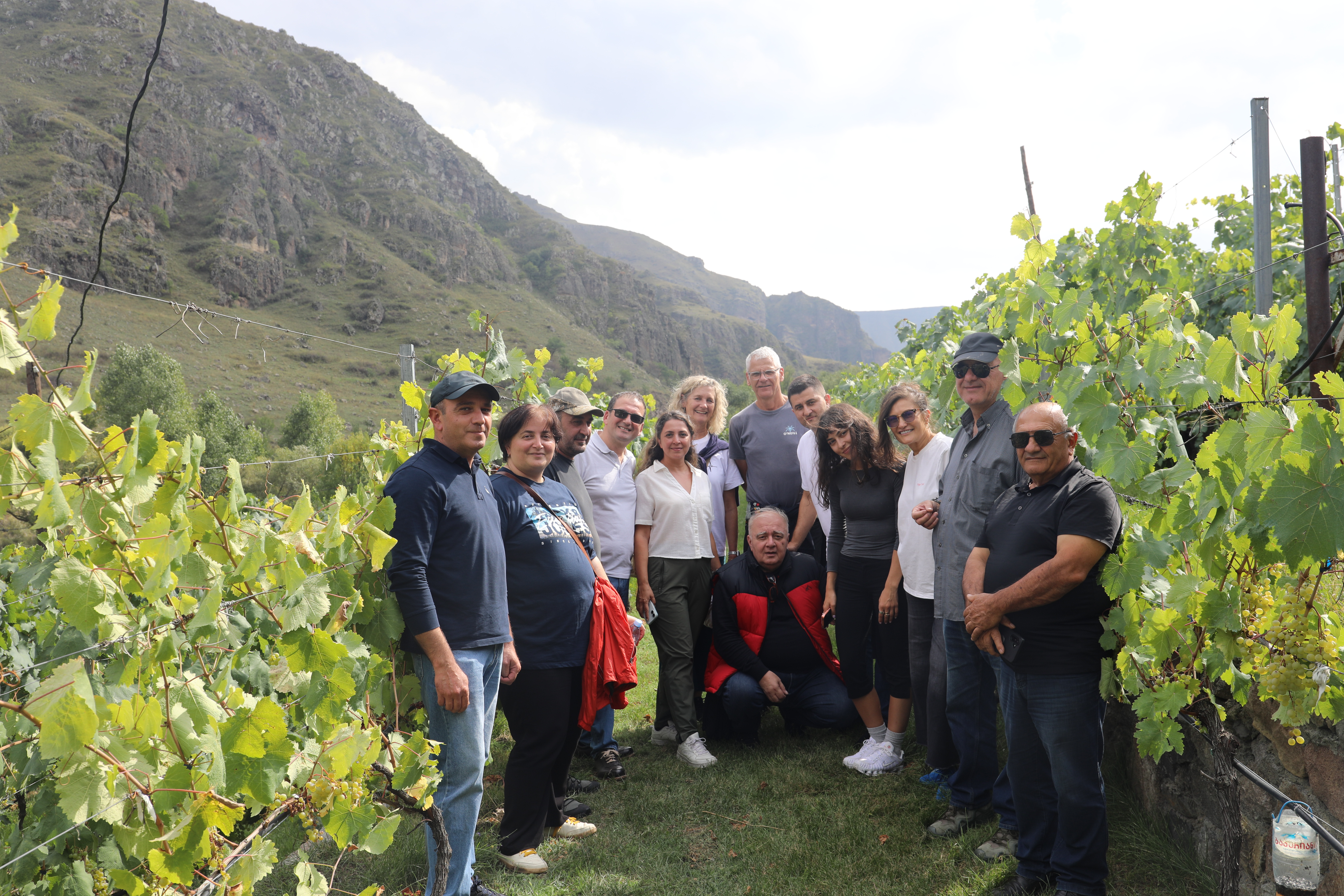
During the mission, UNEP representatives, together with the project team, conducted field visits to agro-ecotourism family farms selected under the project and met with local farmers directly involved in the conservation and sustainable use of agricultural biodiversity. The visits provided an opportunity to see first-hand how the project is supporting the protection of local genetic resources while creating opportunities for their sustainable management and use, and contributing to the livelihoods of rural communities.
Samtskhe-Javakheti is home to valuable agricultural biodiversity, including locally adapted grapevine and wheat varieties, which have been maintained by farming communities over generations. These genetic resources are particularly important in the context of climate change, as locally adapted varieties can contribute to more resilient and sustainable agricultural systems.
A key focus of the project is the in-situ and on-farm conservation of agricultural biodiversity. This approach goes beyond preserving genetic resources as static heritage. It aims to keep local varieties in active cultivation, support their propagation and sustainable use, and ensure that the knowledge and practices associated with them continue to be passed from one generation to the next.
The field visits demonstrated how conservation can be closely linked with the economic interests and livelihoods of rural communities. For local farmers, maintaining traditional varieties becomes more sustainable when these resources can generate tangible economic opportunities.
The project therefore promotes the sustainable use of agrobiodiversity through value-added local products, agro-tourism, traditional food and beverages, and the promotion of locally distinctive agricultural products. By creating opportunities to generate additional income from local genetic resources, the project contributes to strengthening incentives for farmers and communities to continue conserving them.
This link between conservation and economic opportunity is particularly important for the long-term sustainability of agricultural biodiversity. When farmers can benefit economically from maintaining local varieties, conservation becomes an integral part of rural development rather than a separate environmental objective.
The mission also highlighted the importance of combining traditional knowledge with modern approaches to sustainable agriculture. Farmers' experience and knowledge of locally adapted crops provide an important foundation for developing agricultural practices that are better suited to local environmental conditions and future climate challenges.
The conservation of agricultural biodiversity in Samtskhe-Javakheti therefore represents an investment not only in the region's agricultural heritage, but also in its future resilience, rural livelihoods and local economic development.
Local grapevine and wheat varieties are more than genetic resources of historical value. They have the potential to serve as drivers of sustainable agriculture, agro-tourism and rural entrepreneurship, while contributing to the resilience of local food systems.
The UNEP mission reaffirmed the importance of an integrated approach in which biodiversity conservation, sustainable use and economic development reinforce one another. By supporting farmers to conserve and sustainably use local genetic resources, the project is helping to create the conditions for these valuable resources to remain part of the region's living agricultural landscape and provide benefits for local communities and future generations.
Through continued collaboration with farmers, local authorities and other stakeholders, the project seeks to ensure that the region’s unique agricultural biodiversity remains a living resource—supporting sustainable agriculture, strengthening rural livelihoods, creating economic opportunities and providing benefits for local communities and future generations.