Circular Economy
Moving toward a circular economy - where waste is minimised, resources are used efficiently and production processes are progressively cleaned up - requires coordinated action across legislation, business practice and public behaviour. It also requires the kind of sustained, multi-level engagement that can only come from an organisation with deep roots in all three countries and long-standing relationships with the institutions that need to lead the change. REC Caucasus has been building that engagement across the South Caucasus for years, working with governments, businesses, schools and communities on everything from national waste policy to community-level plastic reduction.
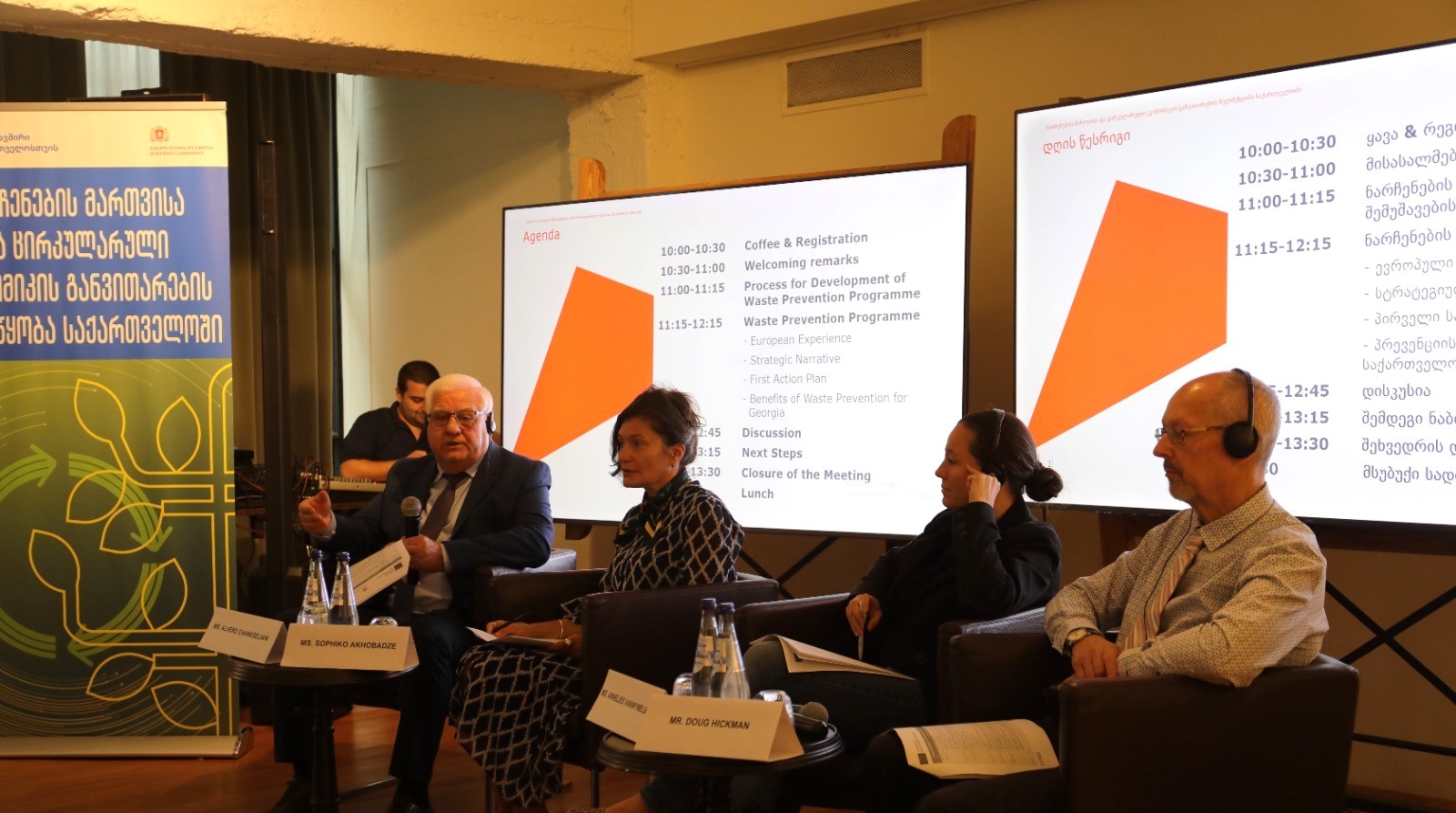
In Georgia, we concluded a major EU-funded waste management project in 2024, delivering waste prevention programmes, extended producer responsibility frameworks across five priority waste streams, and a strengthened national Waste Management Information System. Two SME-level circular economy investment proposals were developed for potential scale-up, and a Feasibility Study and Environmental and Social Impact Assessment for the Central Georgia Solid Waste Management Project - supported by EBRD and KfW - were finalised to full international safeguard standards. In Azerbaijan, we developed and launched a mobile application for household plastic collection, delivered a school-based programme across 12 schools that engaged 2,400 students and collected nearly five tonnes of plastic for certified recycling, and ran a national awareness campaign that reached over 787,000 people. In Armenia, we support cleaner production in SMEs through the EU4Environment RECP programme and helped advance the country's sustainable public procurement framework, developing technical procurement criteria for priority product categories including LED lighting, cloud services and sustainable building materials.