COP17 Side Event Highlights Community-Led Conservation in Georgia
Yerevan, 22 October 2026
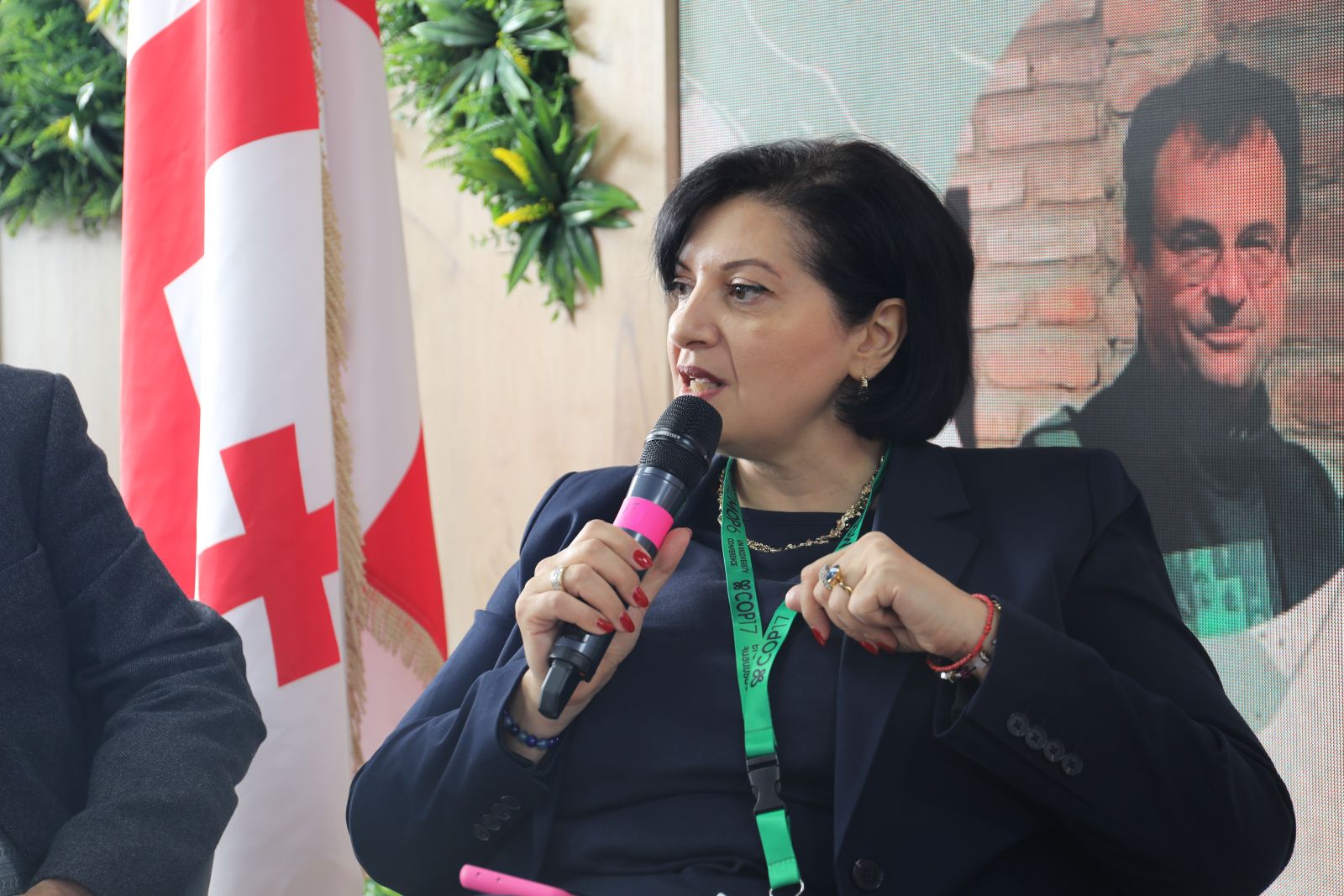
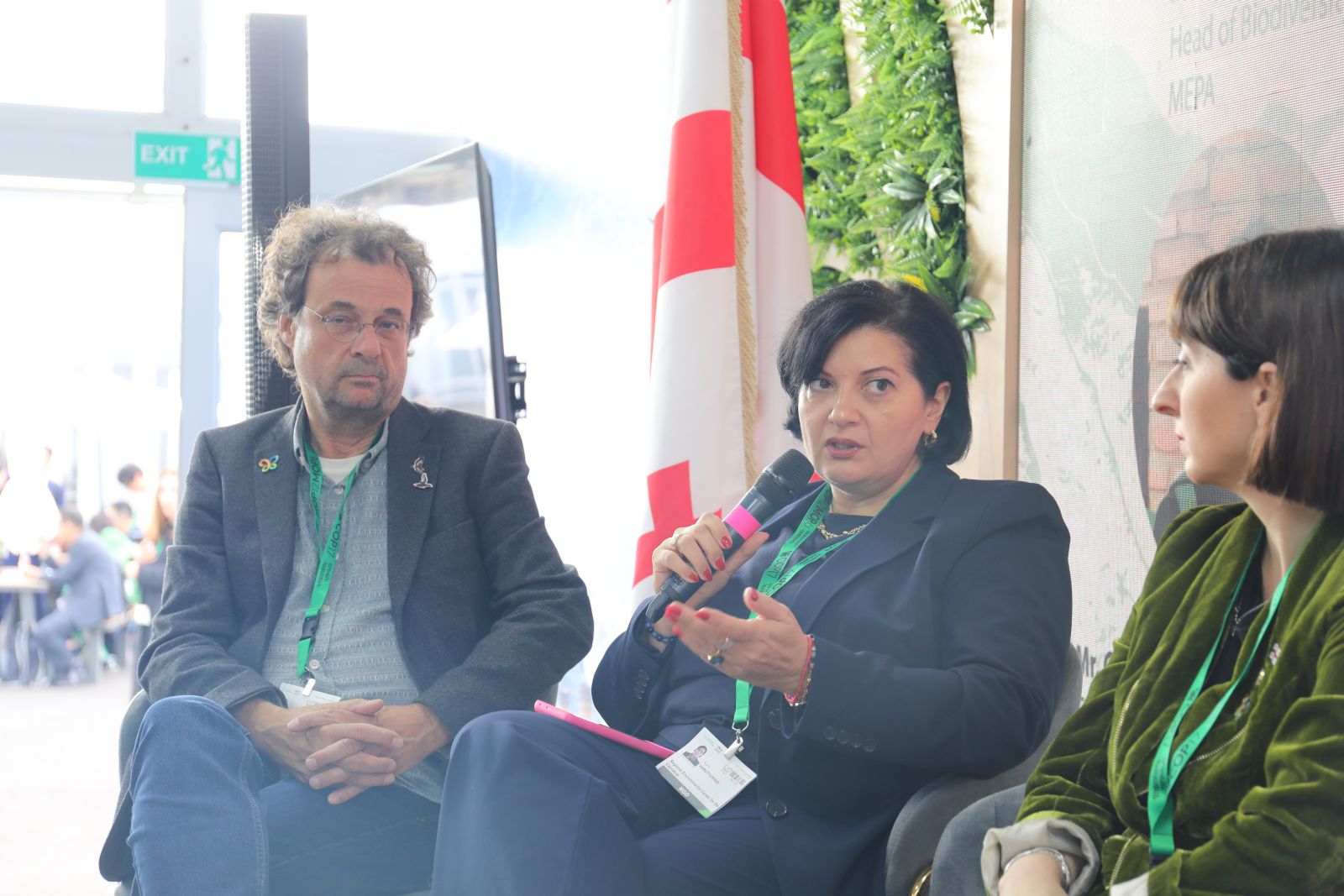
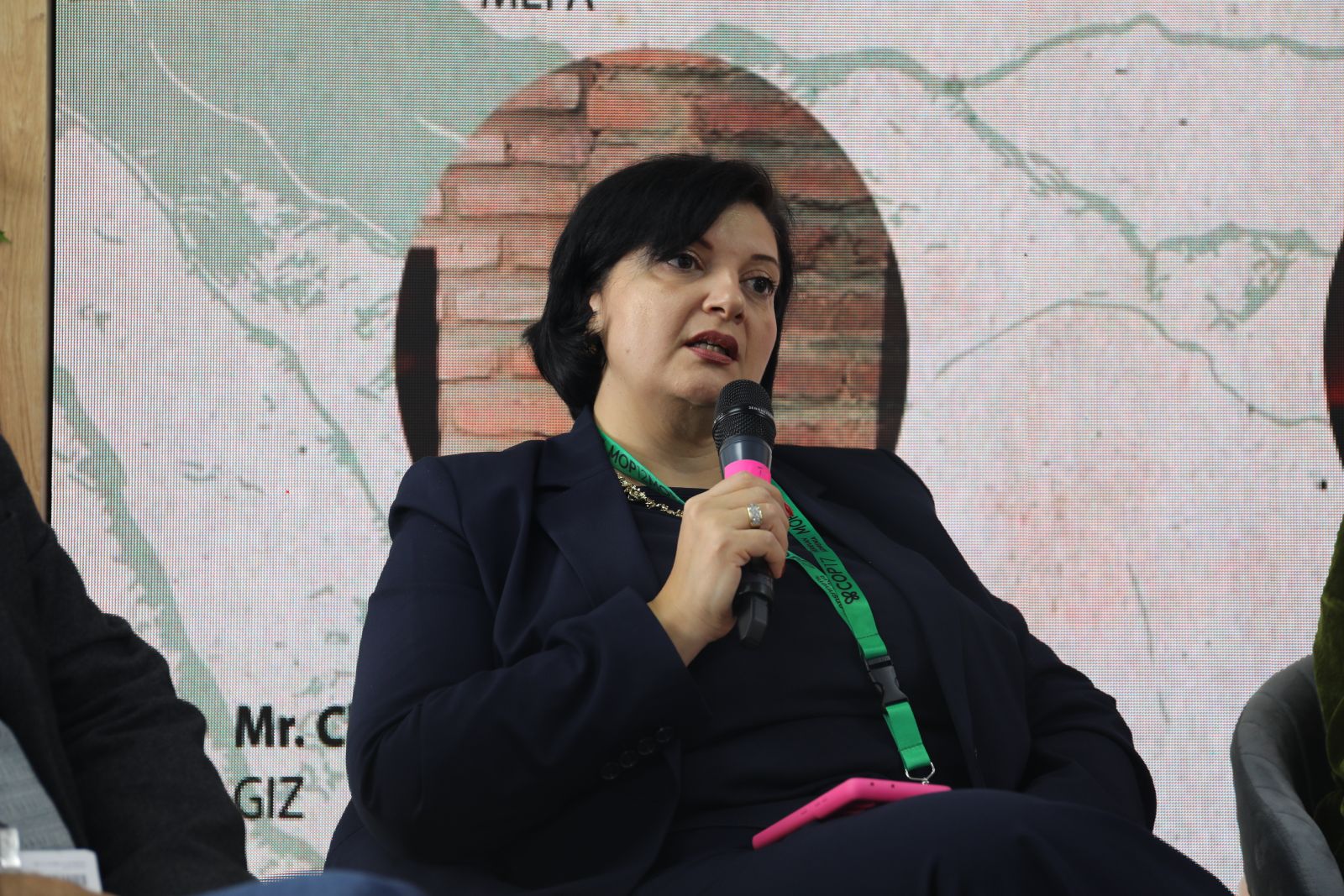
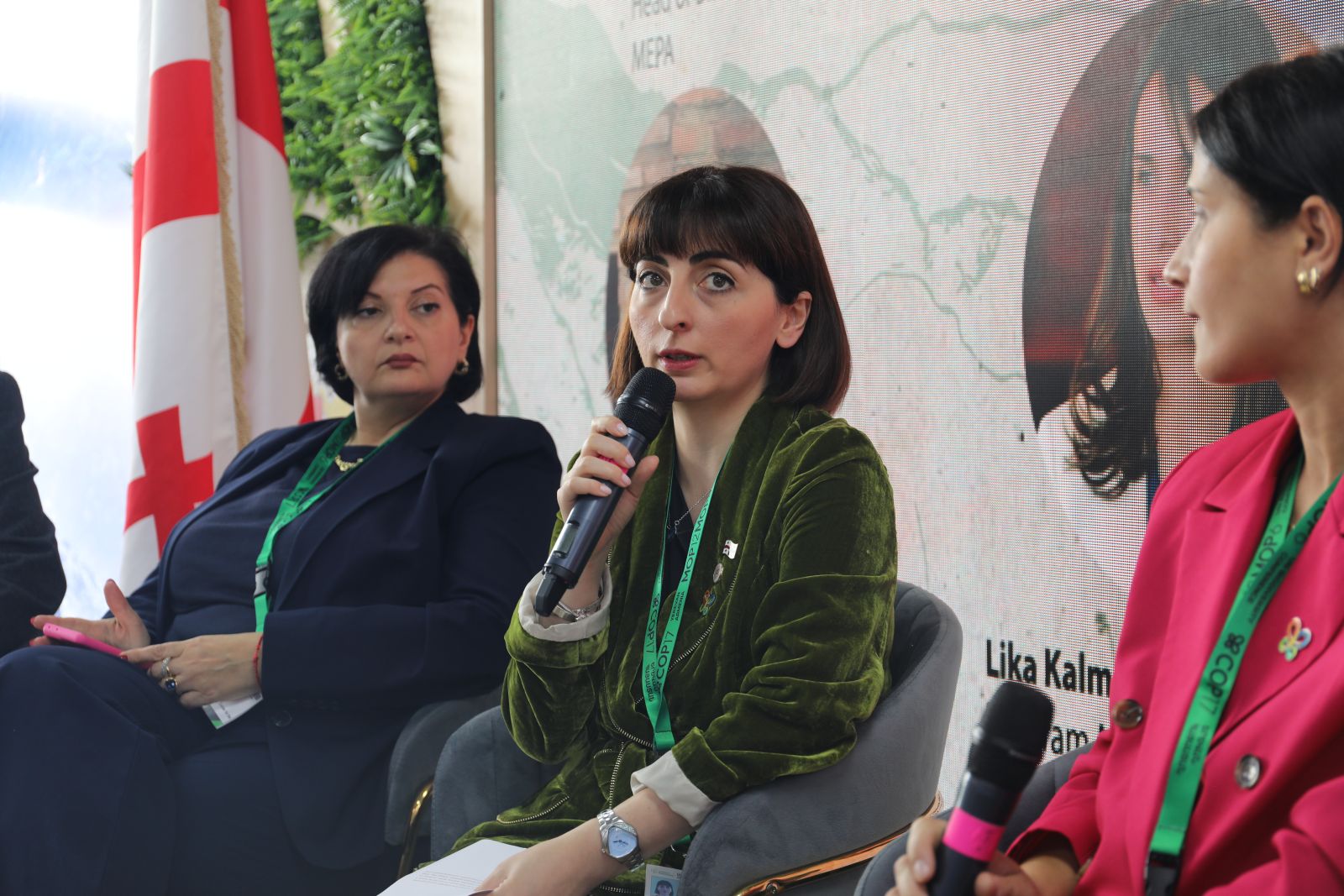
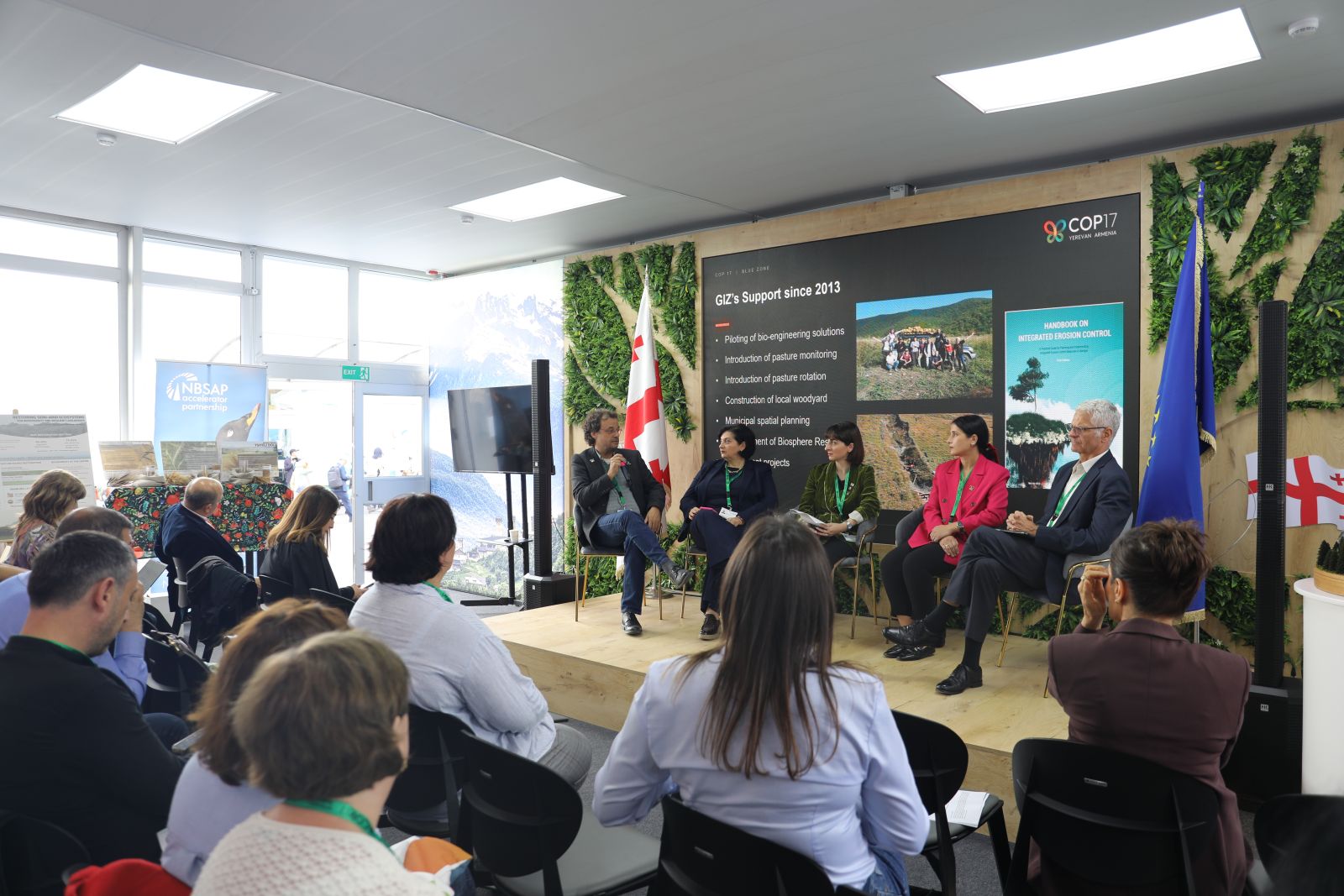
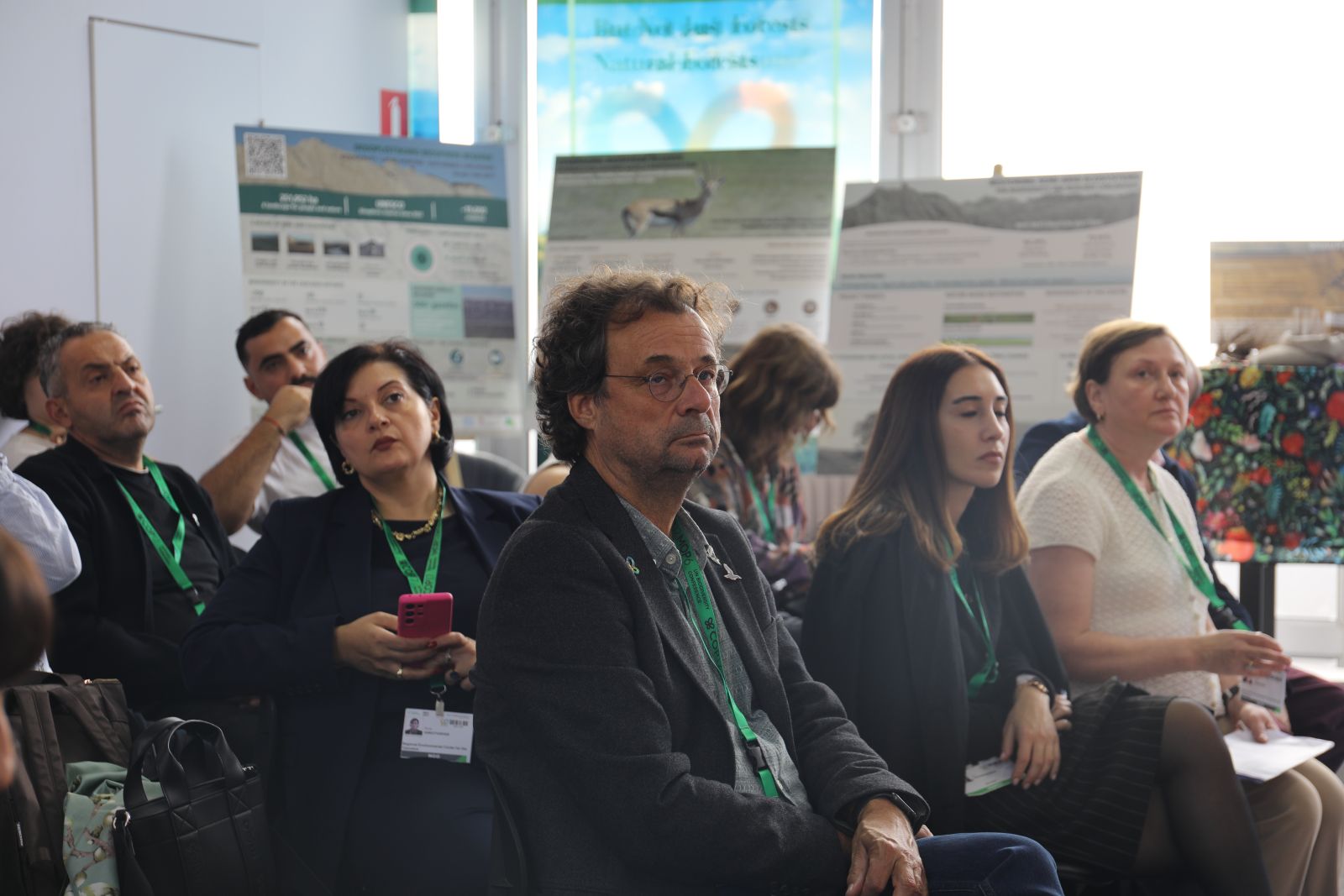
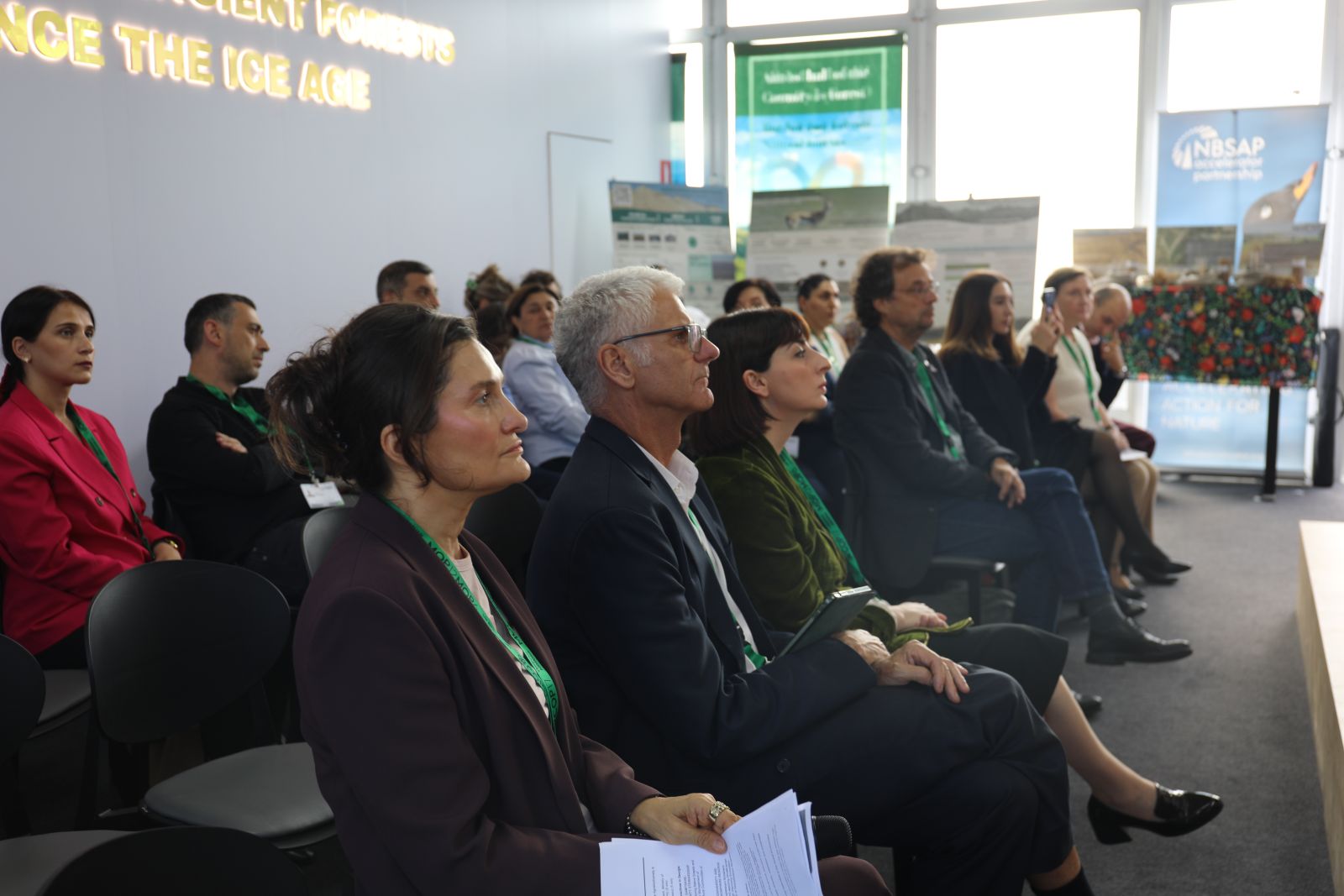
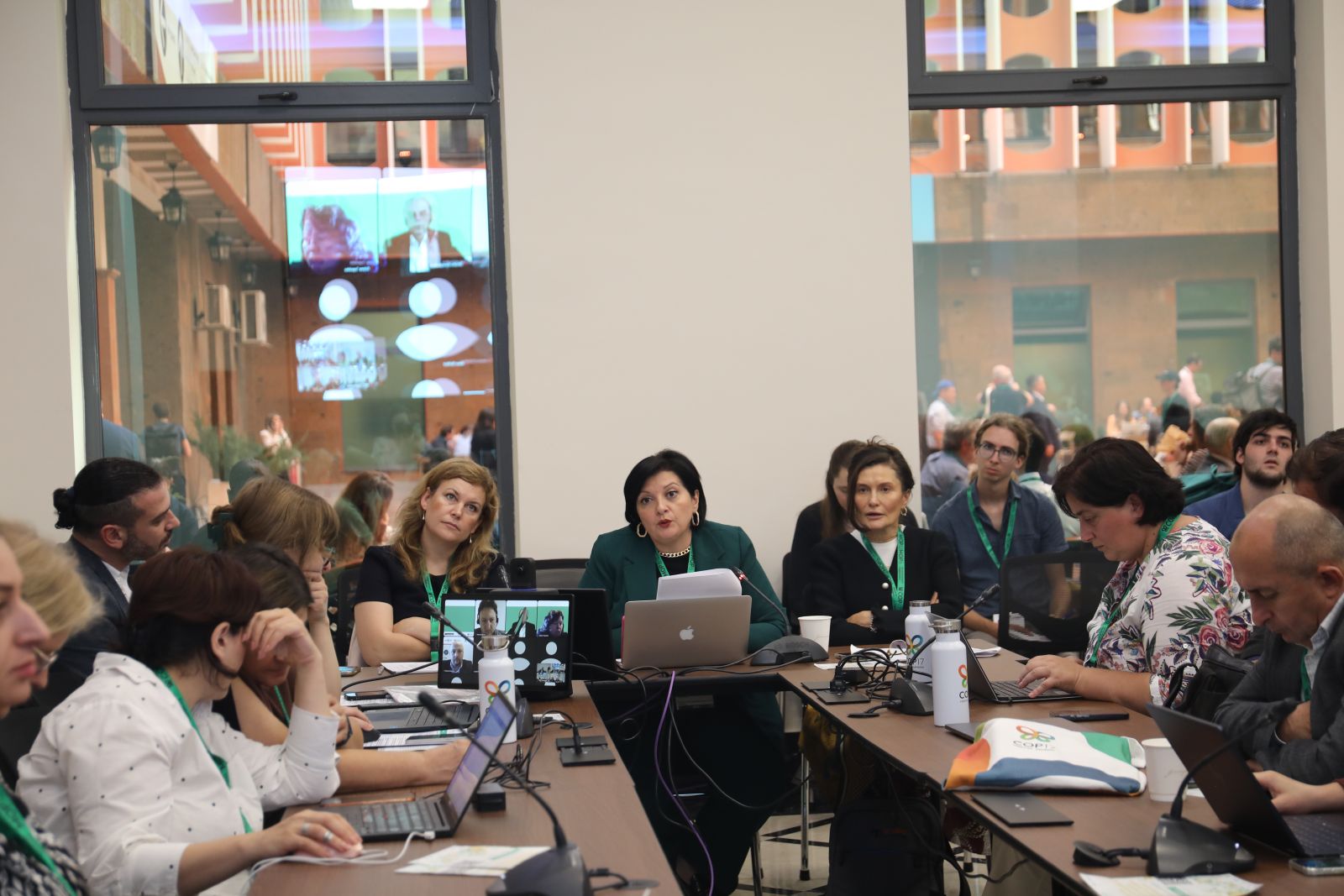
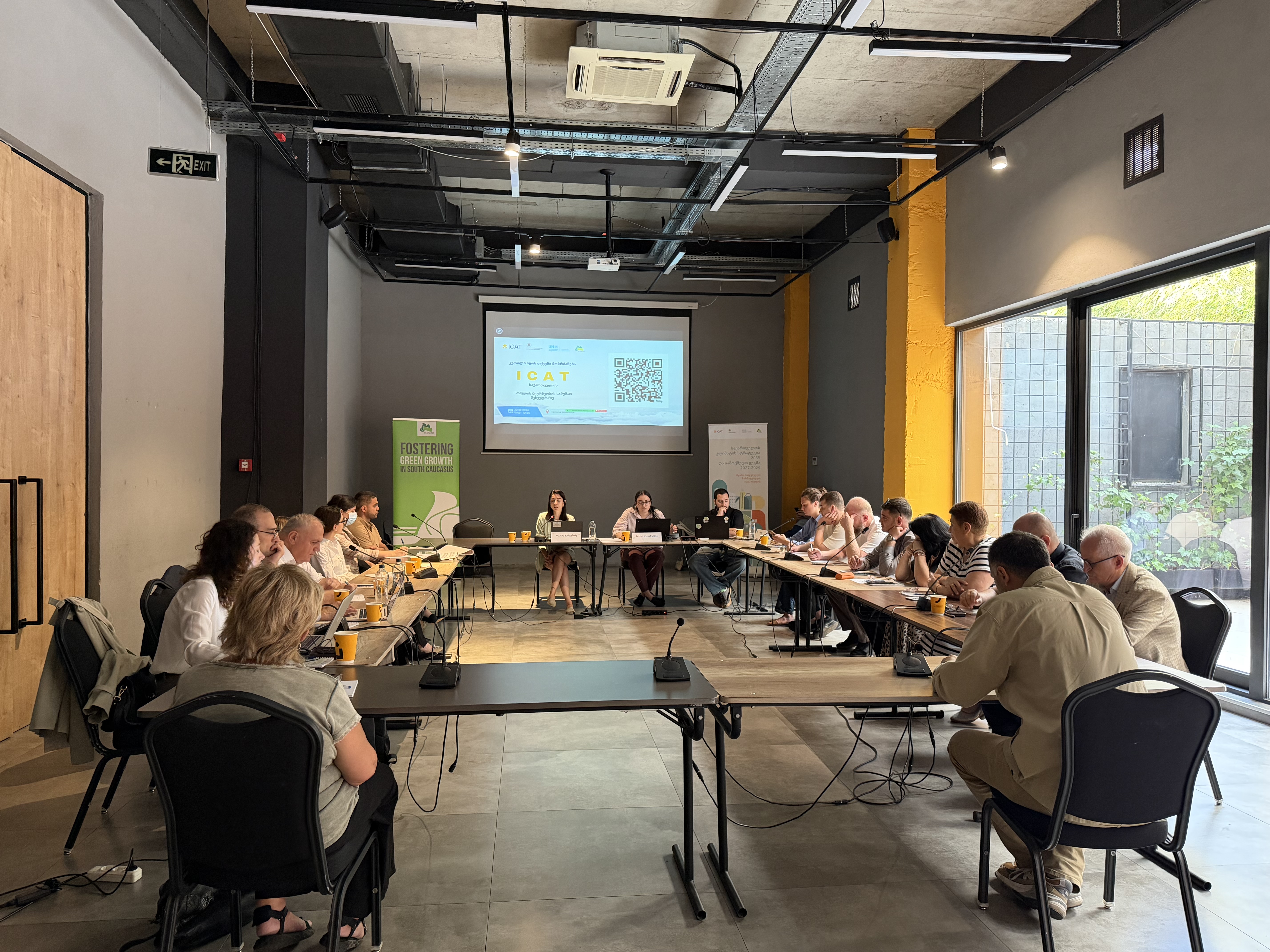
Local stewardship of endemic varieties of crops and conservation of the key species can deliver lasting results for nature and rural communities alike. That was the central message of "Bridging People and Biodiversity: Living Landscapes in the South Caucasus", a side event convened by the Regional Environmental Centre for the Caucasus with the Ministry of Environmental Protection and Agriculture at the Georgia Pavilion during the CBD COP17 in Yerevan.
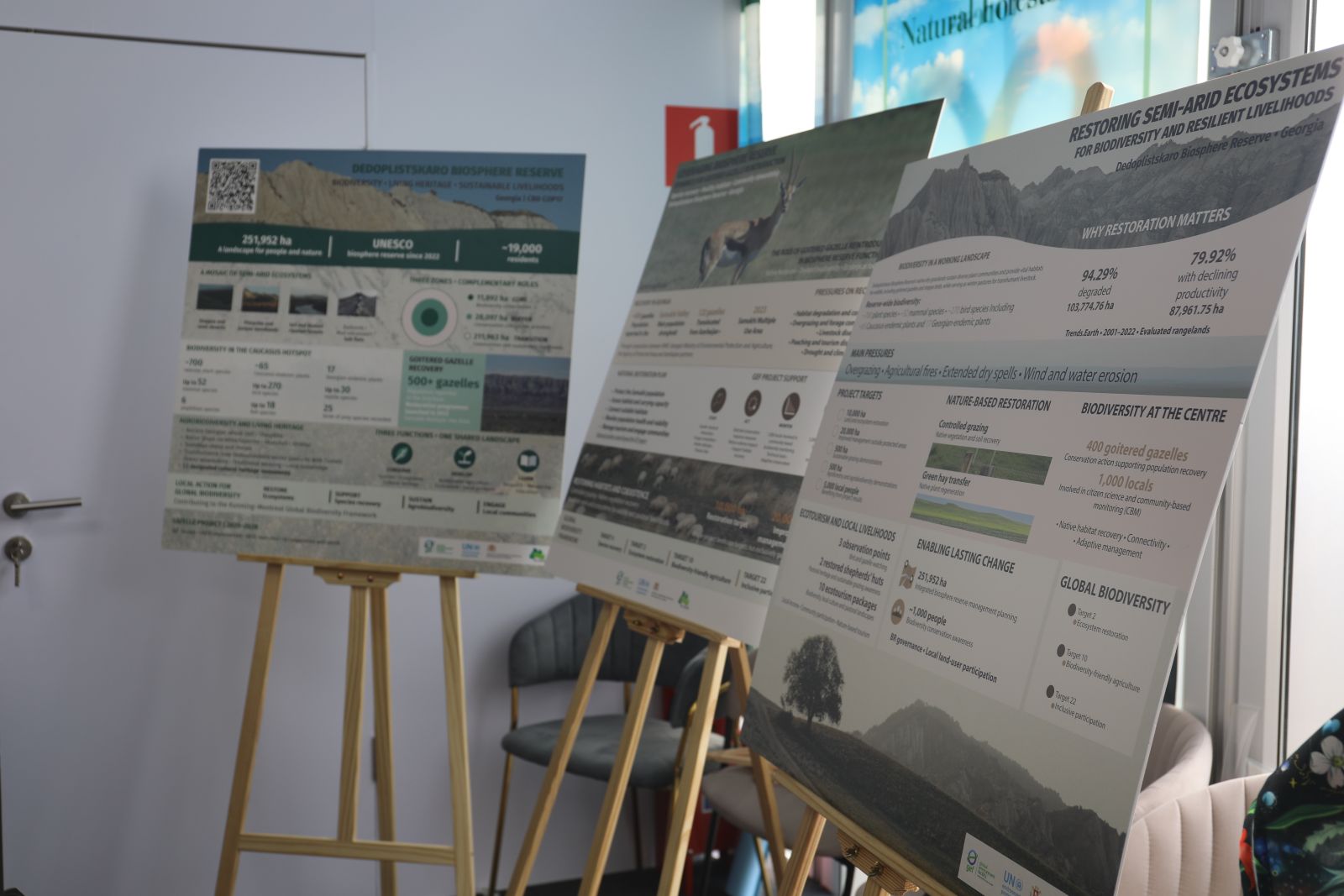
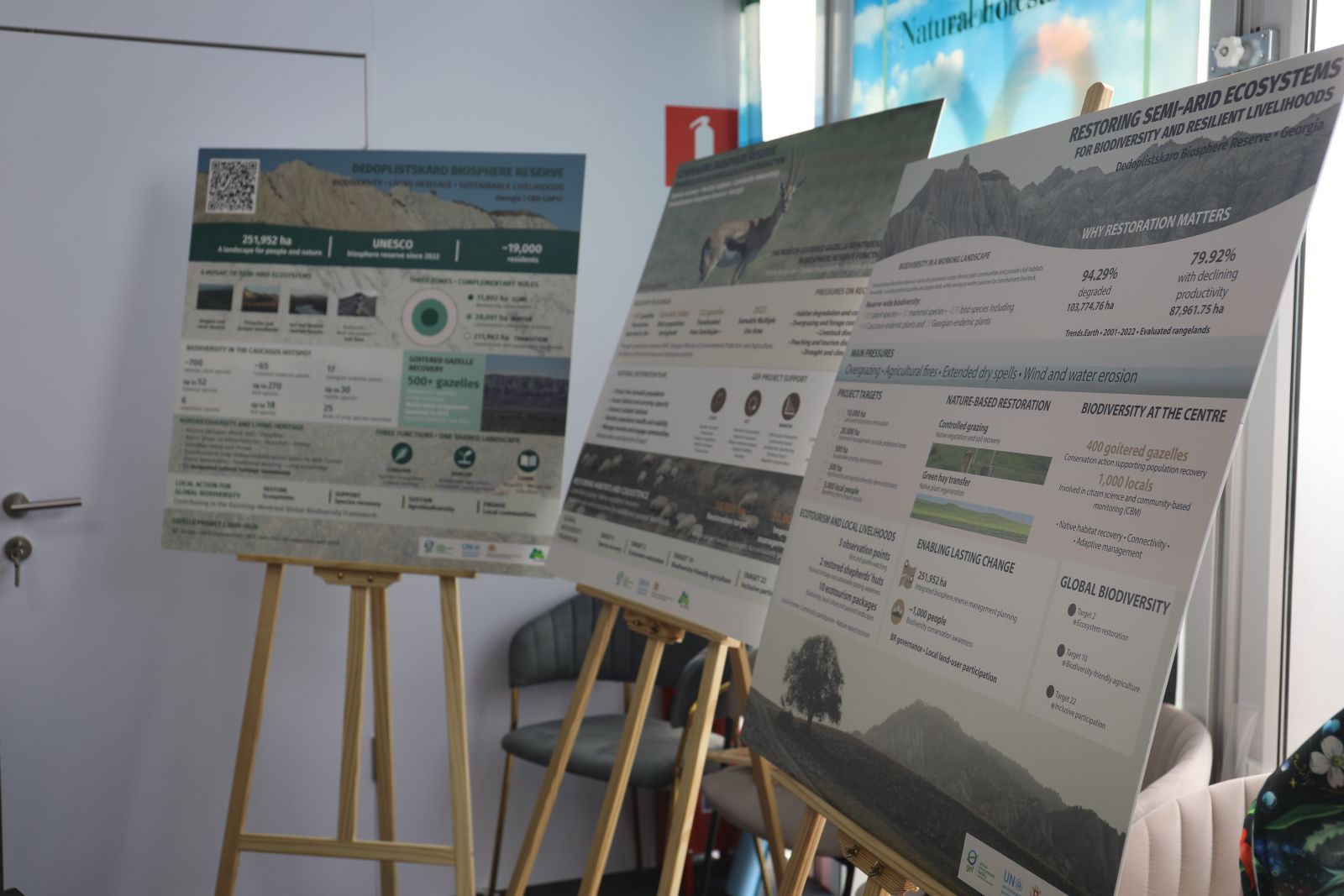
To set the scene, the organizers highlighted the achievements of two ongoing projects(“Mainstreaming Agrobiodiversity Conservation and Sustainable Use into Georgia’s Agricultural Production System” and “Transforming Policy and Investment through Improving Ecosystem Management and Restoration of Degraded Drylands of Dedoplistskaro Biosphere Reserve_GAZELLE” and underscored the importance of the Global Environment Facility as a key financing mechanism for on-the-ground action. This framework enabled the demonstration of concrete results in agrobiodiversity conservation and community-managed biosphere reserves. Initiated by MEPA, financed by the GEF, and implemented by UNEP and RECC, these initiatives stood at the forefront of the showcase, illustrating how intersectoral collaboration drives progress toward the Global Biodiversity Framework Targets
"The conservation of agricultural biodiversity is an investment in both nature and people creating sustainable livelihoods, strengthening food security, and bringing us closer to the CBD’s vision of living in harmony with nature."
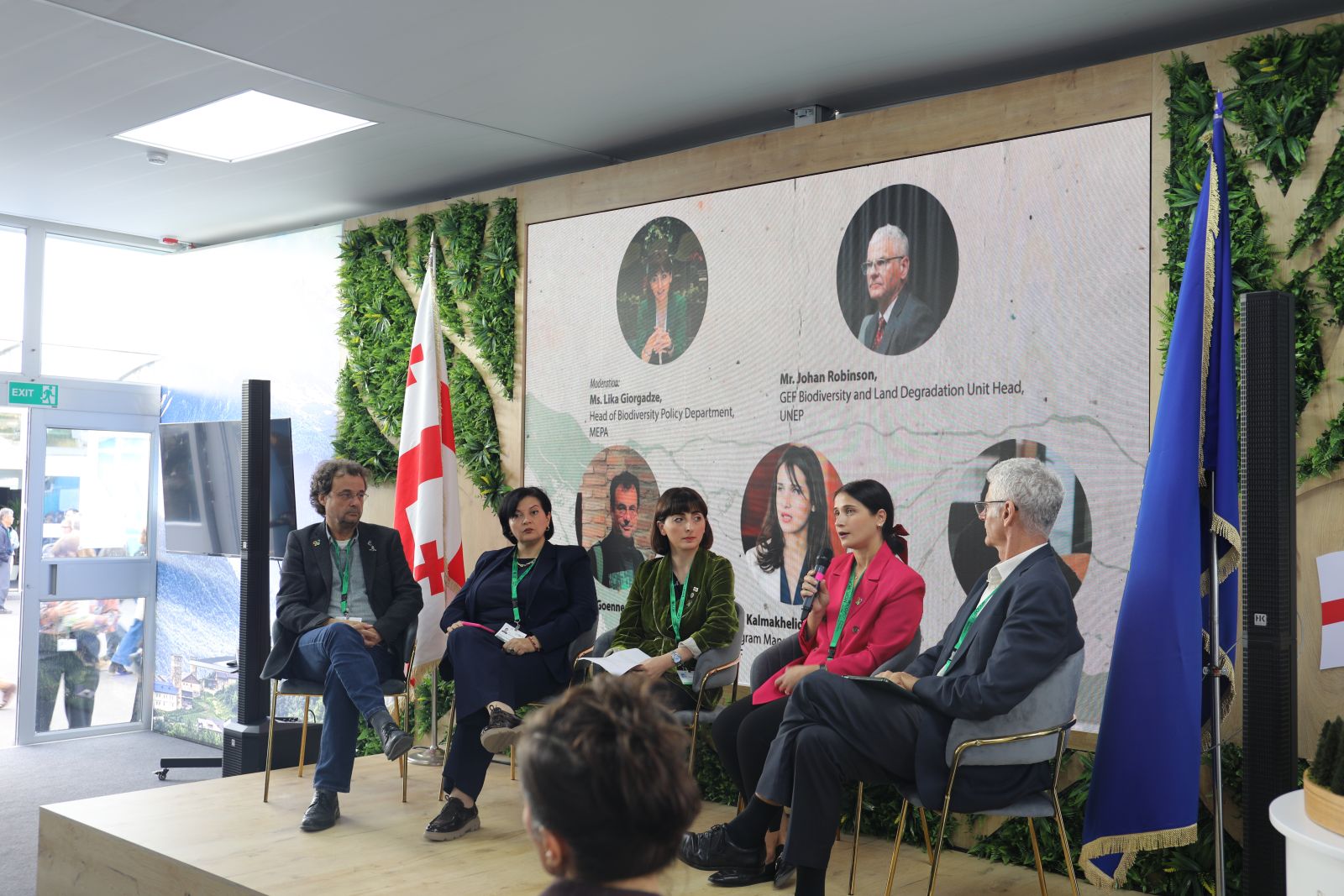
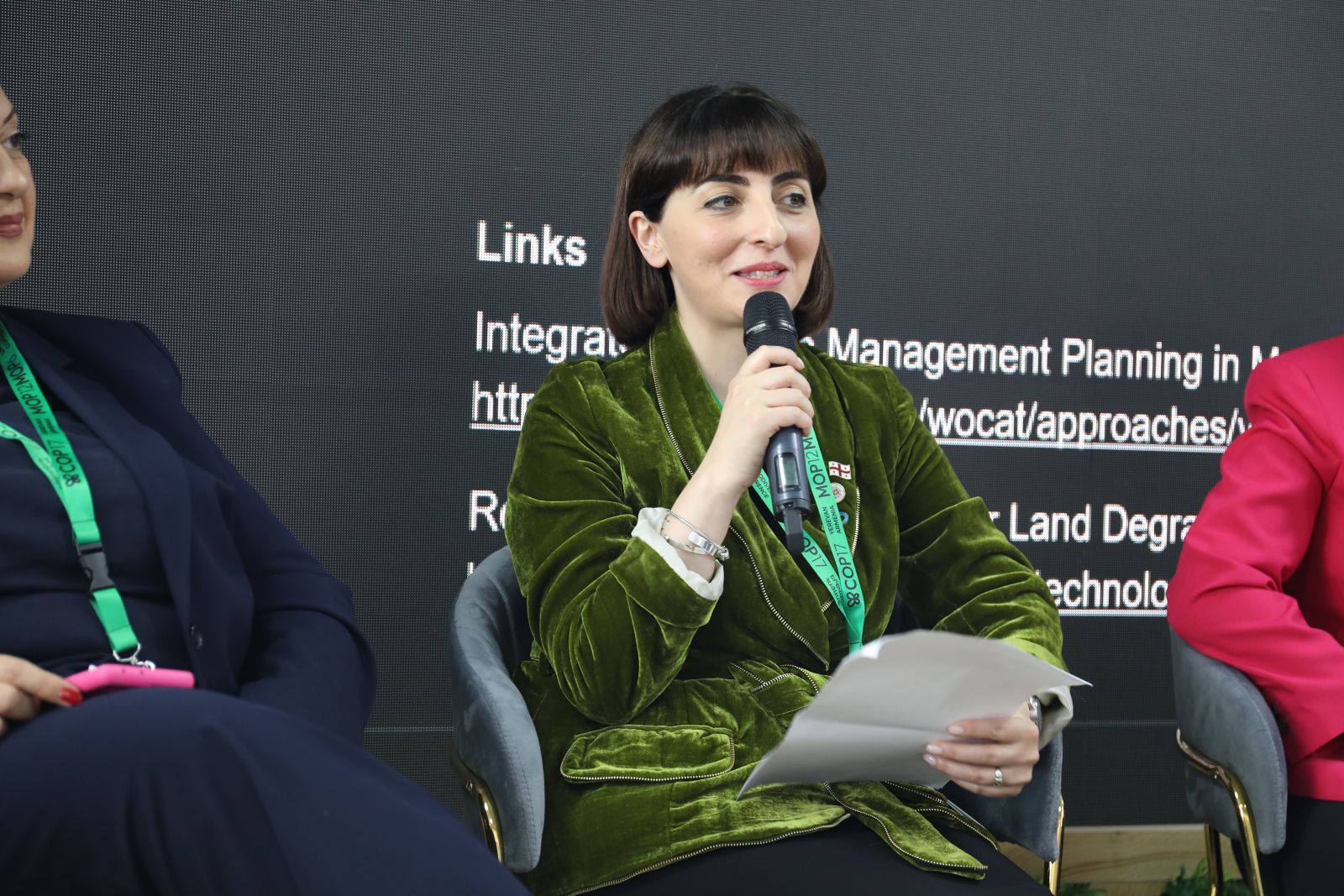
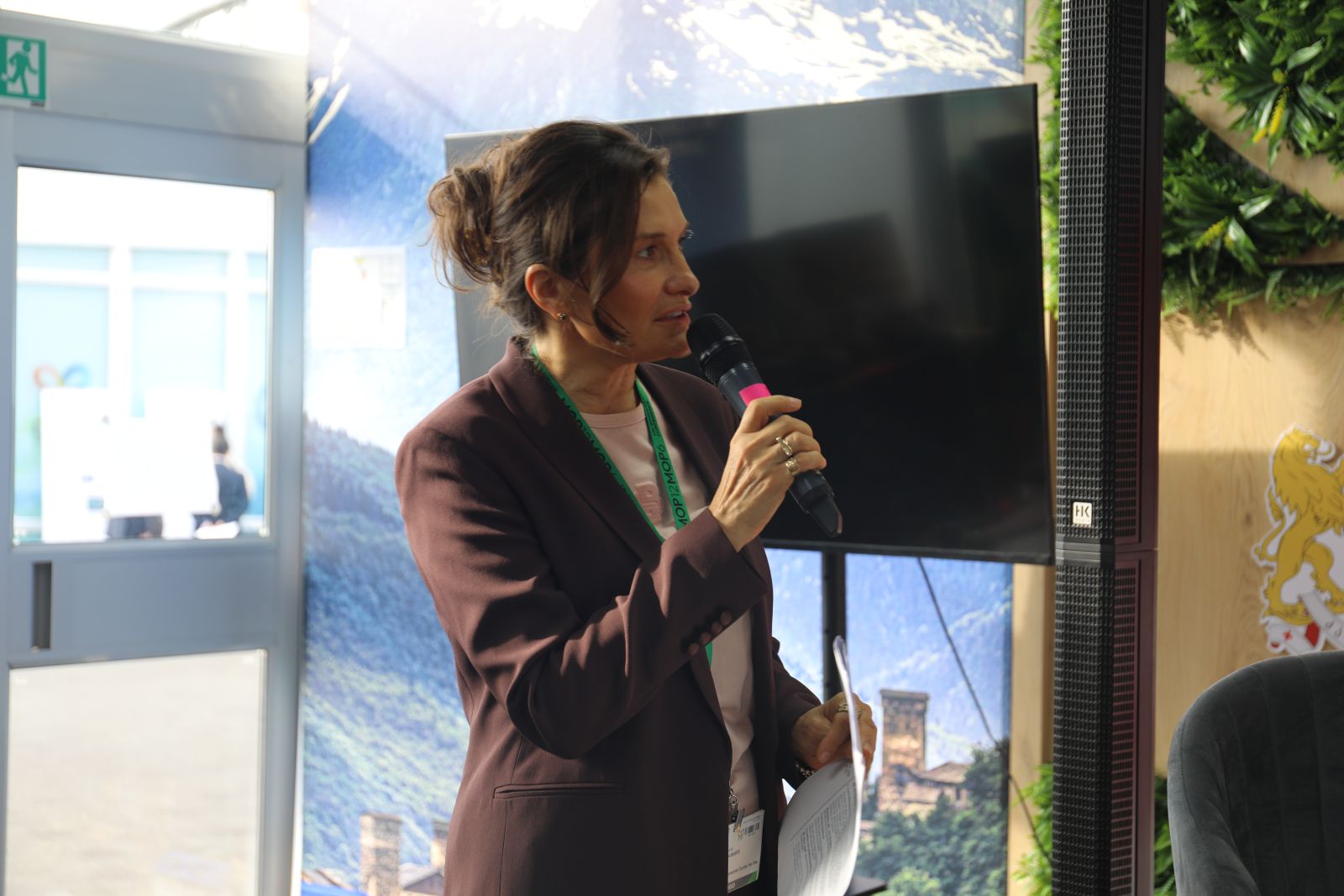
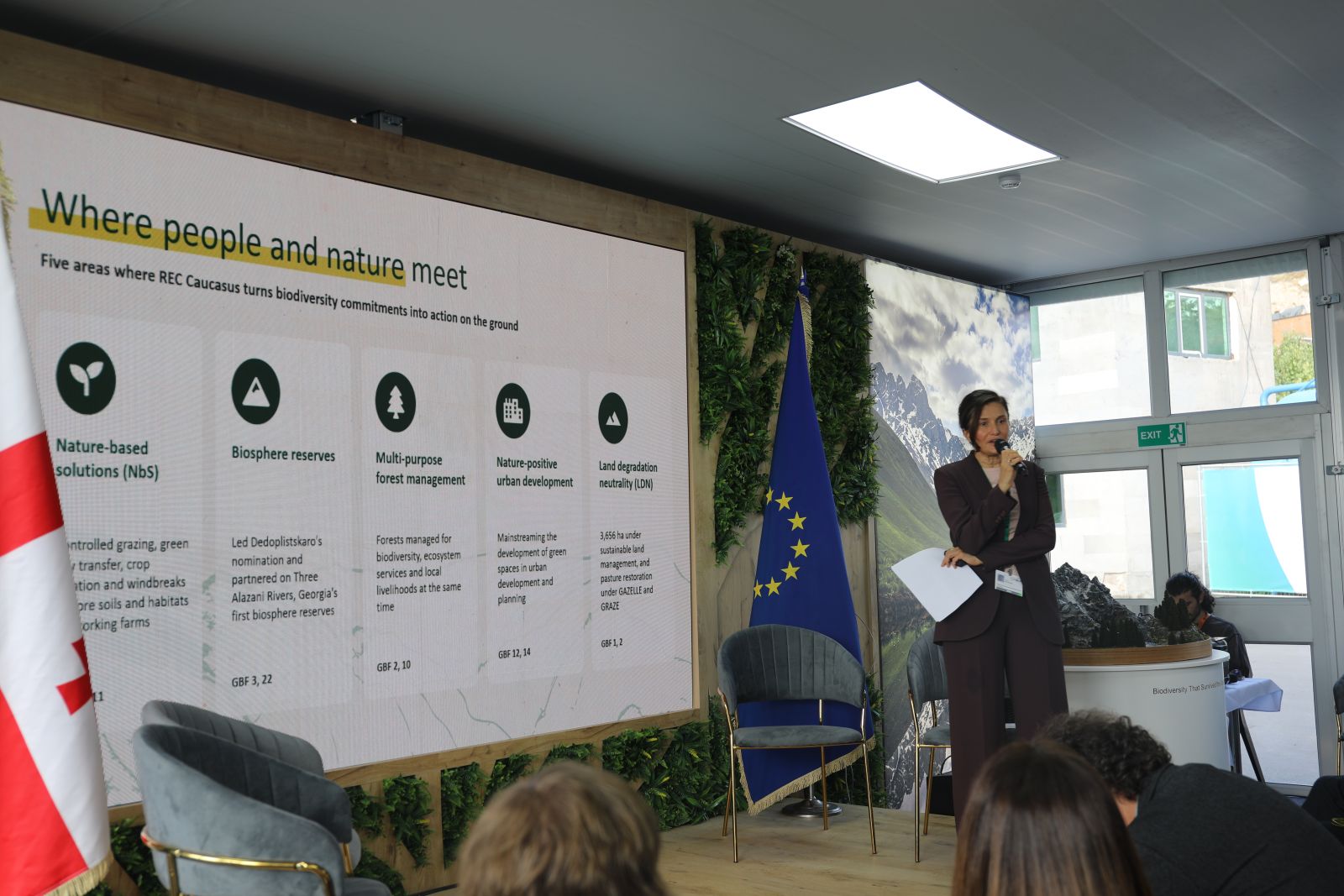
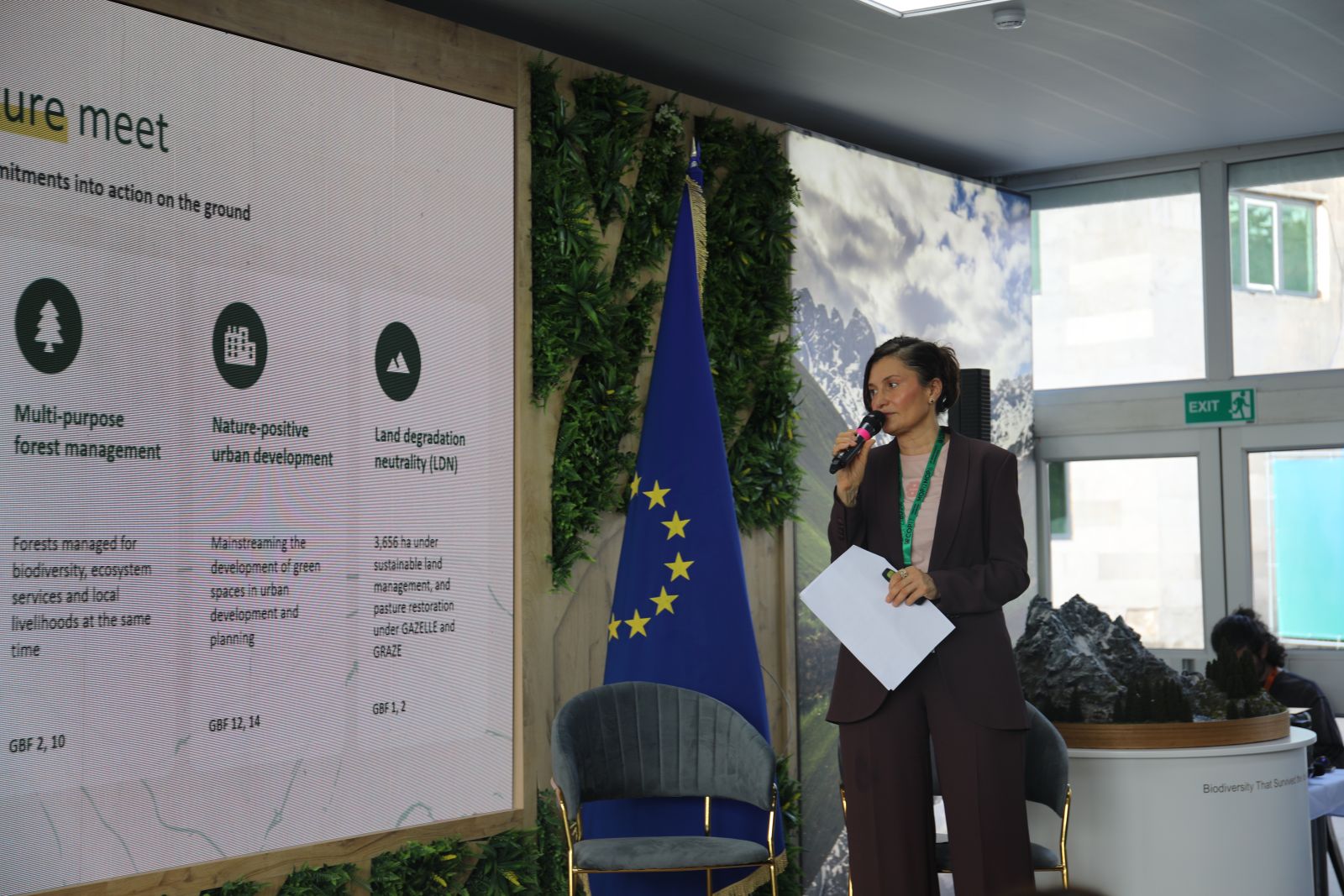
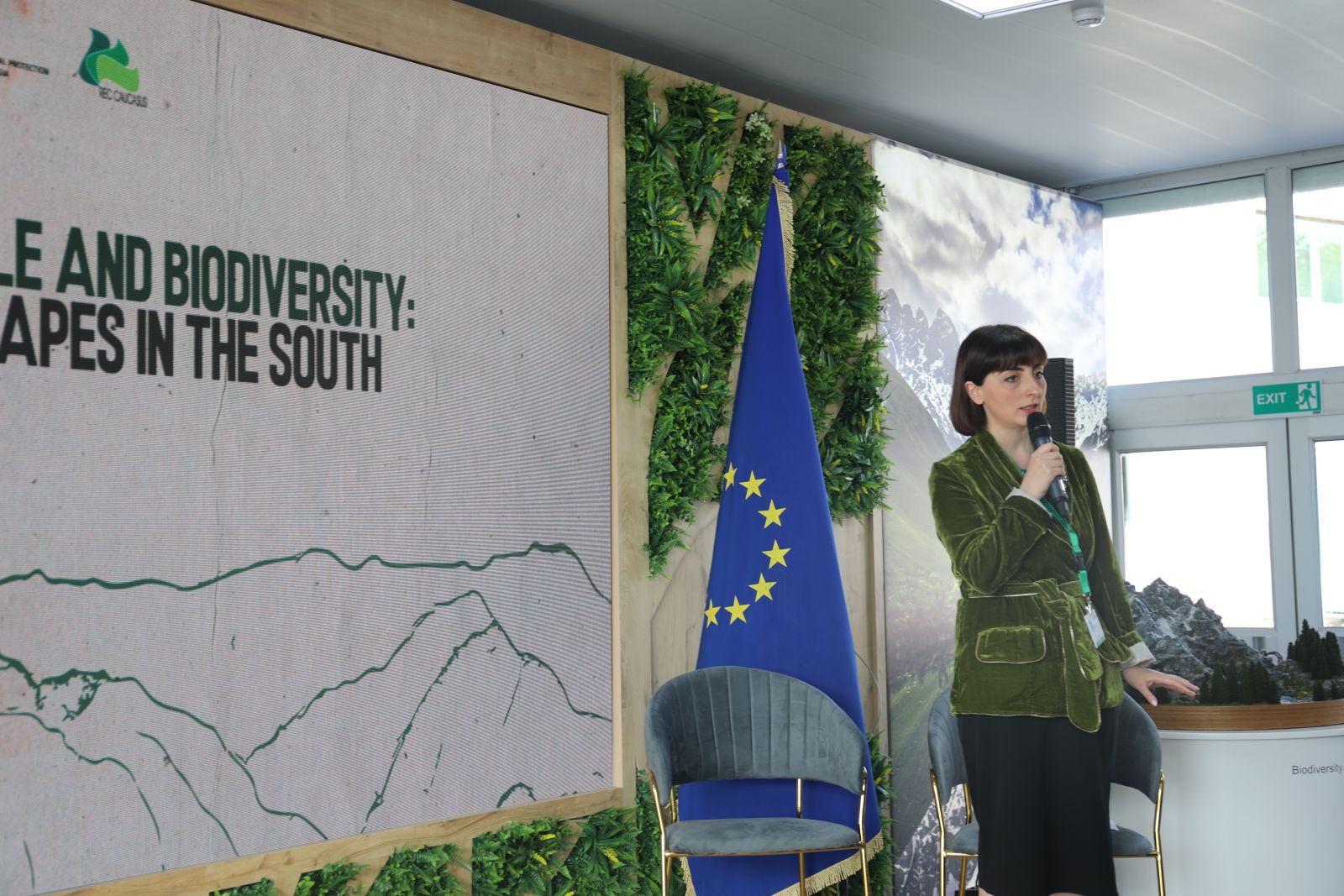
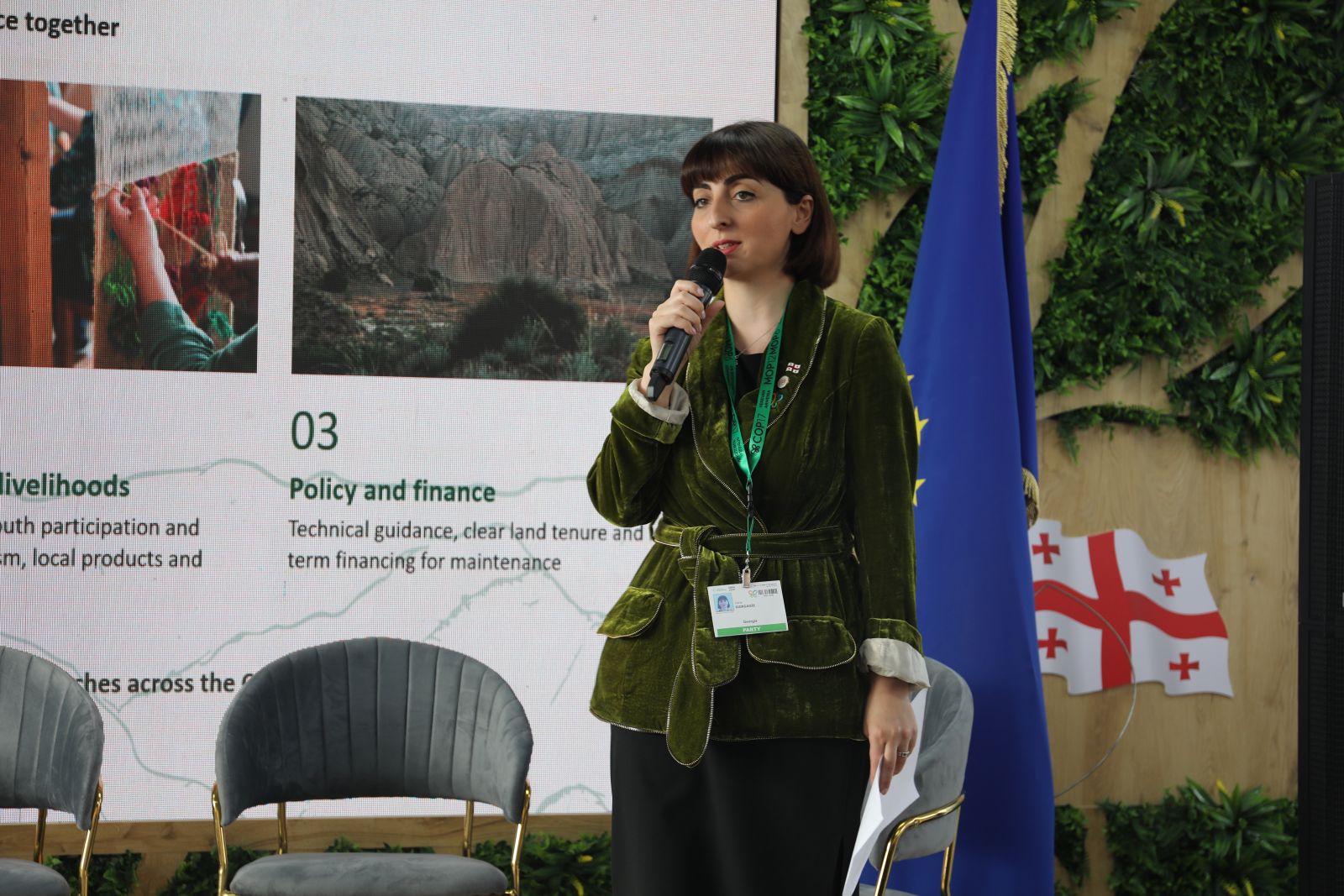
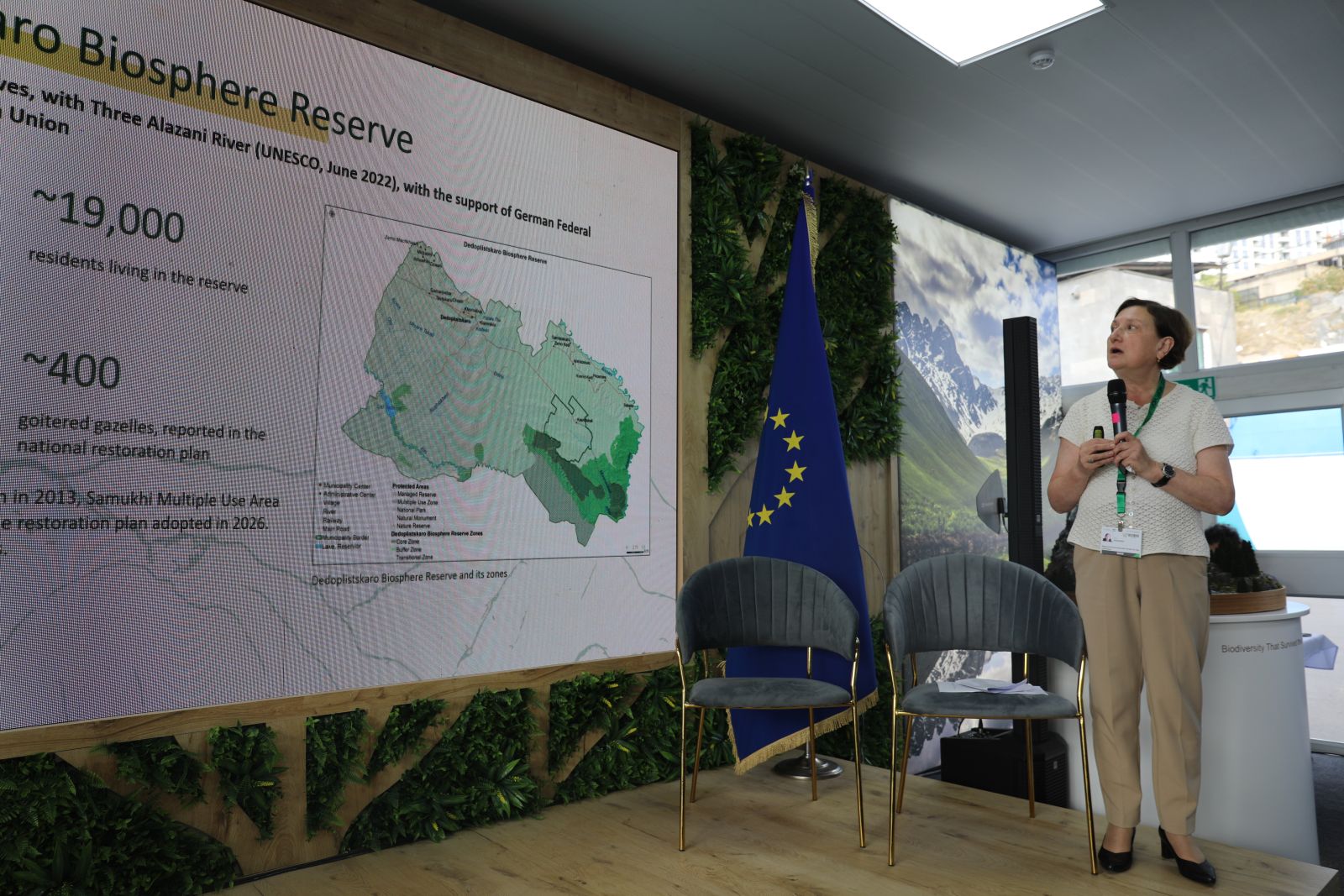
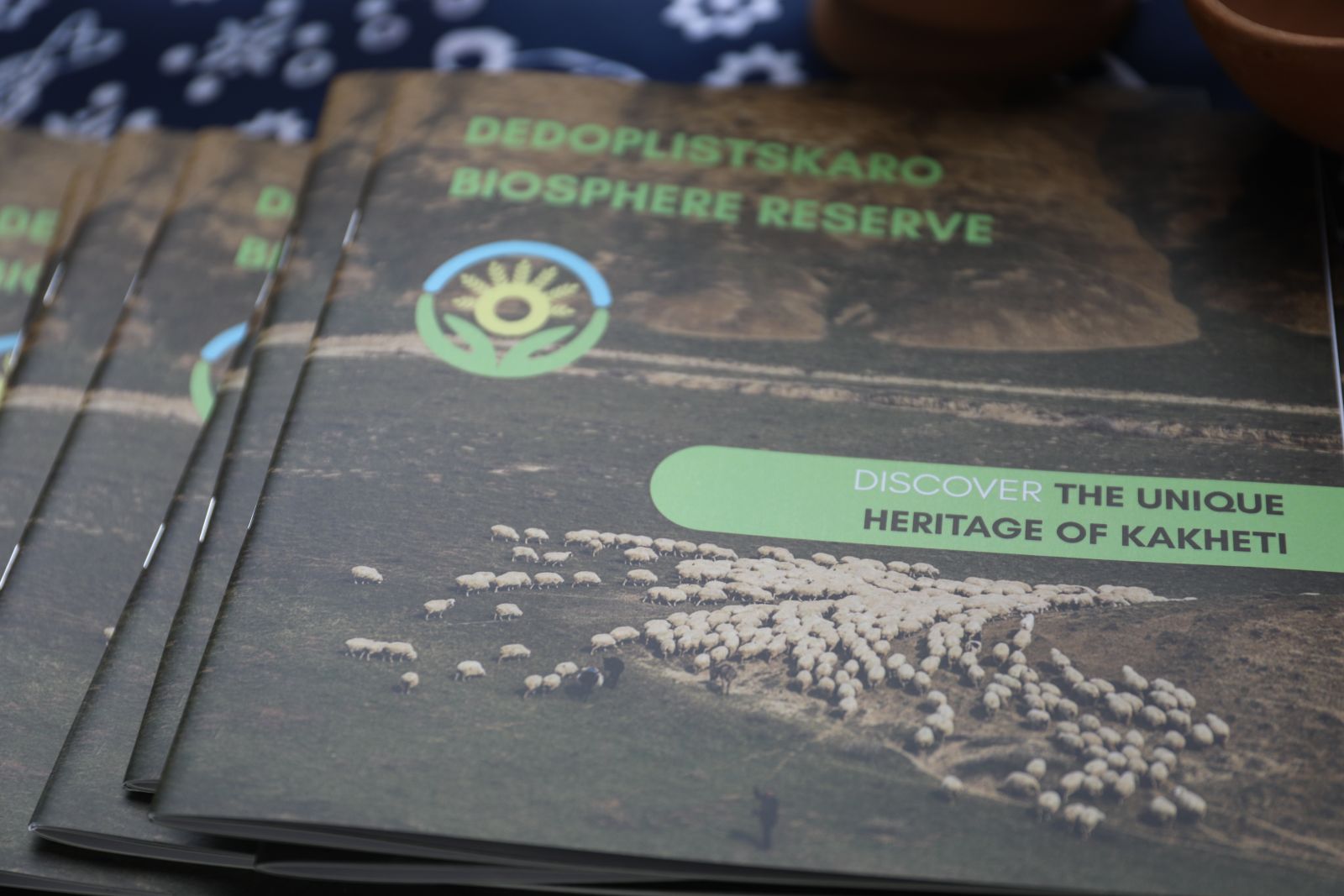
Opening the session, Ms. Lika Giorgadze, Head of the Biodiversity Policy Department at MEPA, highlighted the role of agrobiodiversity and biosphere reserves in Georgia's implementation of the Kunming-Montreal Global Biodiversity Framework. Ms. Sophiko Akhobadze, Executive Director of REC Caucasus, set the scene. She outlined the organisation's work on nature-based solutions, biosphere reserves, multi-purpose forest management, urban biodiversity and land degradation neutrality, and recalled its role in the nomination of Dedoplistskaro and Three Alazani Rivers. UNESCO recognised both as Georgia's first biosphere reserves in 2022.
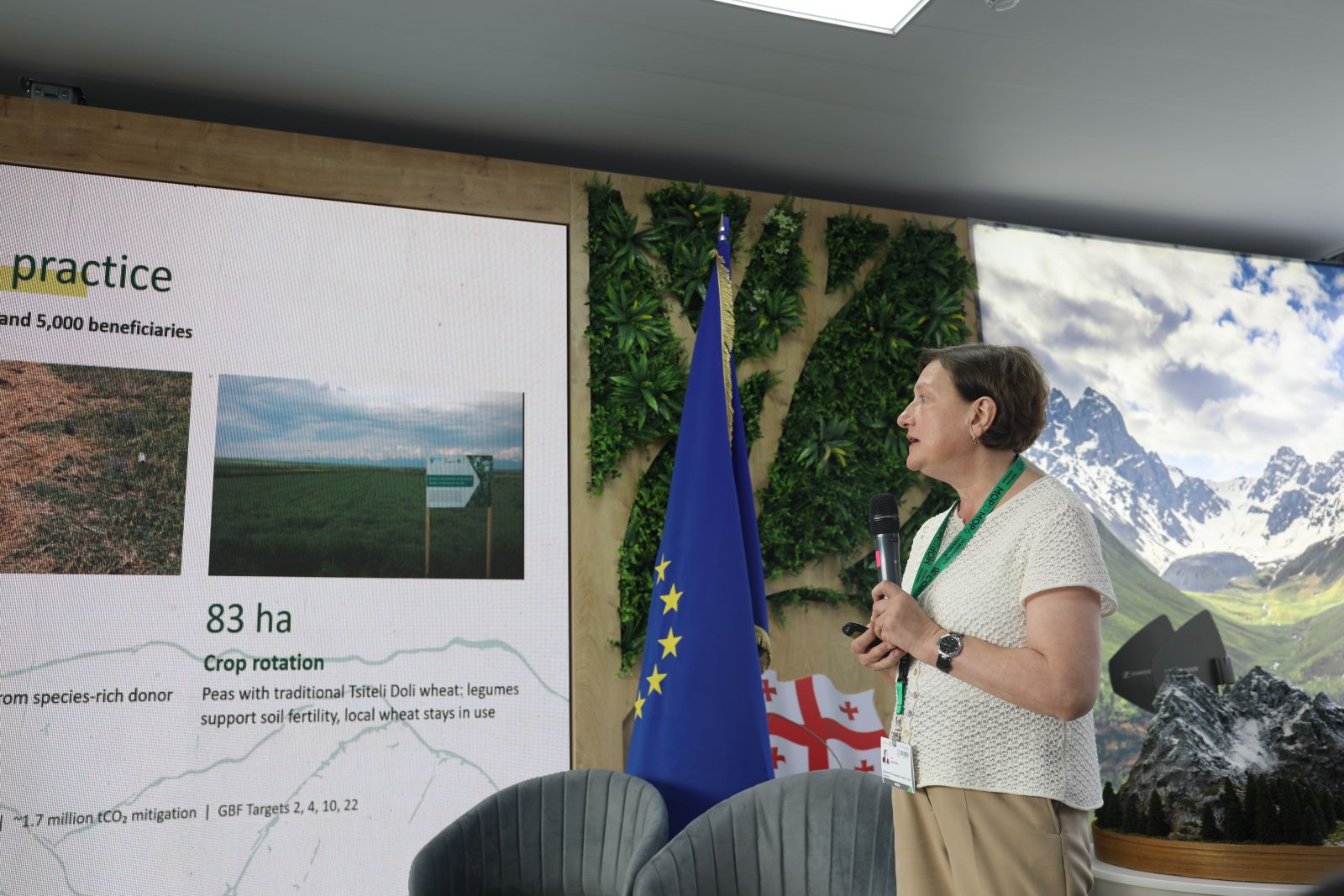
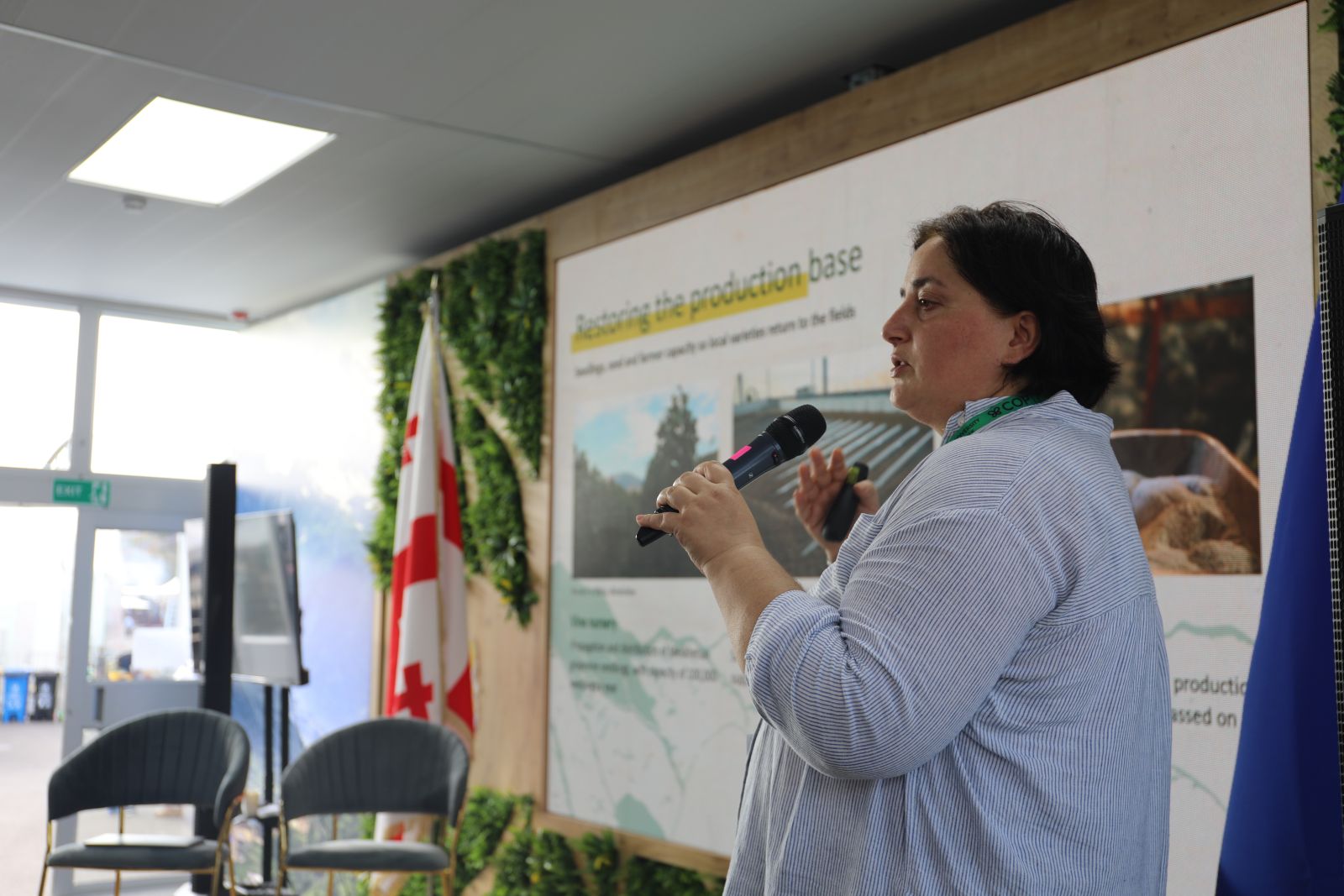
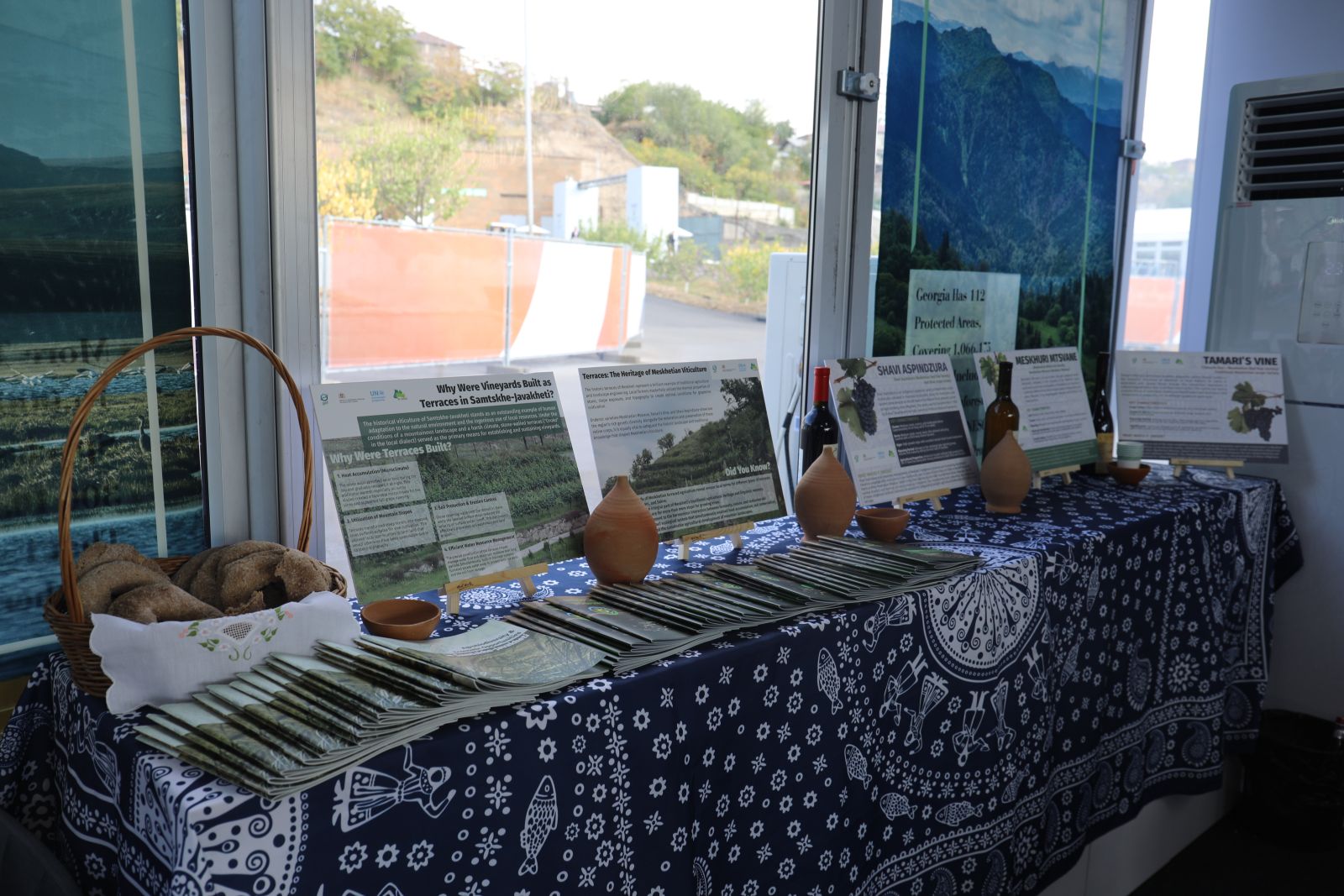
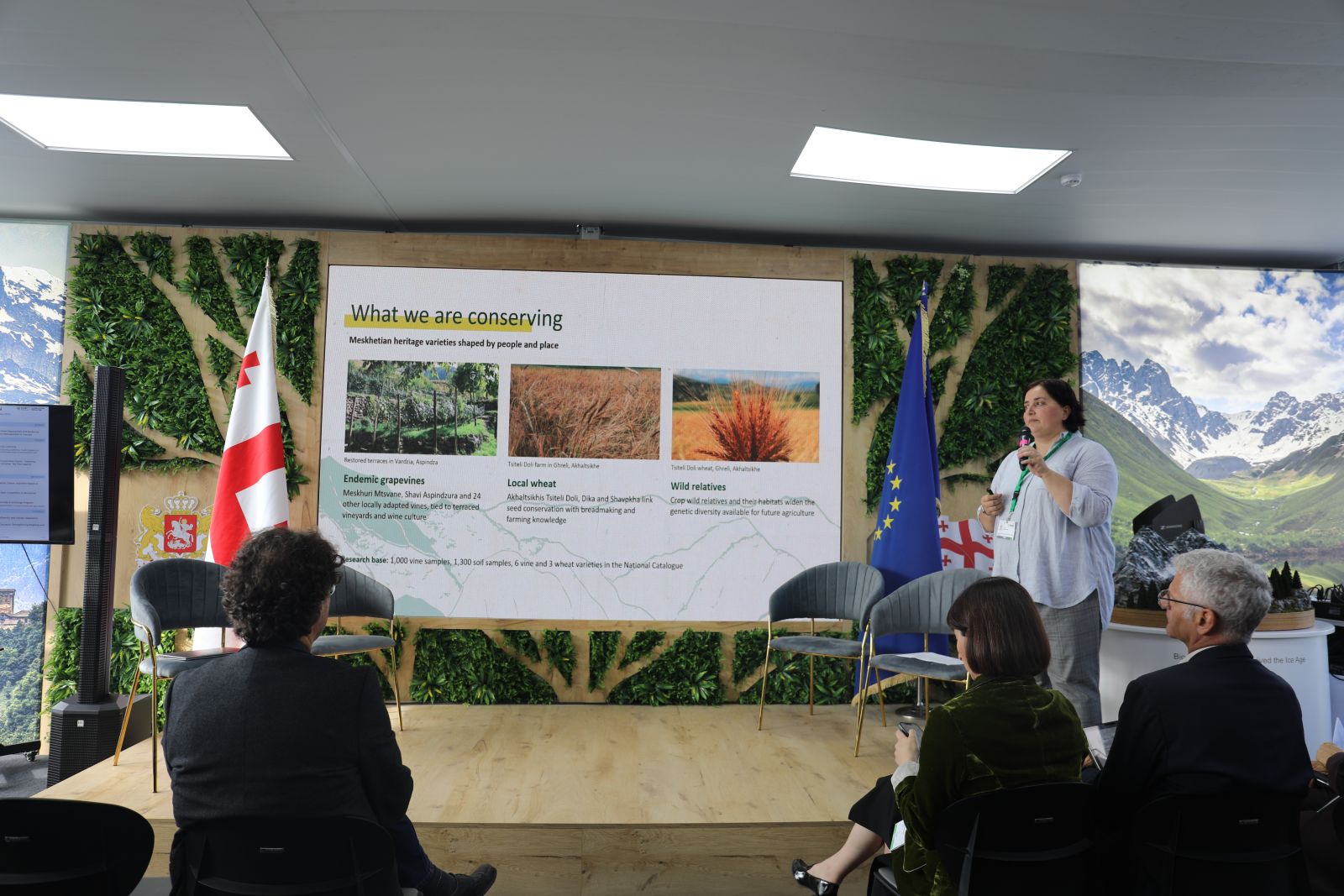
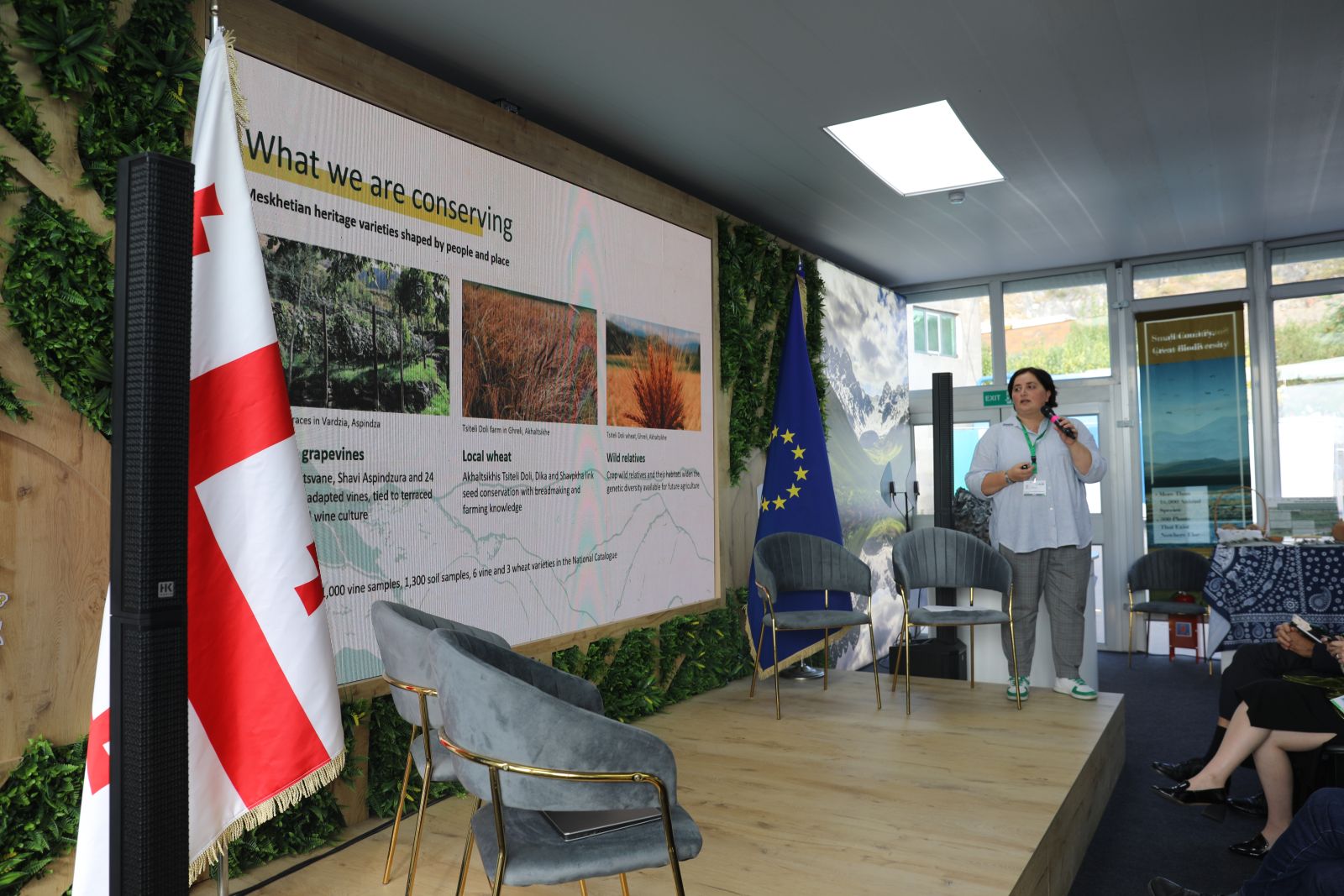
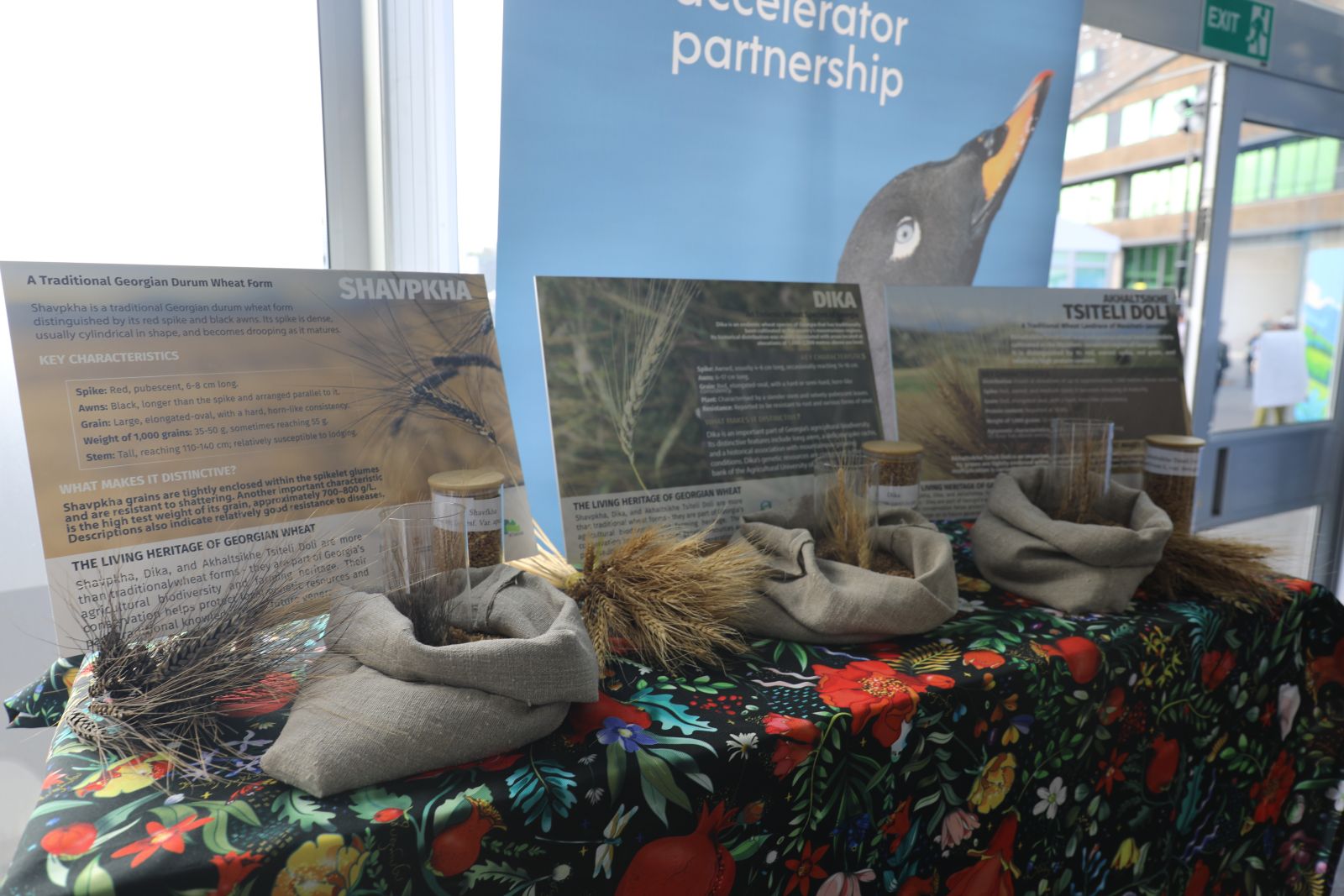
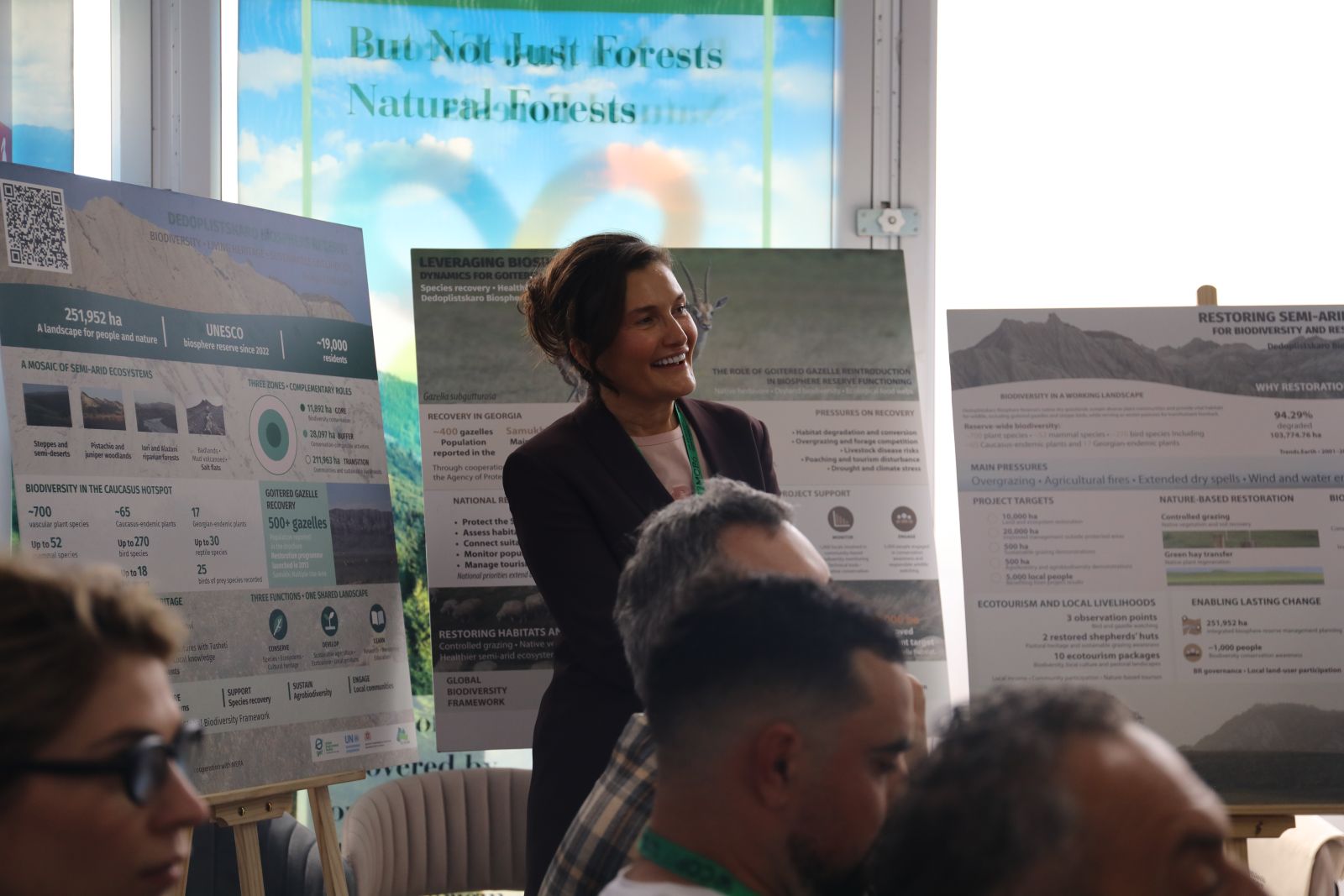
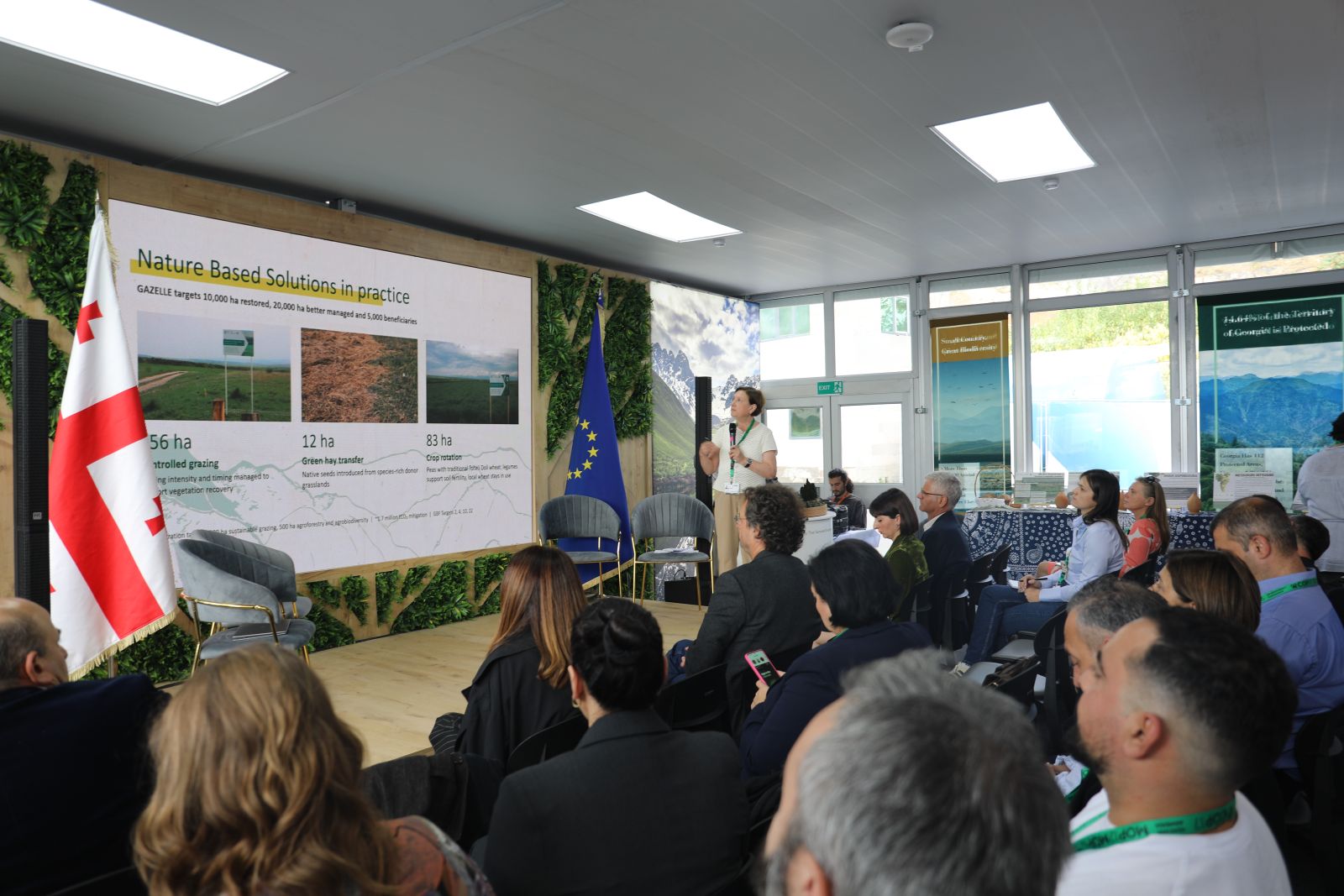
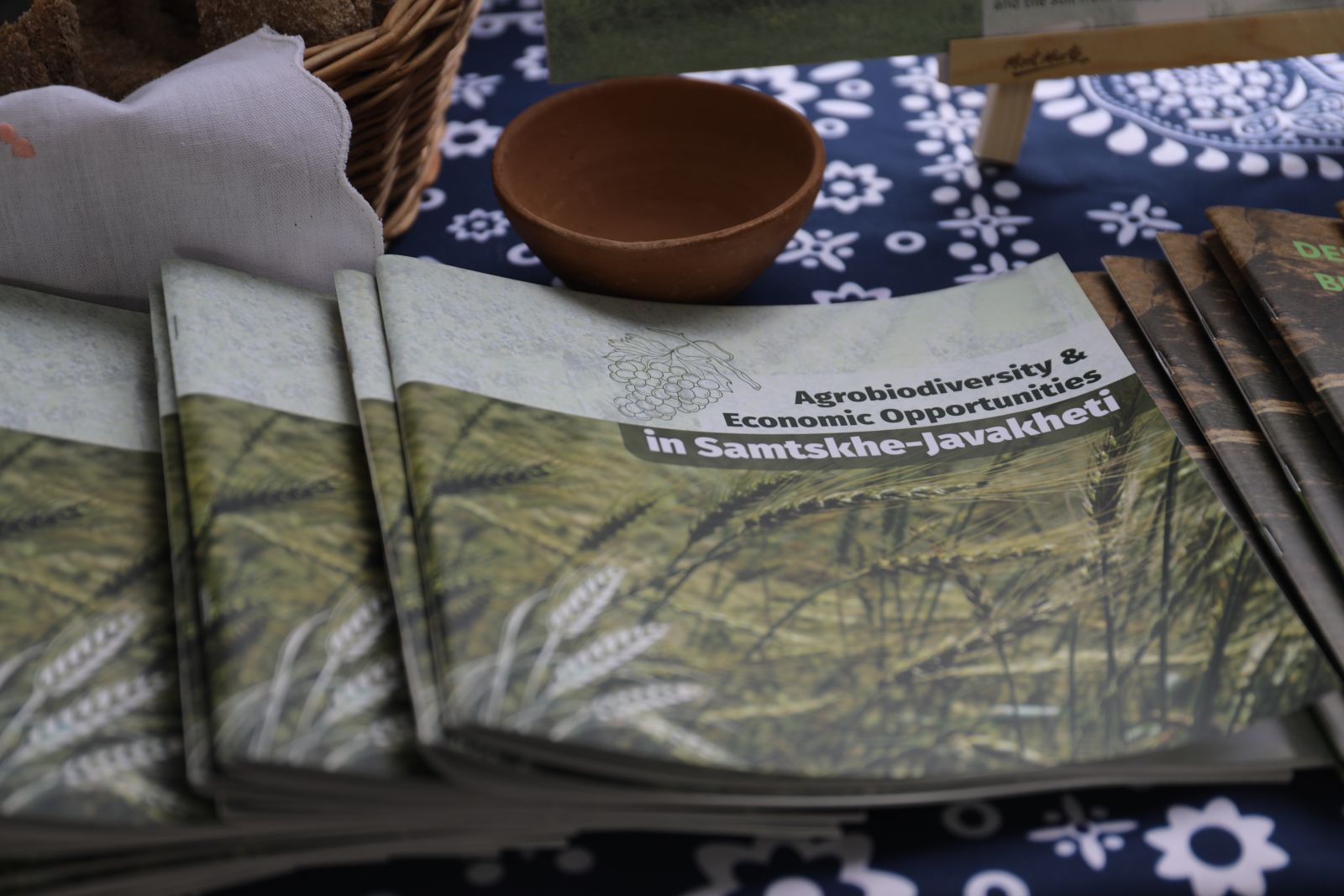
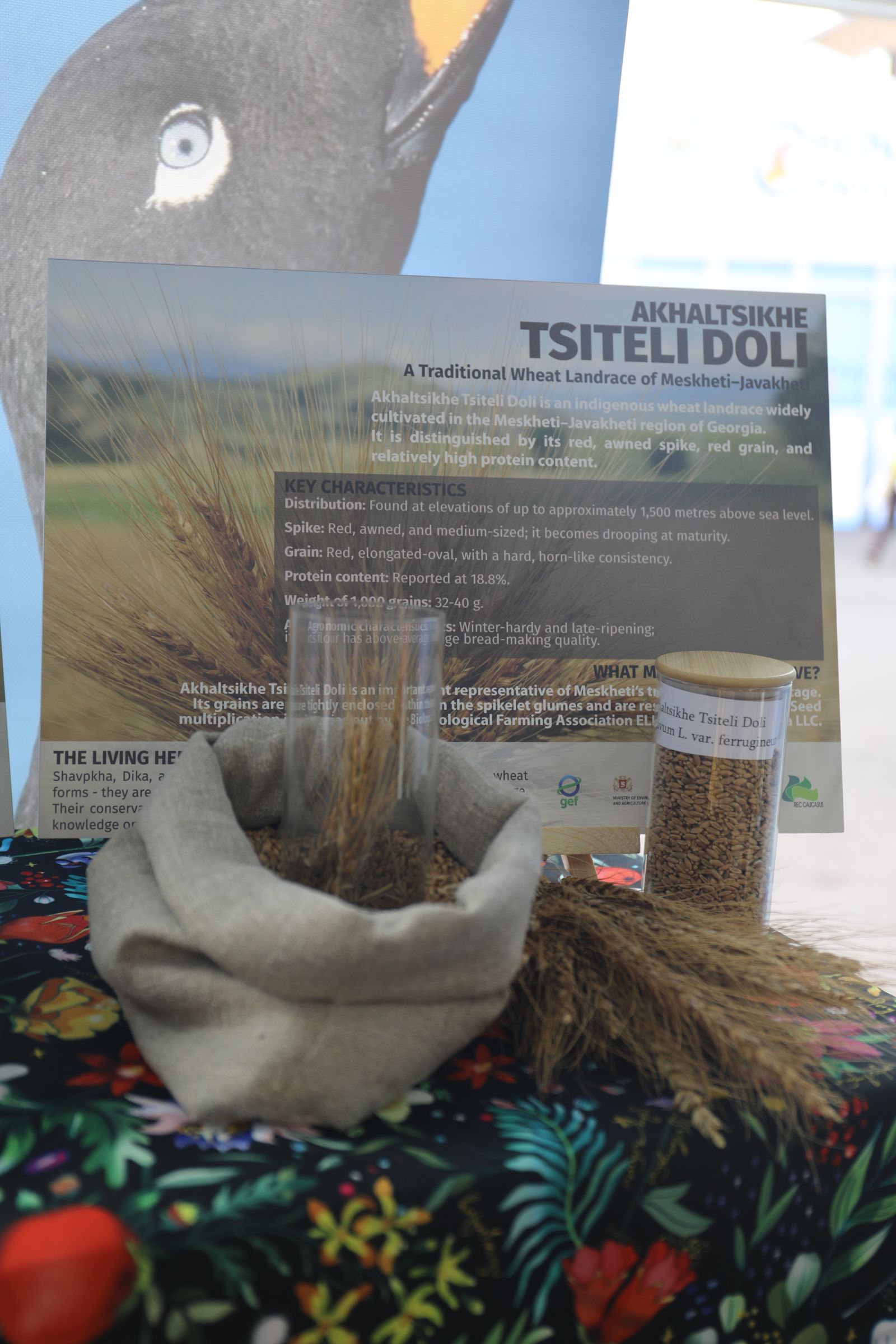
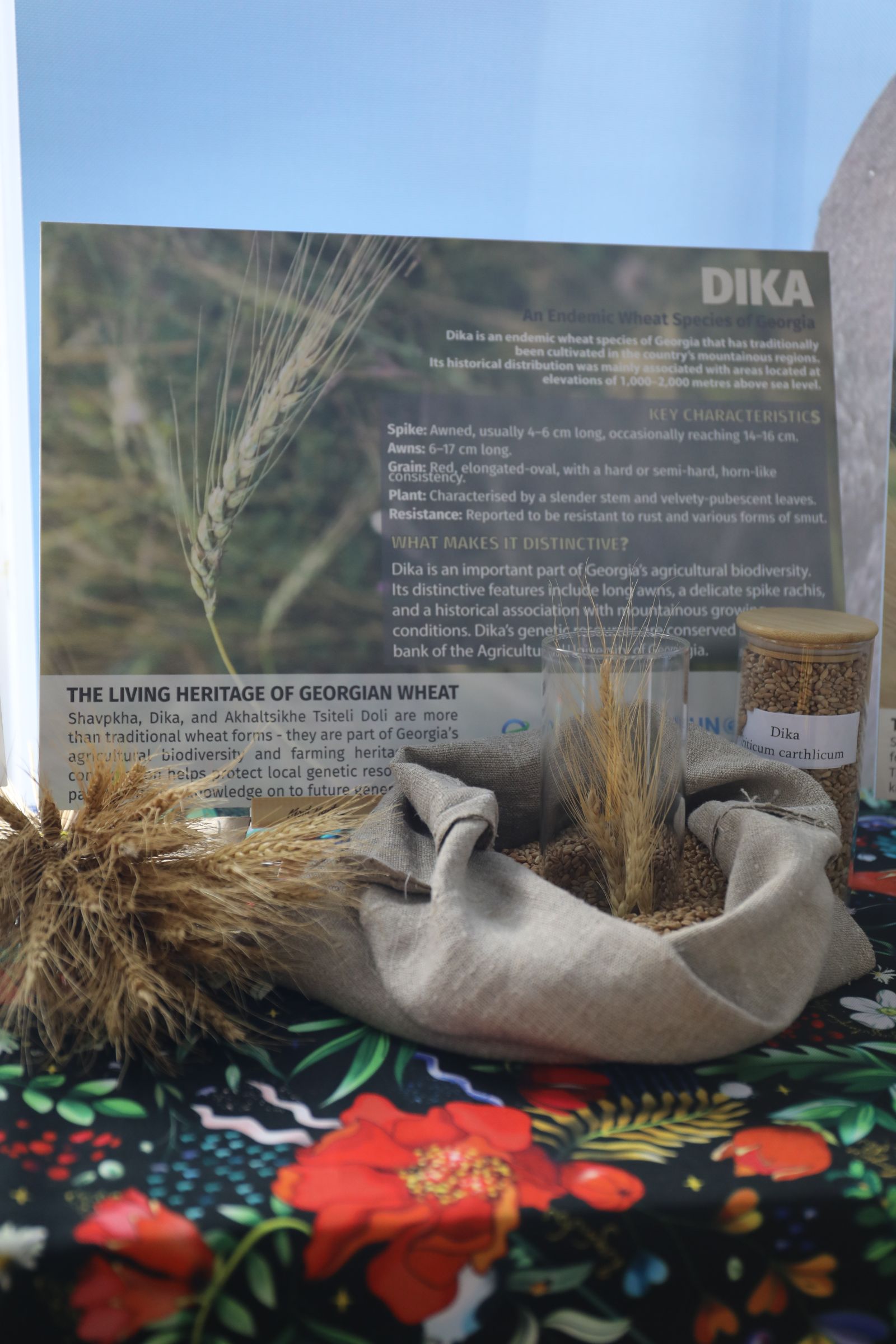
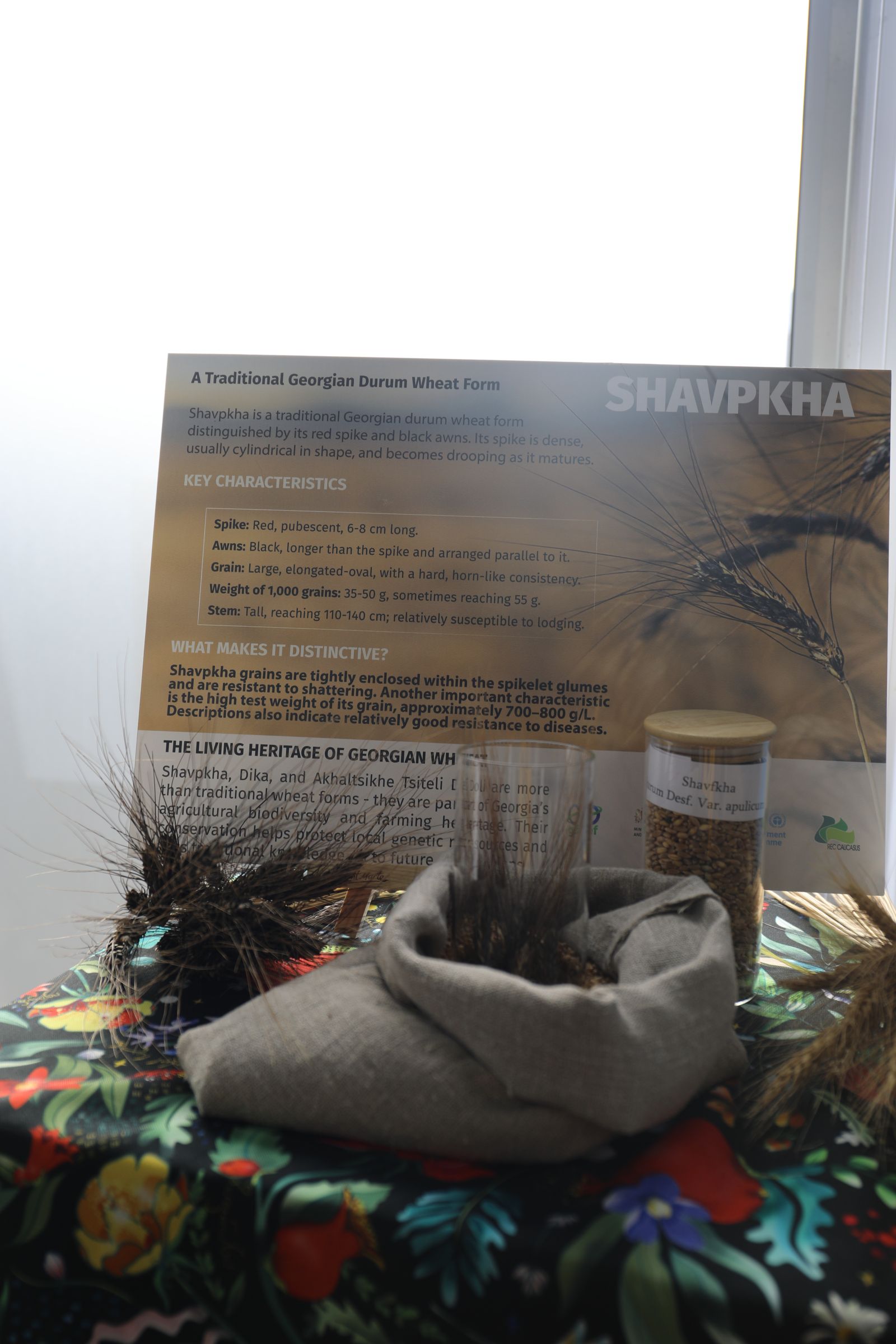
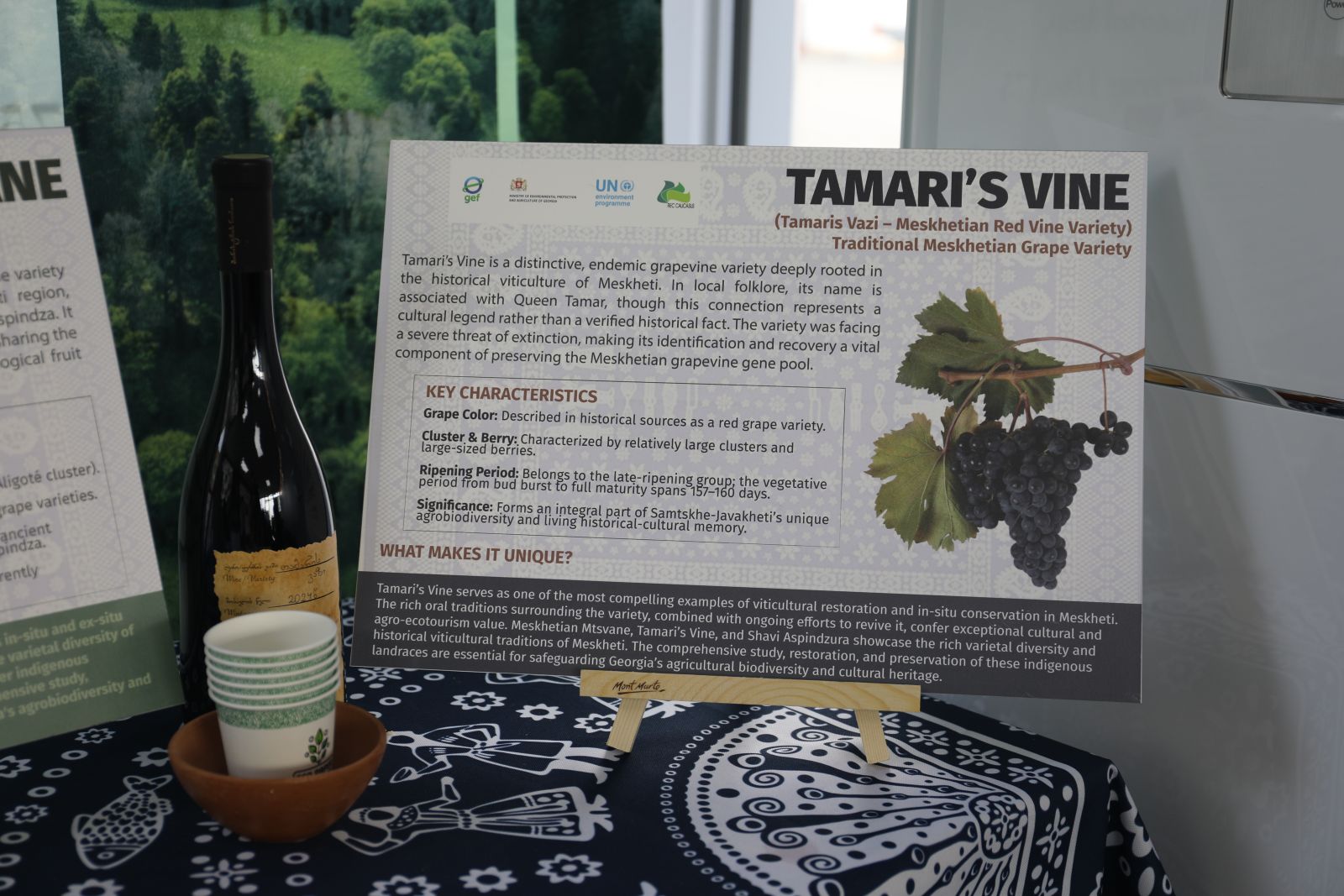
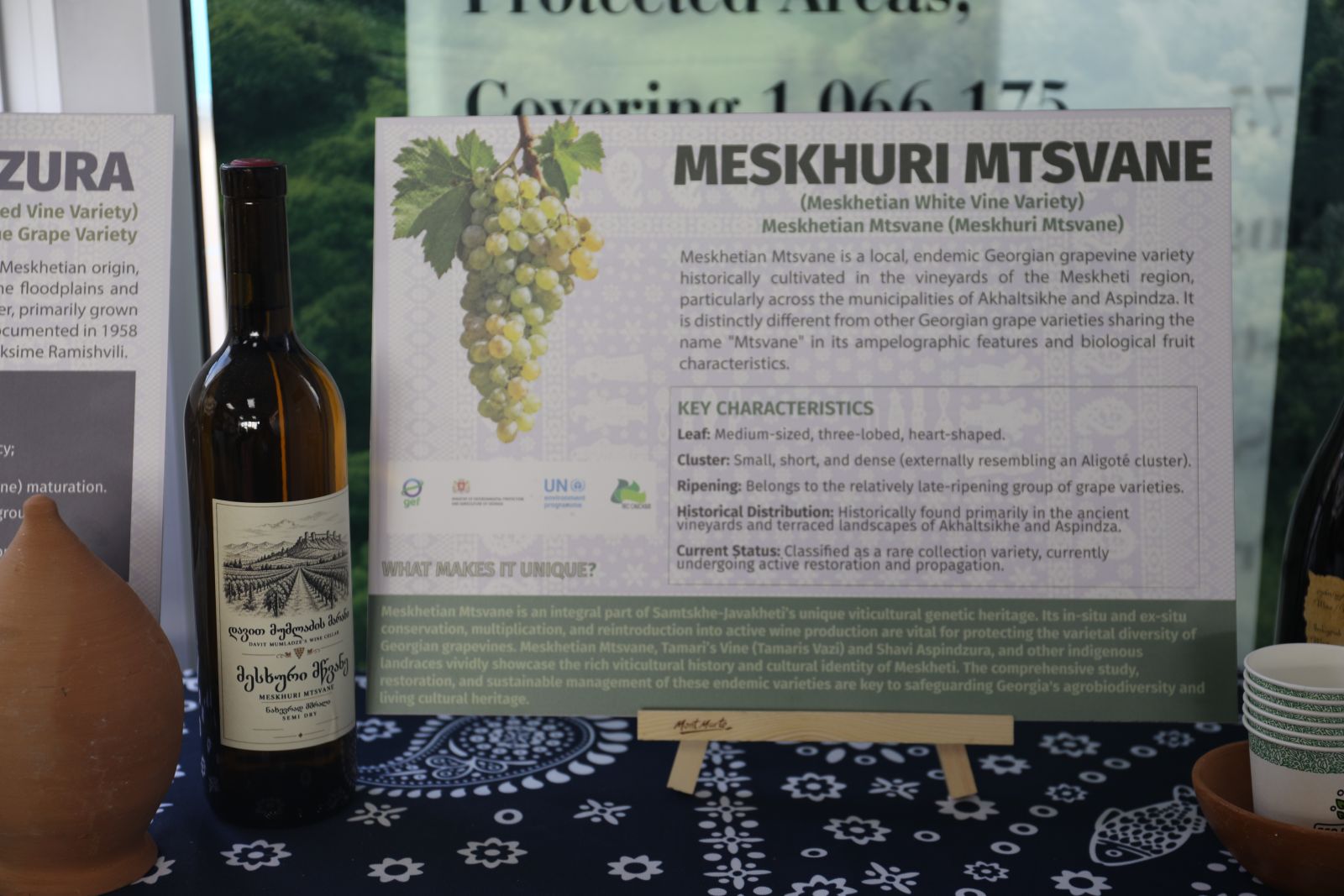
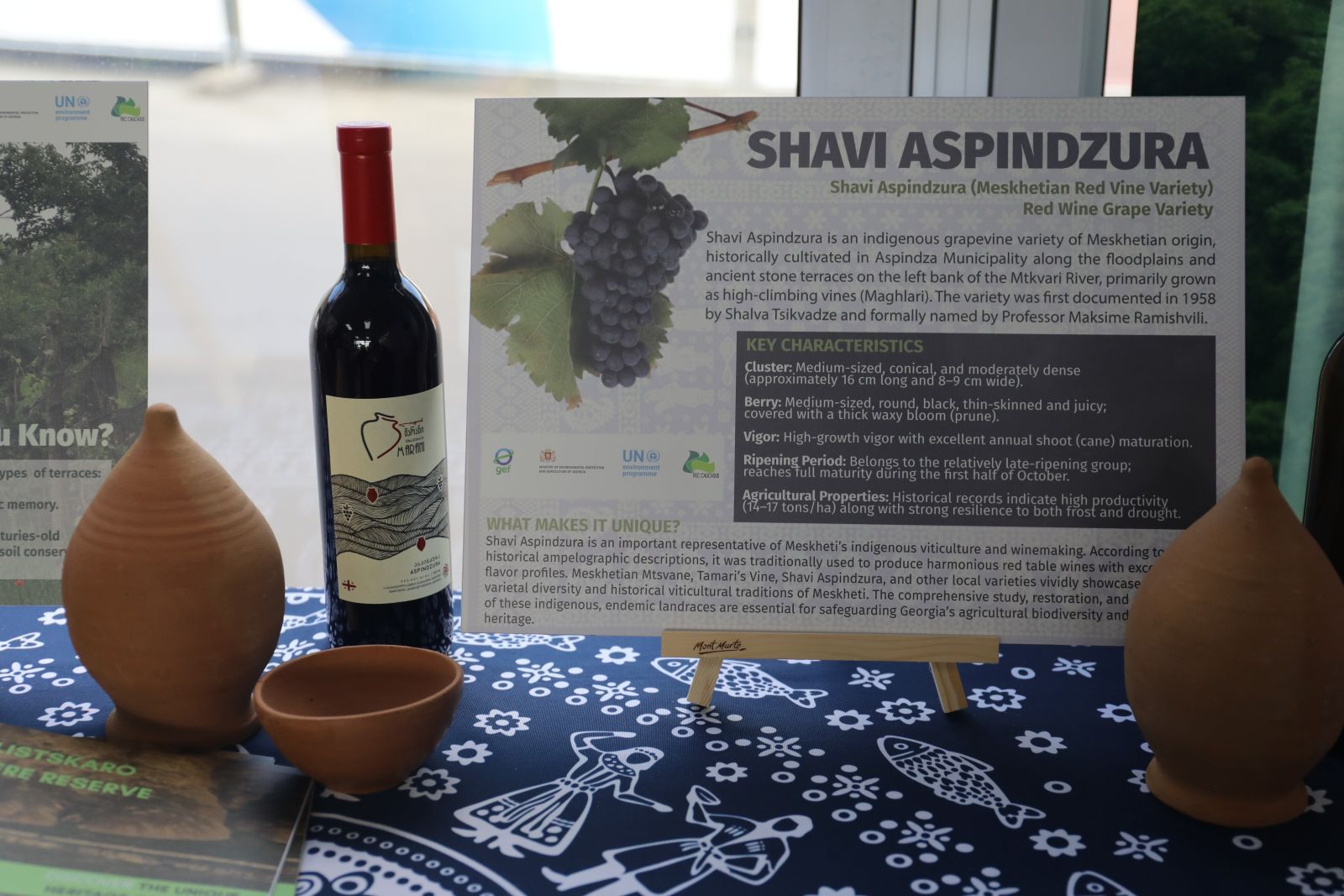
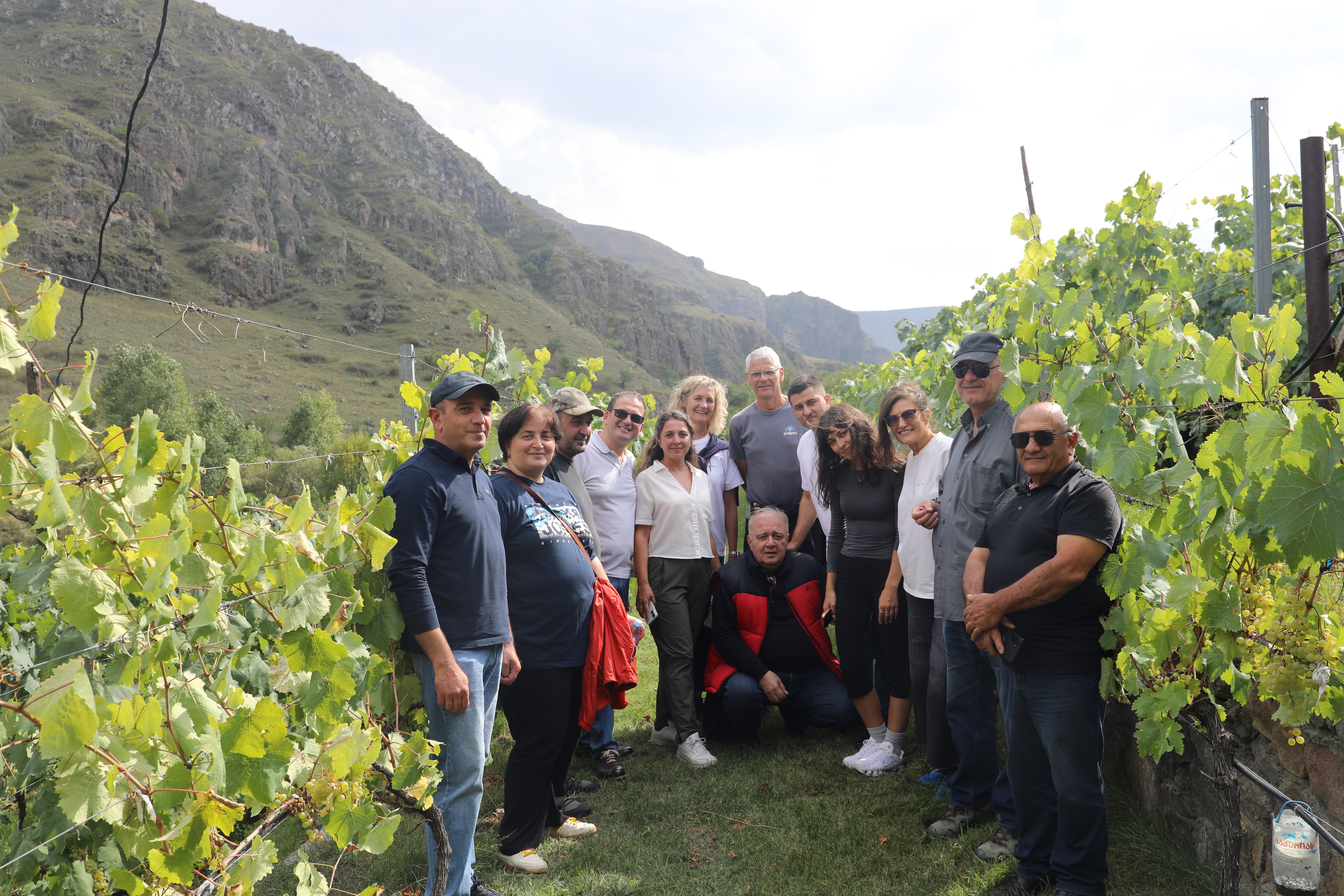
REC Caucasus presented efforts to restore aboriginal Meskhetian grapevine and wheat varieties in Samtskhe-Javakheti. Six vine and three wheat varieties have now been registered in the National Catalogue, and vine nurseries, seed banks and agritourism are linking crop diversity with local incomes. Furthermore, REC Caucasus presented the GAZELLE project in Dedoplistskaro Biosphere Reserve. Controlled grazing, green hay transfer and crop rotation with traditional wheat are being used to restore degraded semi-arid rangelands, towards a target of 10,000 hectares under restoration.
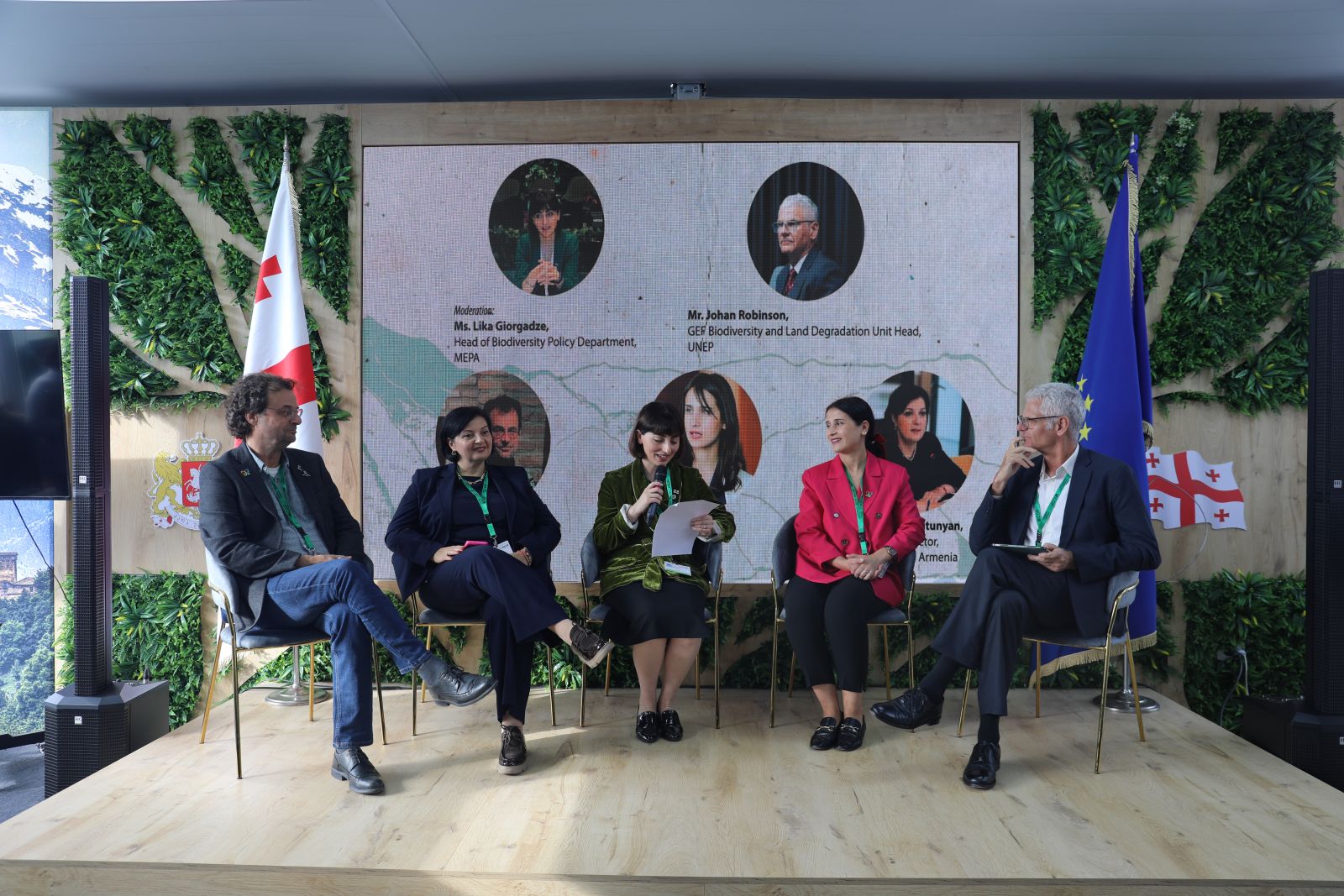
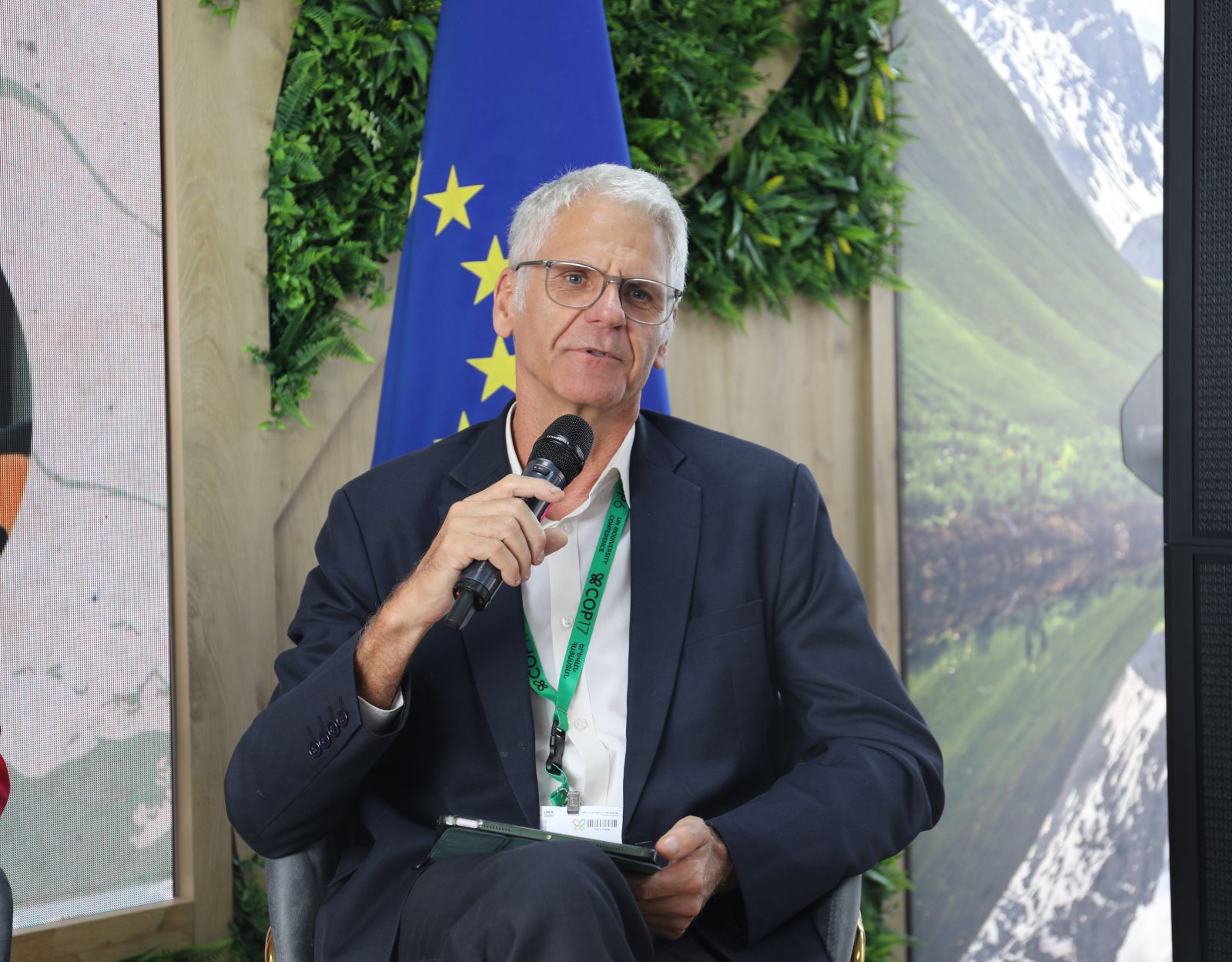
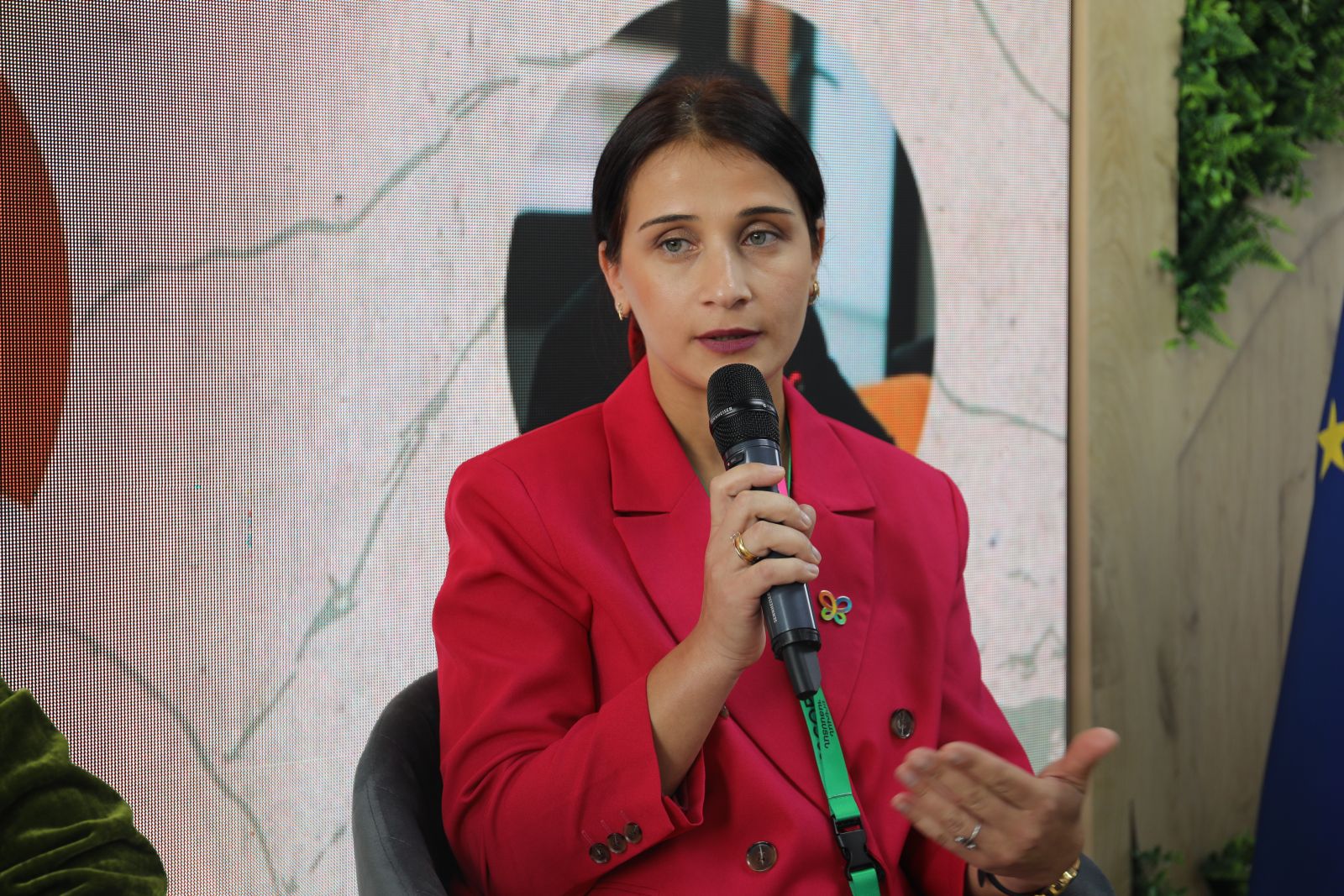
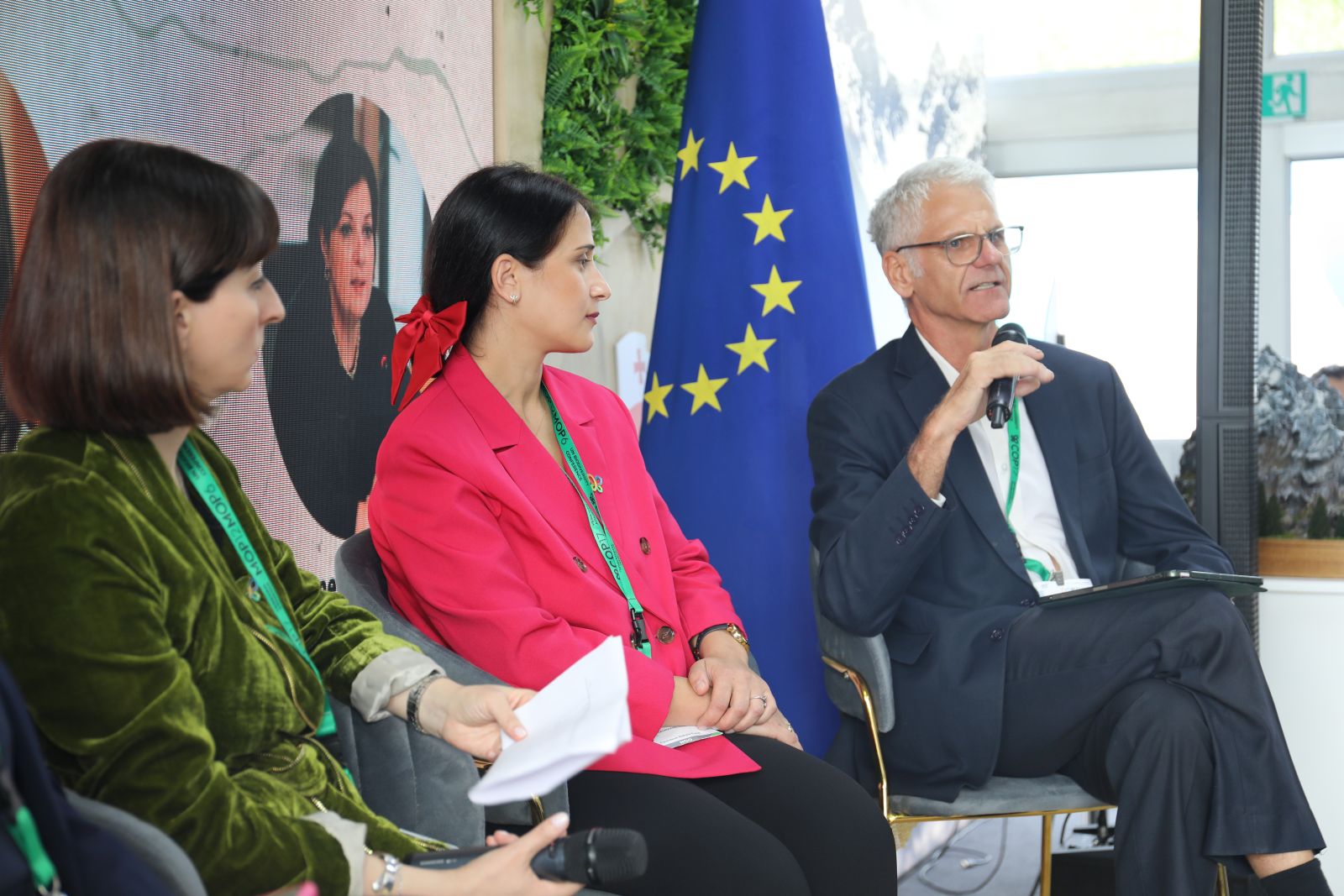
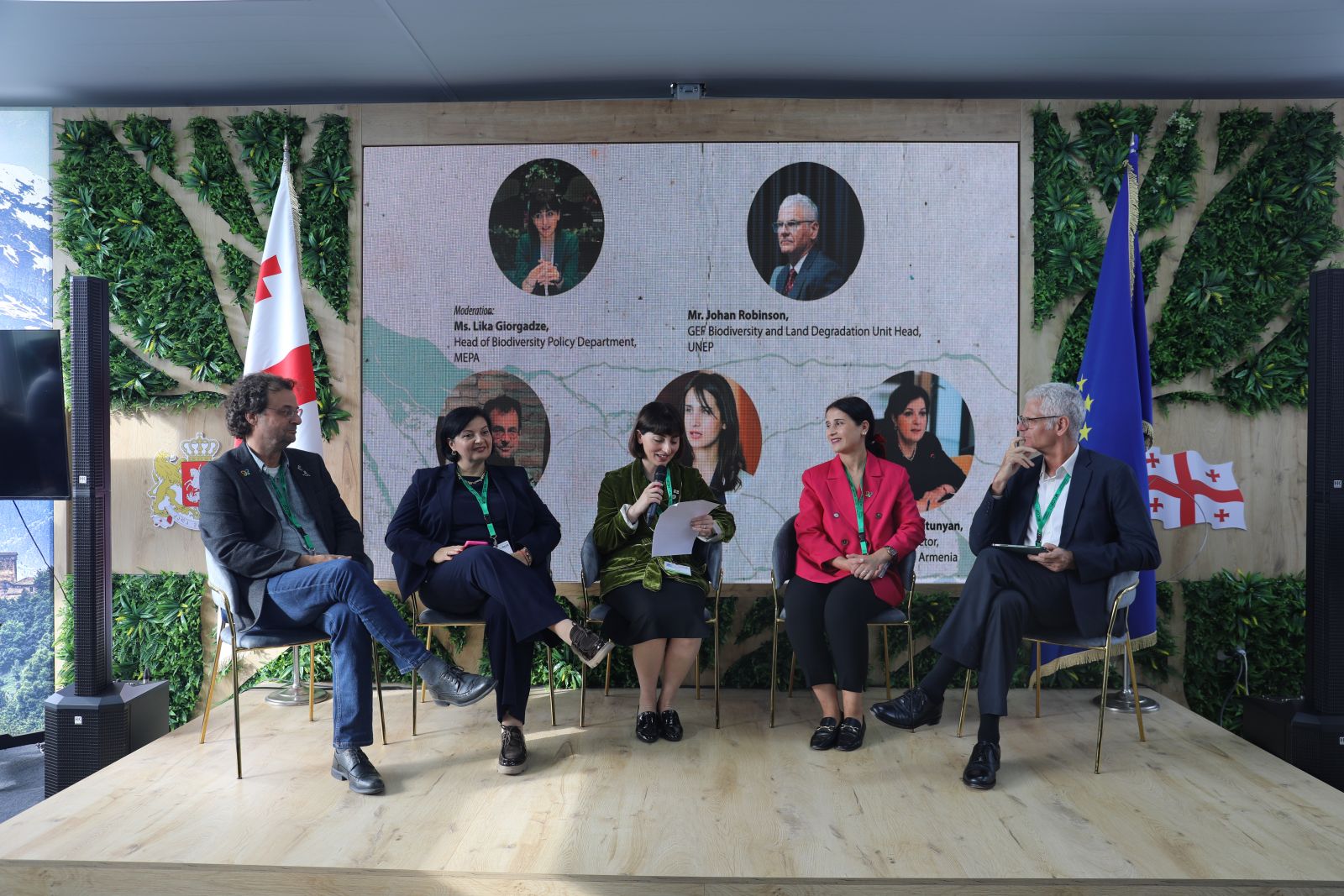
A panel discussion moderated by Ms. Giorgadze then explored how such approaches can move from local roots to regional action. Mr. Johan Robinson, Head of the GEF Biodiversity and Land Degradation Unit at UNEP, highlighted UNEP's active role in supporting countries to achieve the targets of the Global Biodiversity Framework, and the measurable impact that GEF-funded projects are having on the ground.
"For Georgia, conserving agricultural biodiversity serves a dual purpose, importantly, it addresses the needs the local populations need for sustaining livelihoods, and furthermore, with this whole of society approach, we move towards achieving the targets Georgia has taken on".
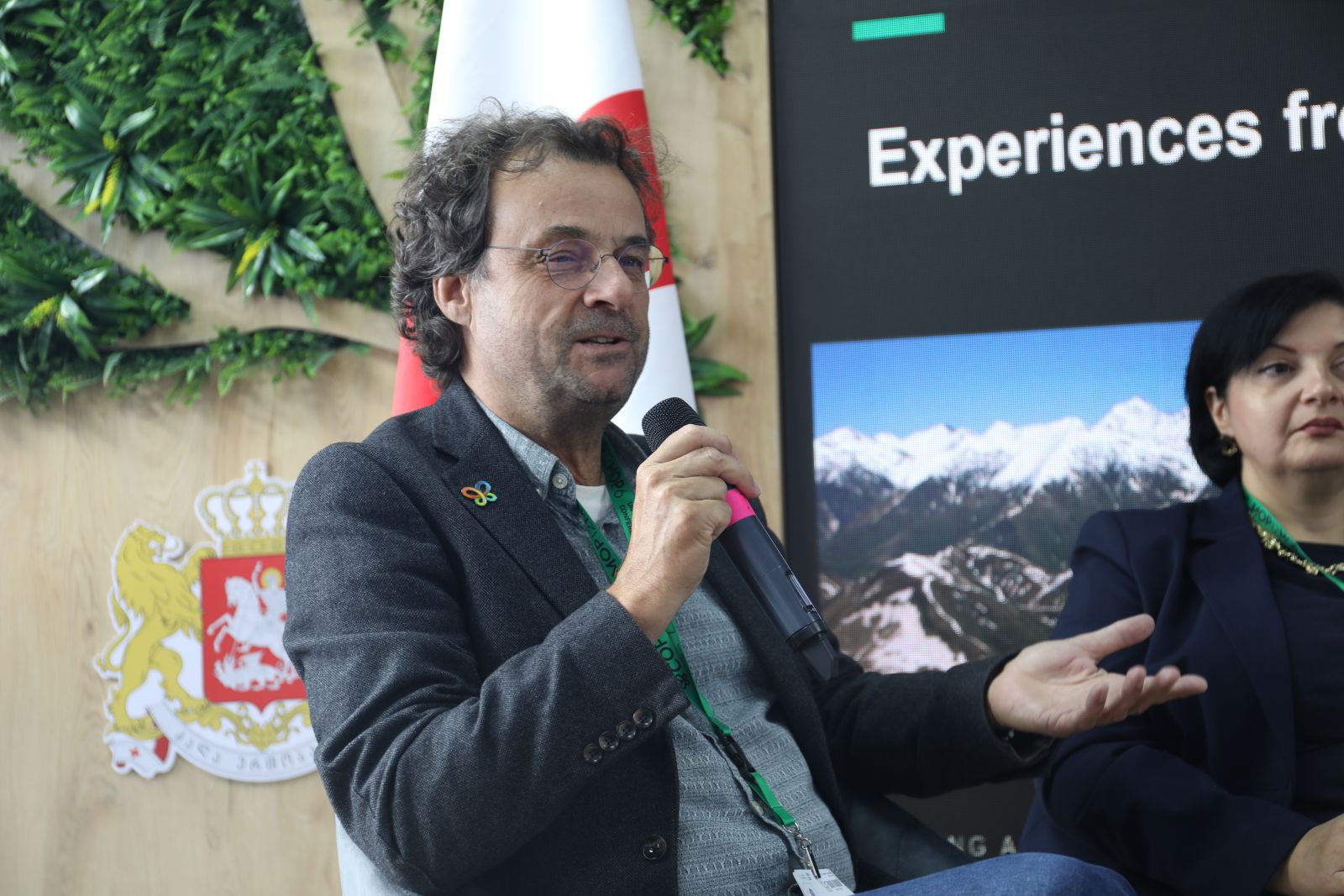
Mr. Christian Goenner of GIZ underlined the long-standing support of GIZ and the German Government for biodiversity conservation in Georgia.
"Georgia has about 98 per cent of its forests as natural forest, with more than 130 tree species found in the inventory," he said. "This gives a fantastic precondition for biodiversity. But it needs restoration."
Ms. Lia Kalmakhelidze of the Caucasus Nature Fund emphasised the Fund's role in sustaining such initiatives at the local level.
"For long-term successful conservation, it is important to have a long-term partner in financing. Caucasus Nature Fund provides long-term, sustainable and predictable financing for protected area systems."
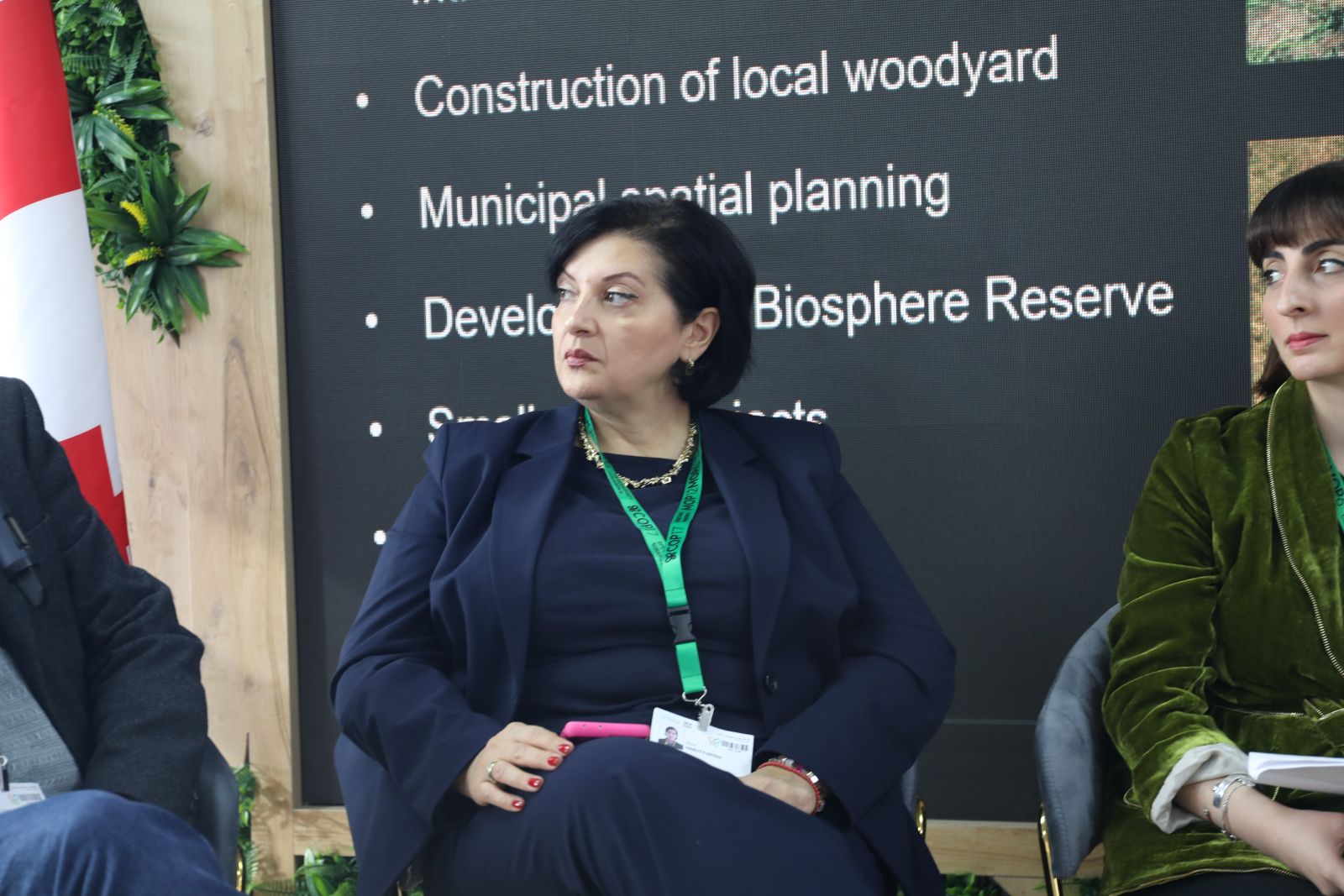
Ms. Nune Harutunyan, Executive Director of REC Caucasus Armenia, stressed the importance of grassroots action, including the participation of women, and the need for adequate financing to sustain it.
"Local communities, especially women, serve as the driving force for change, without their buy-in, meaningful behavior change is impossible, that is why REC Caucasus works with grasroots movements to establish long standing practices which drive sustainable, nature-driven development".
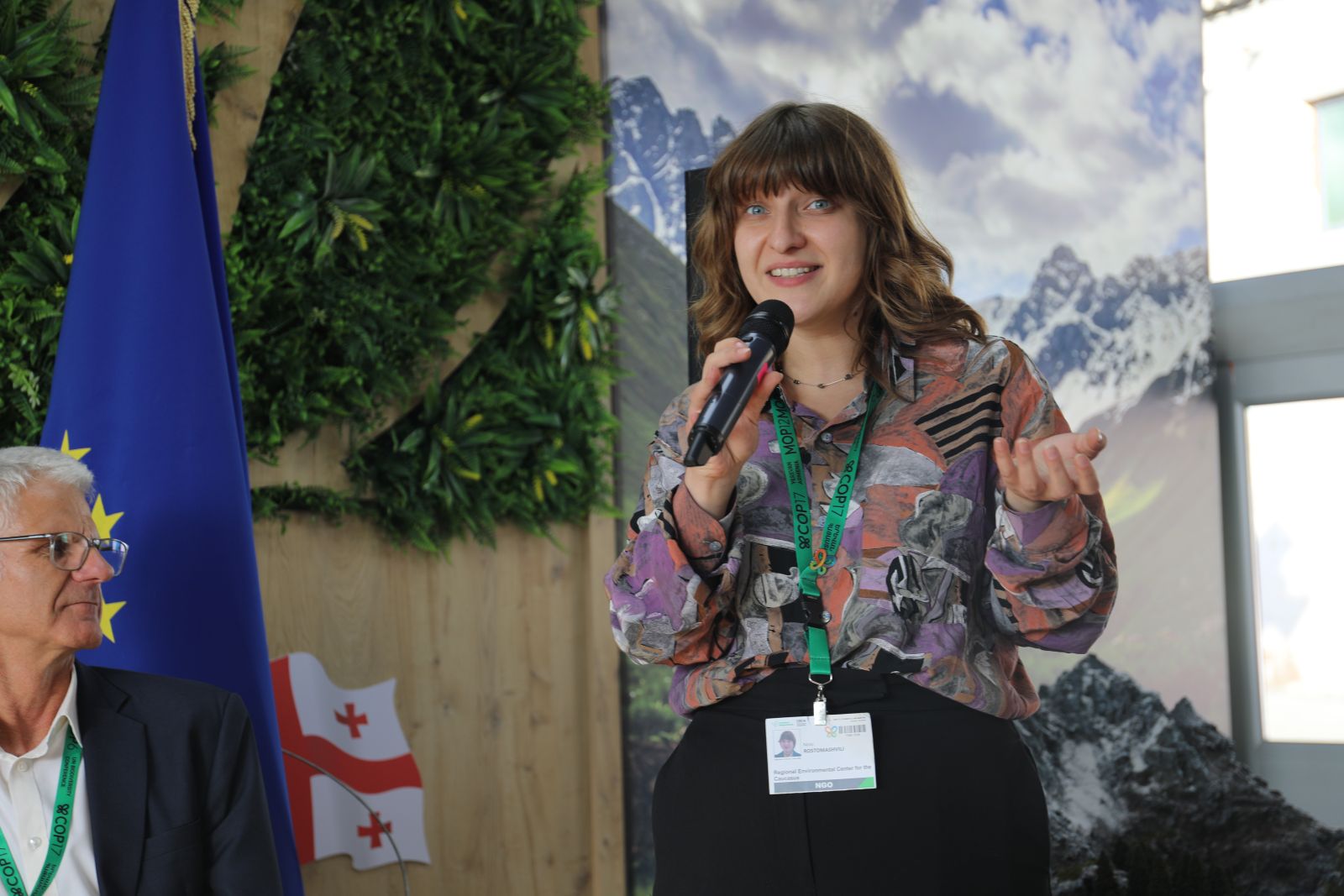
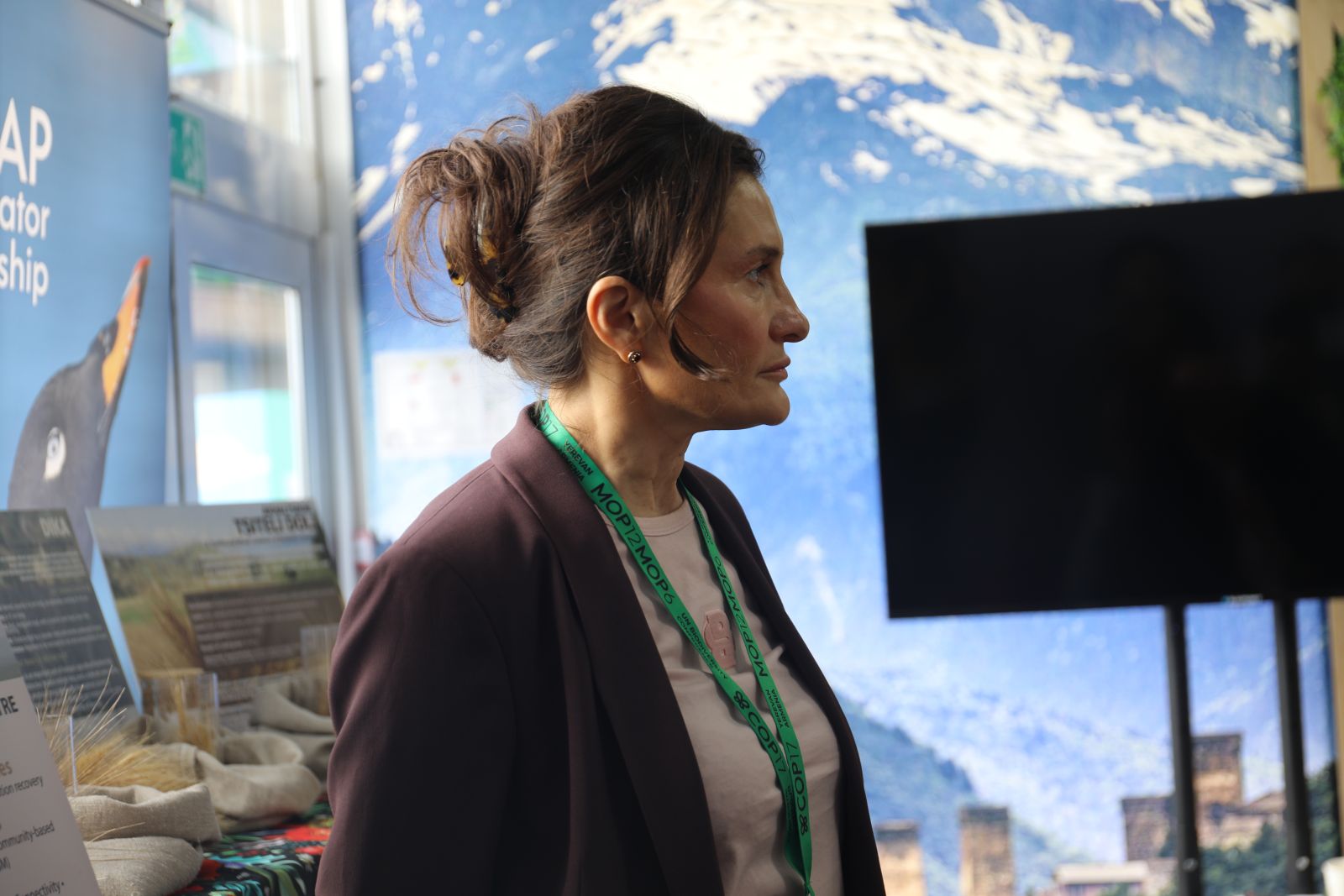
In her closing remarks, Ms. Nino Rostomashvili, Sustainable Development Programme Lead at REC Caucasus, noted that conservation endures when it also sustains livelihoods, and the models presented are ready to be replicated across the Caucasus, with the sustained partnerships, with policy and finance support.