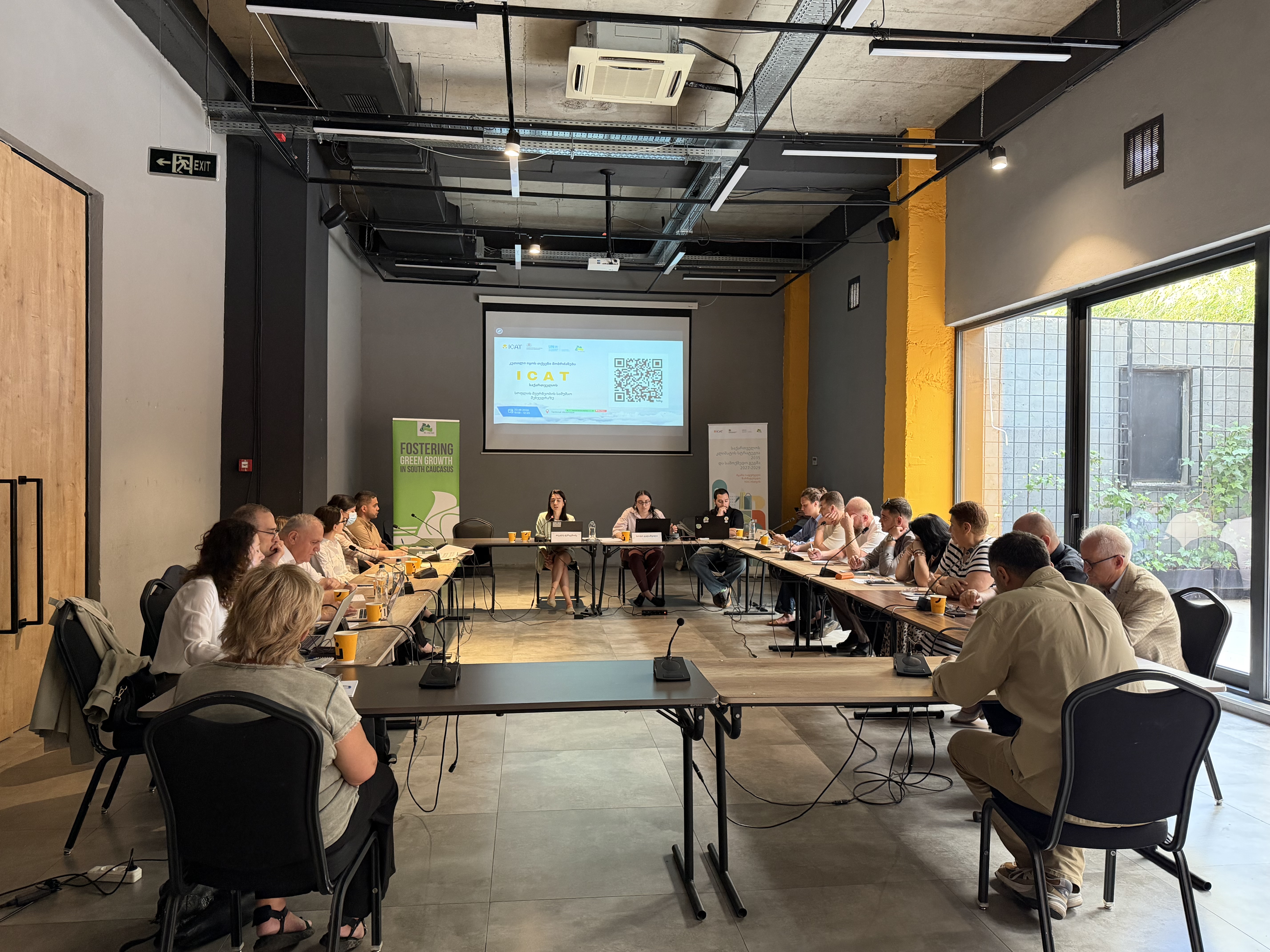
ICAT Georgia Holds First Buildings Sector Working Group Meeting
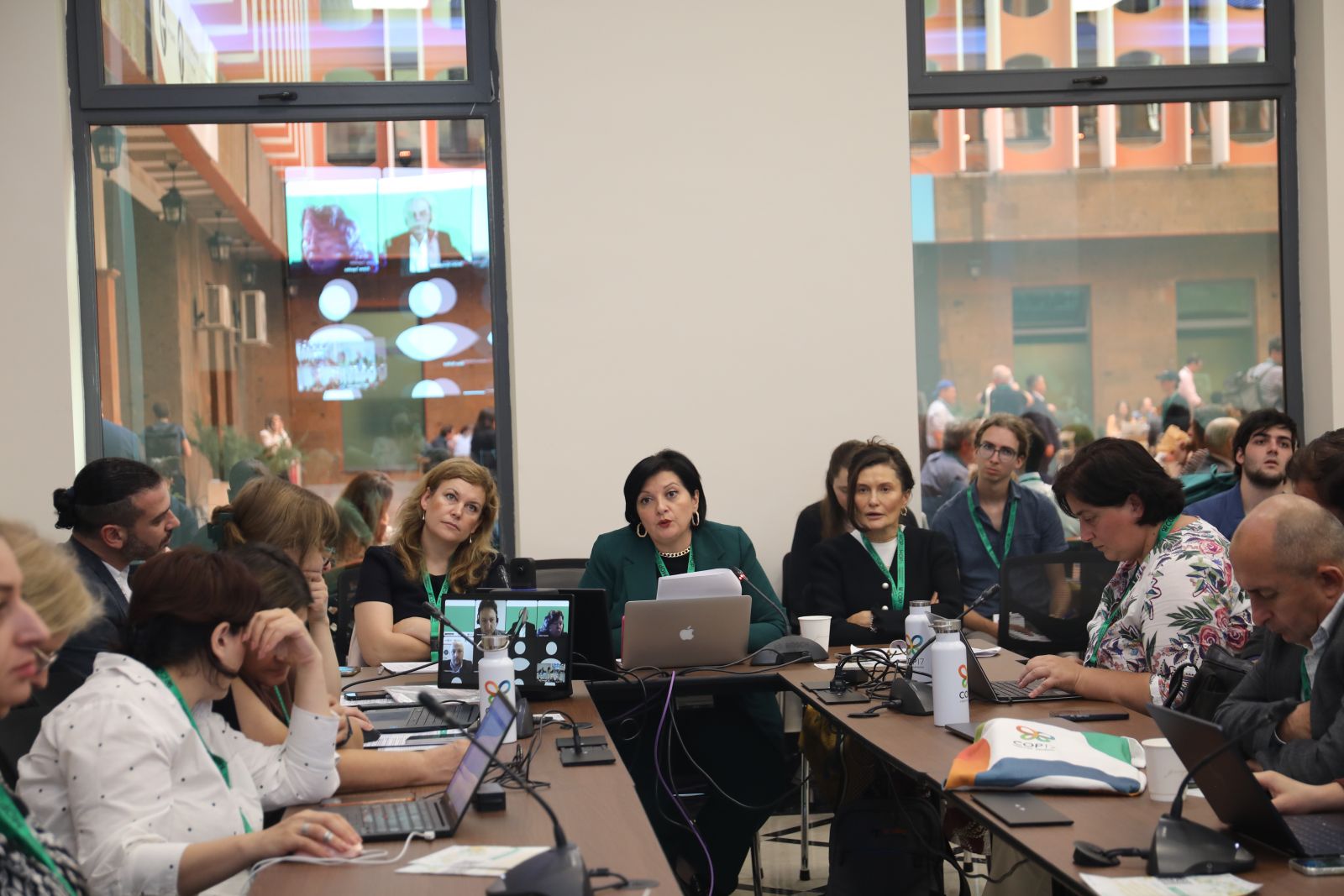
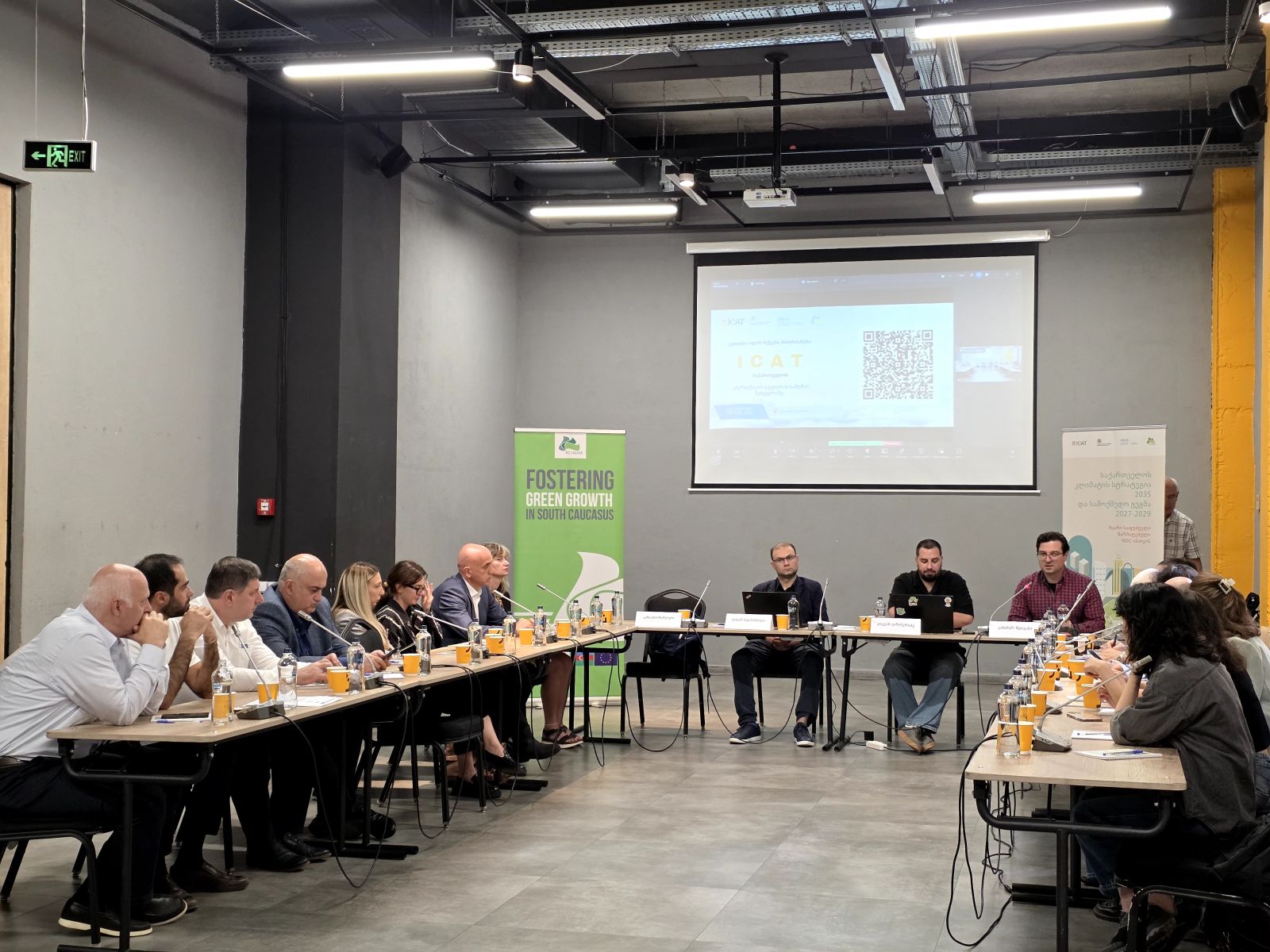
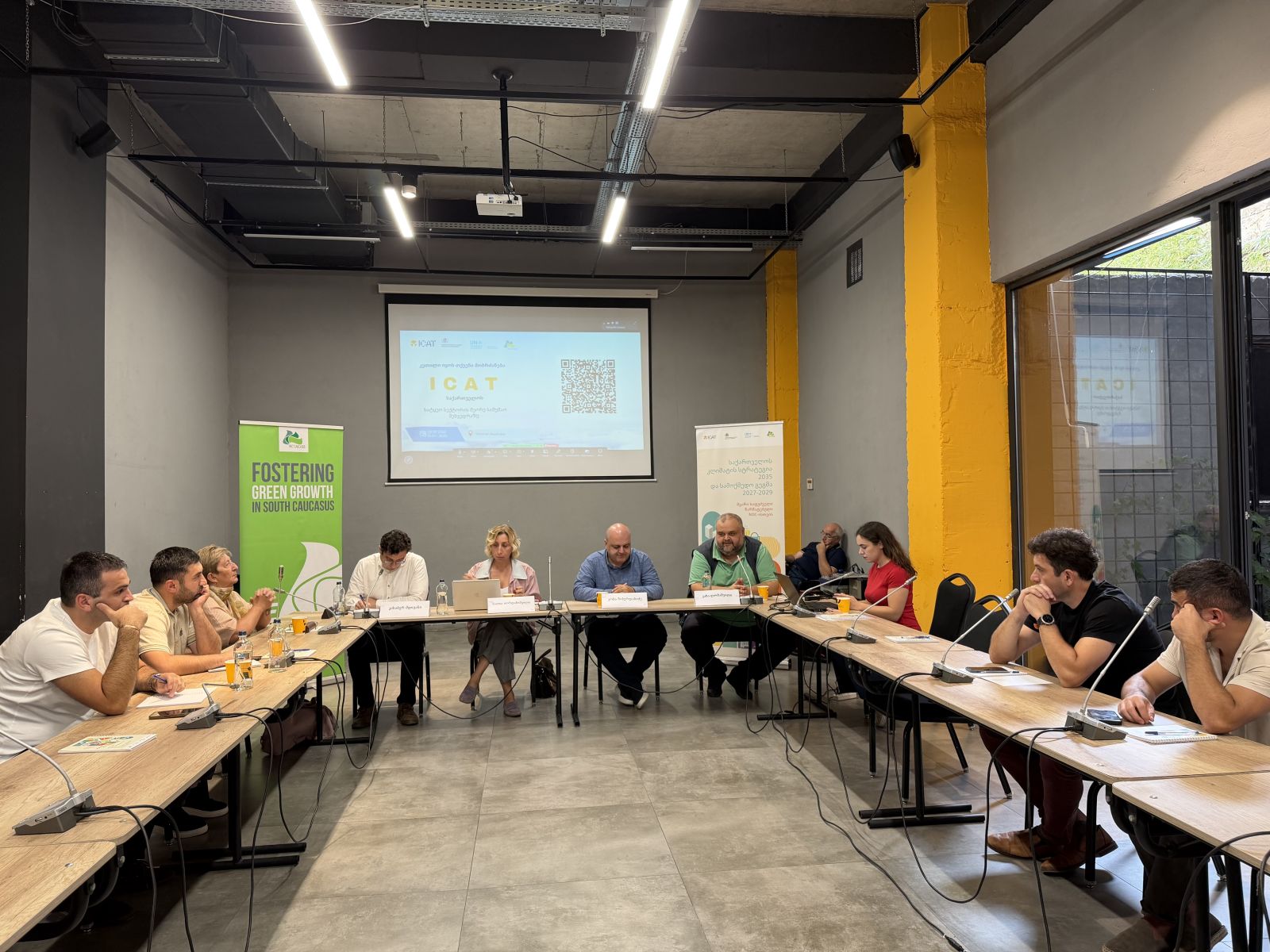
As part of the project “ICAT Georgia: Developing a Framework for NDC Tracking and GHG Projections in Priority Sectors,” the Regional Environmental Centre for the Caucasus (REC Caucasus), in close cooperation with the Ministry of Environmental Protection and Agriculture of Georgia (MEPA), held the first meeting of the Buildings Sector Working Group on 27 August 2026 in Tbilisi.
The meeting marked an important step in the sectoral consultation process supporting the update of Georgia’s National Climate Strategy through 2035 and the development of the 2027-2029 Climate Action Plan. It brought together representatives of relevant government institutions, technical experts and other stakeholders working on buildings, energy efficiency and climate policy.
Held in a hybrid format, the meeting was opened and facilitated by Kakhaber Mdivani, Project Coordinator at REC Caucasus. Elene Panchvidze, Project Assistant and Buildings Sector Expert at REC Caucasus, presented the process for updating the climate strategy and action plan in accordance with Government Resolution No. 629.
Participants reviewed the implementation status of buildings-sector measures included in the 2024-2025 Climate Action Plan and discussed their alignment with Georgia’s NDC 3.0. Key areas discussed included building energy-performance requirements and certification, energy-efficient renovation of public and commercial buildings, energy-efficient heating technologies, and public awareness.
The working group also discussed key challenges affecting implementation, including the lack of a comprehensive and regularly updated building-stock database, fragmented project-level data collection, limited financing, and insufficient sectoral expertise. Participants considered ongoing and planned measures that could be reflected in the 2027-2029 Climate Action Plan, as well as institutional responsibilities, data ownership, baselines and measurable indicators.
Potential measures financed through the state budget were also reviewed, including programmes for the construction and rehabilitation of schools, preschools and vocational education facilities. Areas requiring further technical analysis and bilateral consultations were identified, including measures addressing residential-building emissions and energy poverty.
Funded by ICAT and managed by UNOPS, the project is implemented by REC Caucasus in close cooperation with MEPA, with the UNEP Copenhagen Climate Centre (UNEP-CCC) serving as the international technical partner.
Further sectoral consultations will contribute to the preparation of Georgia’s updated climate policy framework and help identify practical and measurable mitigation actions for the buildings sector.