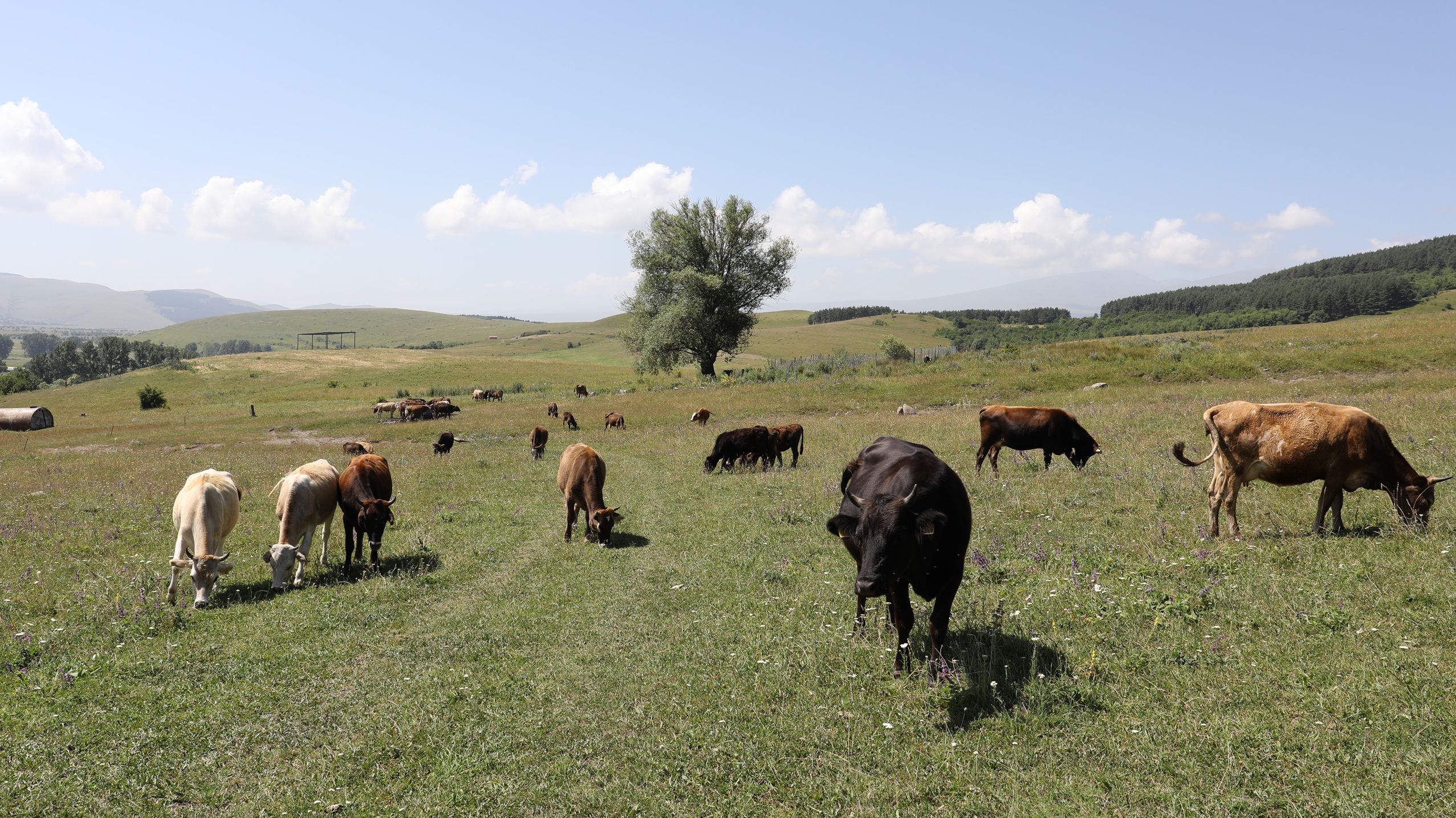
Ongoing Farmer Training and Knowledge Transfer Support the Preservation of Samtskhe-Javakheti’s Agrobiodiversity
The conservation of agricultural biodiversity is becoming increasingly important in the face of climate change, environmental degradation, and the loss of traditional agricultural knowledge. In Samtskhe-Javakheti region, ongoing efforts to strengthen farmers’ knowledge and practical skills are playing a critical role in preserving local crop varieties, promoting sustainable agricultural practices, and enhancing the resilience of rural communities.
For generations, the region has been home to unique agricultural resources, including endemic and traditional varieties of grapevine, wheat, fruit trees, and other crops that have adapted to local environmental conditions over centuries. These genetic resources represent not only an important part of Georgia’s cultural heritage but also a valuable asset for adapting agriculture to changing climatic conditions. However, migration, the decline of traditional farming systems, and limited access to agricultural extension services have contributed to the gradual loss of knowledge associated with their cultivation and management.
To address these challenges, a series of farmer training and knowledge-sharing activities have been implemented throughout the region. The trainings aim to equip farmers with practical skills related to the conservation and sustainable use of agrobiodiversity while strengthening local capacities for climate-resilient agriculture.
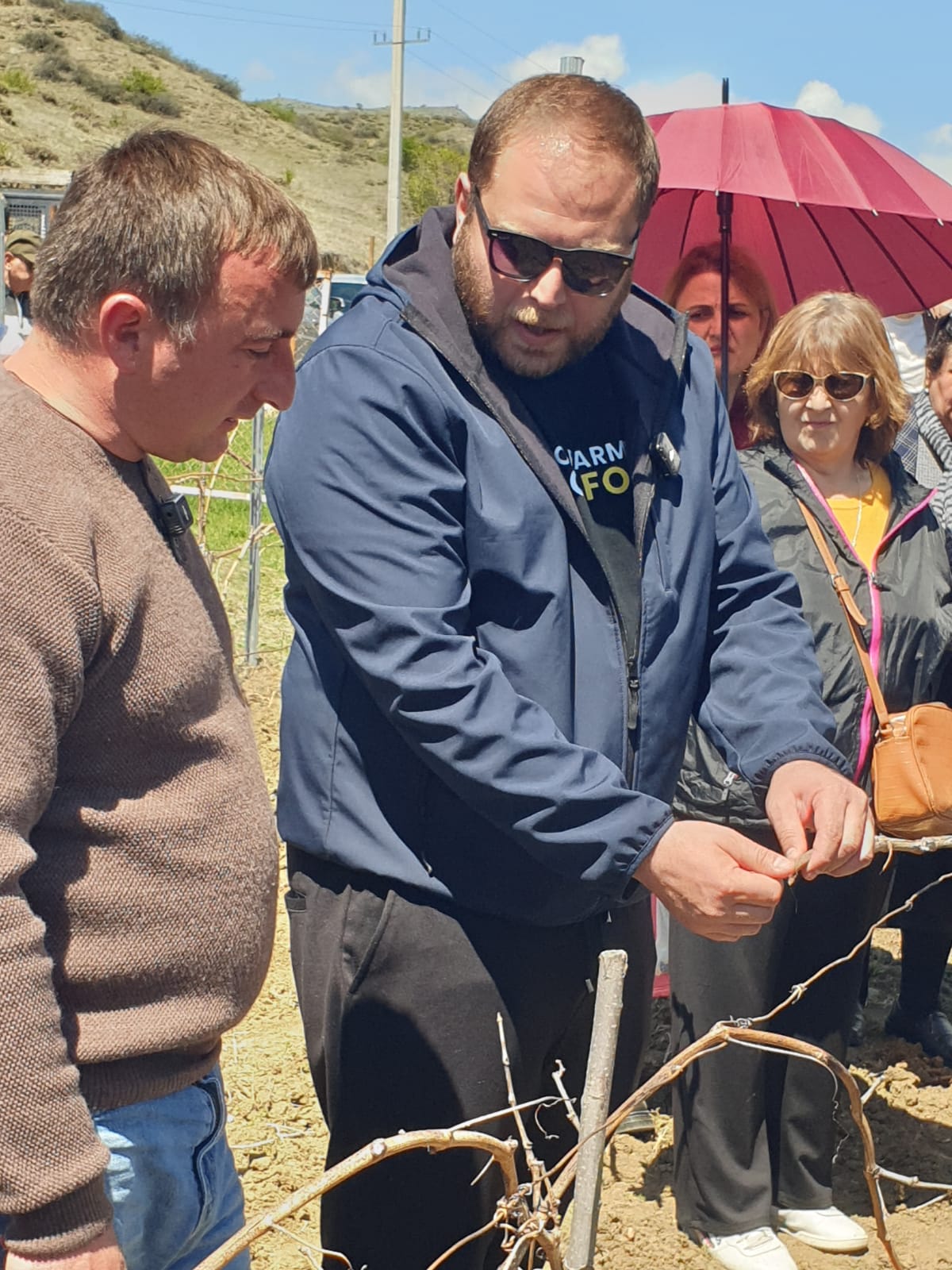
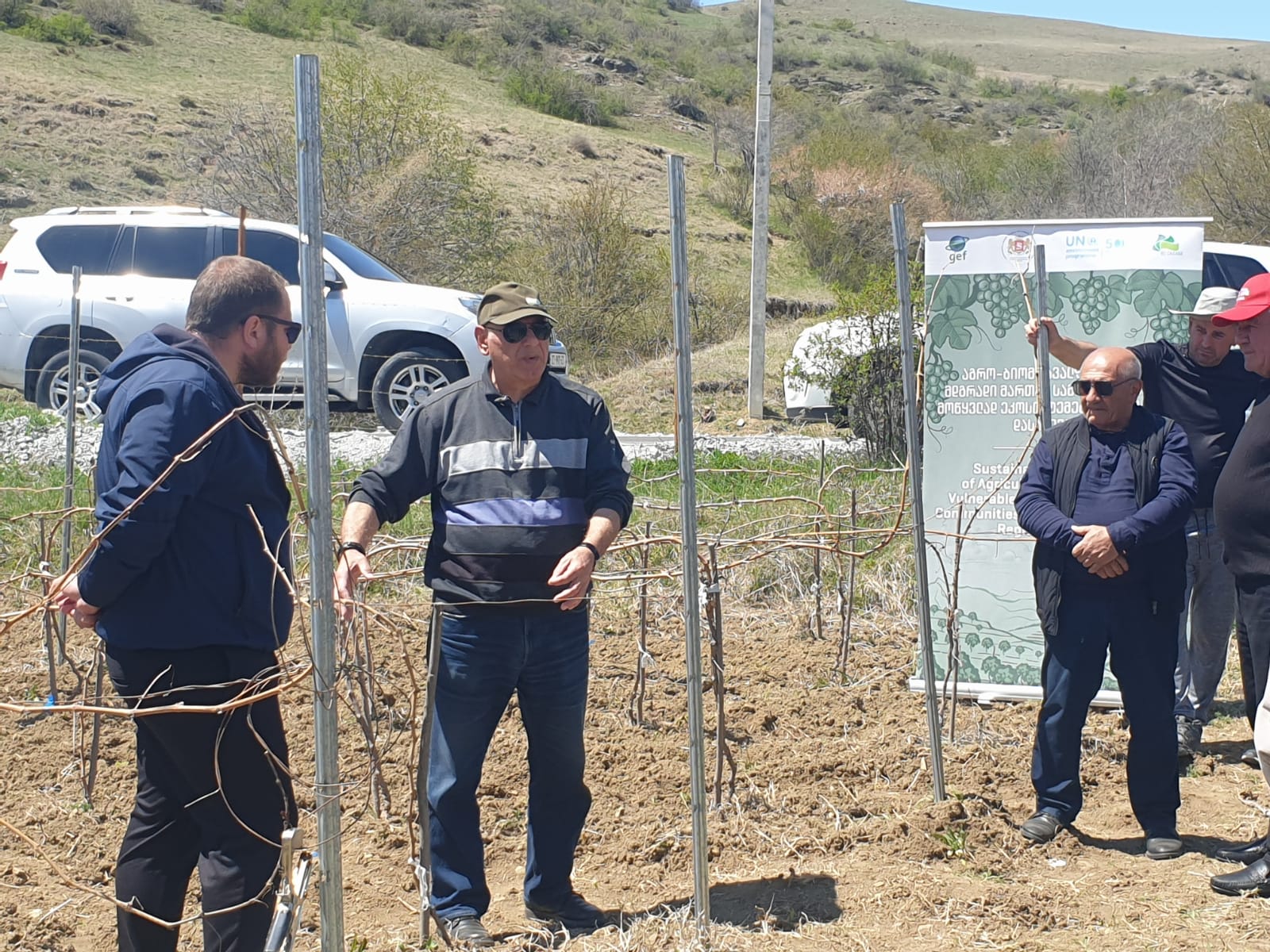
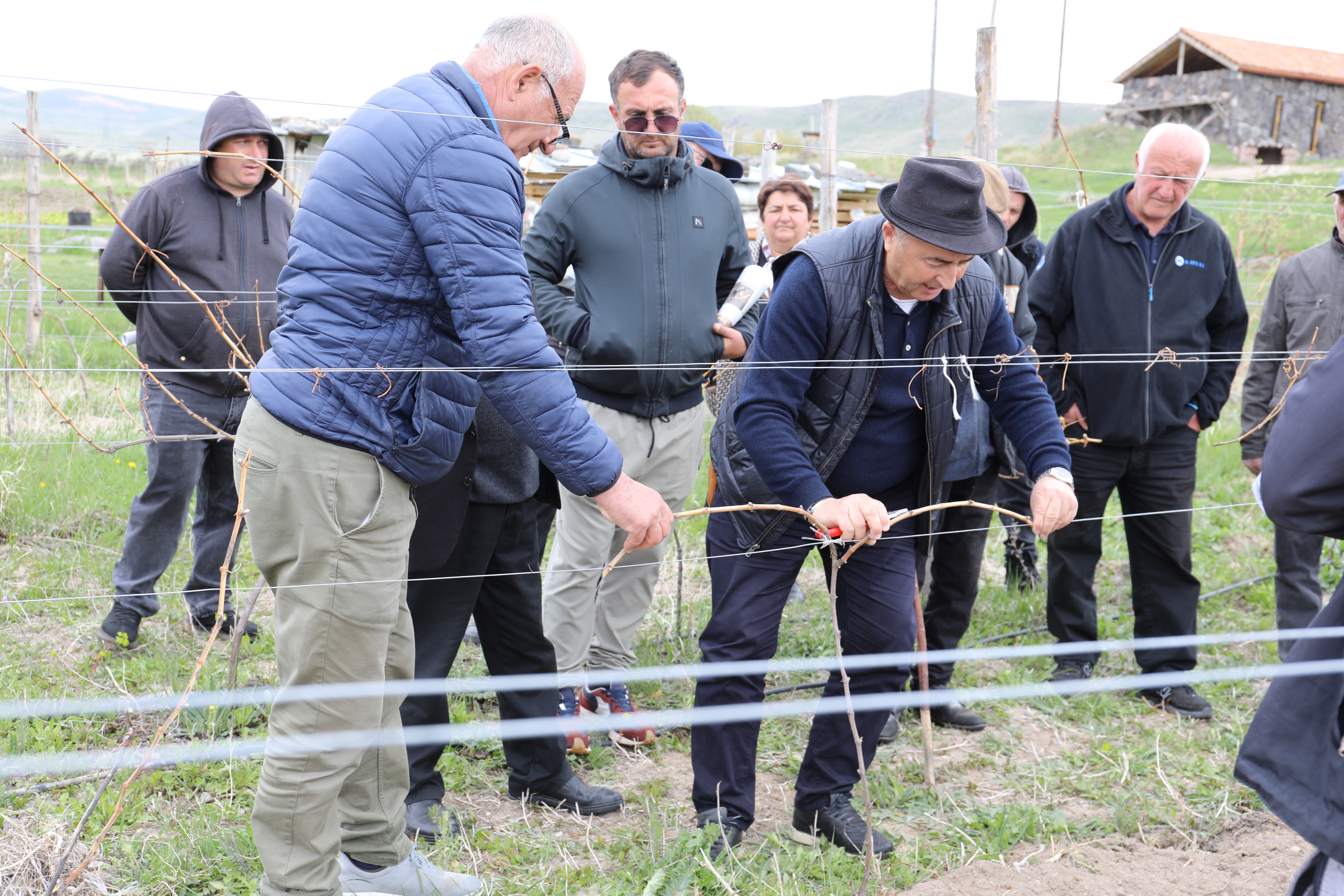
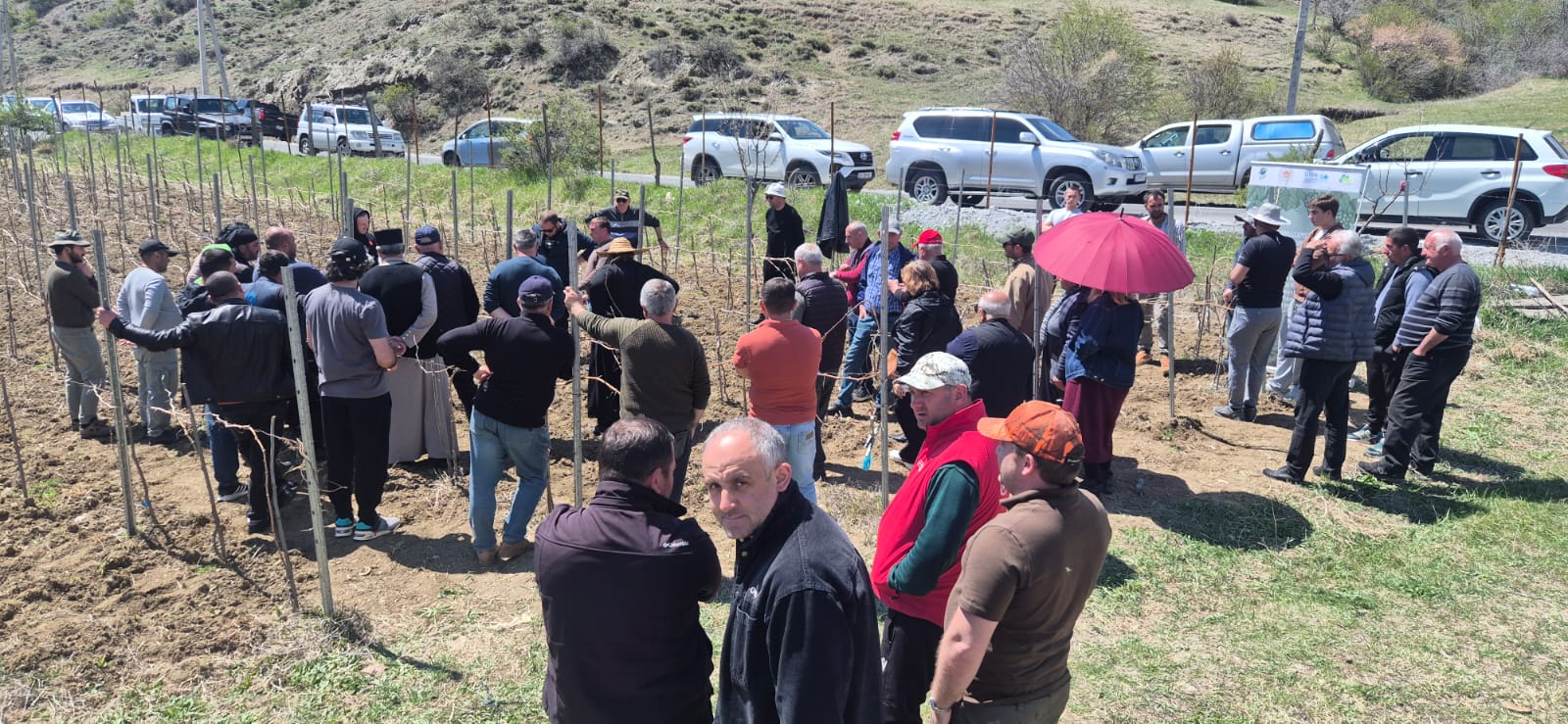
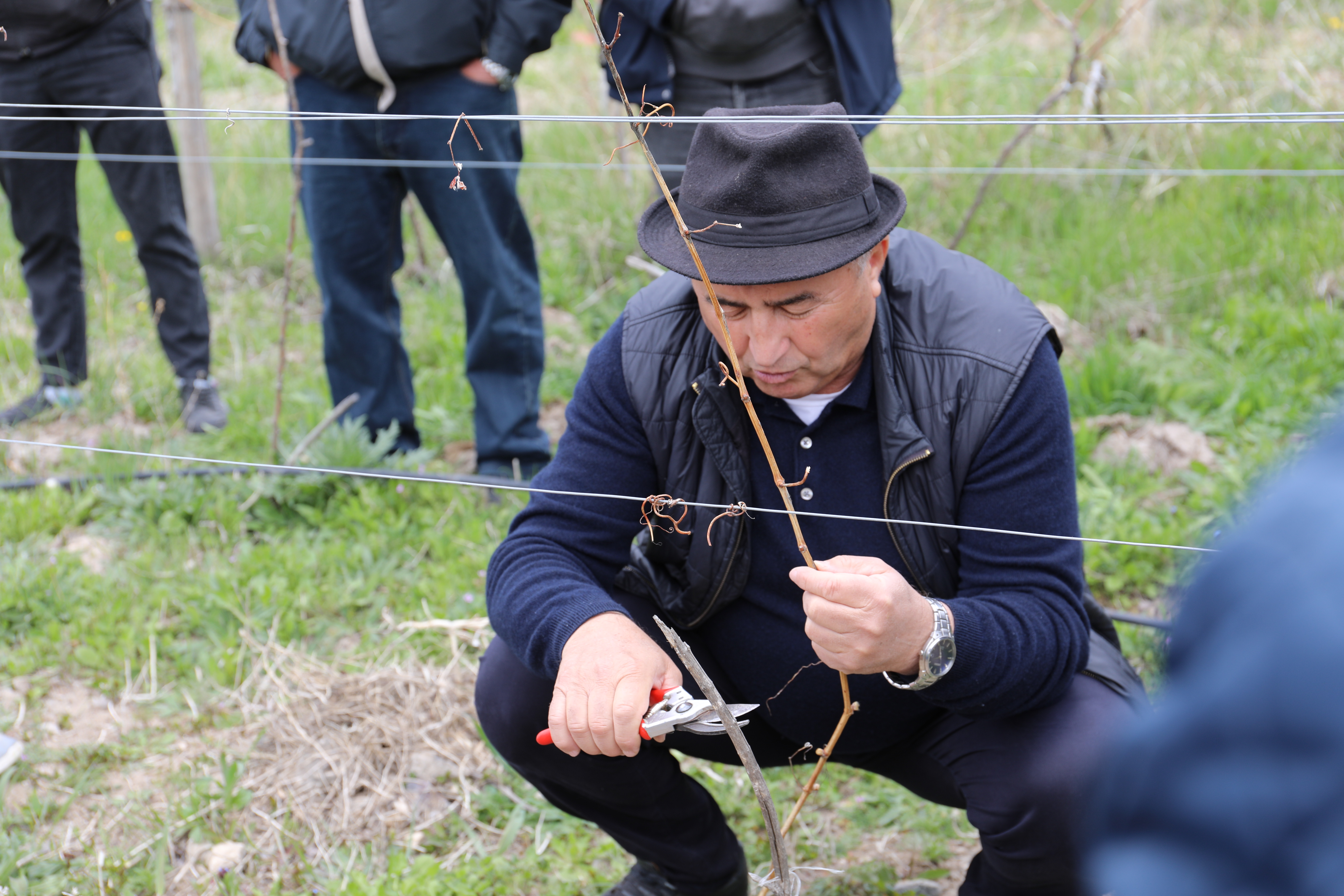
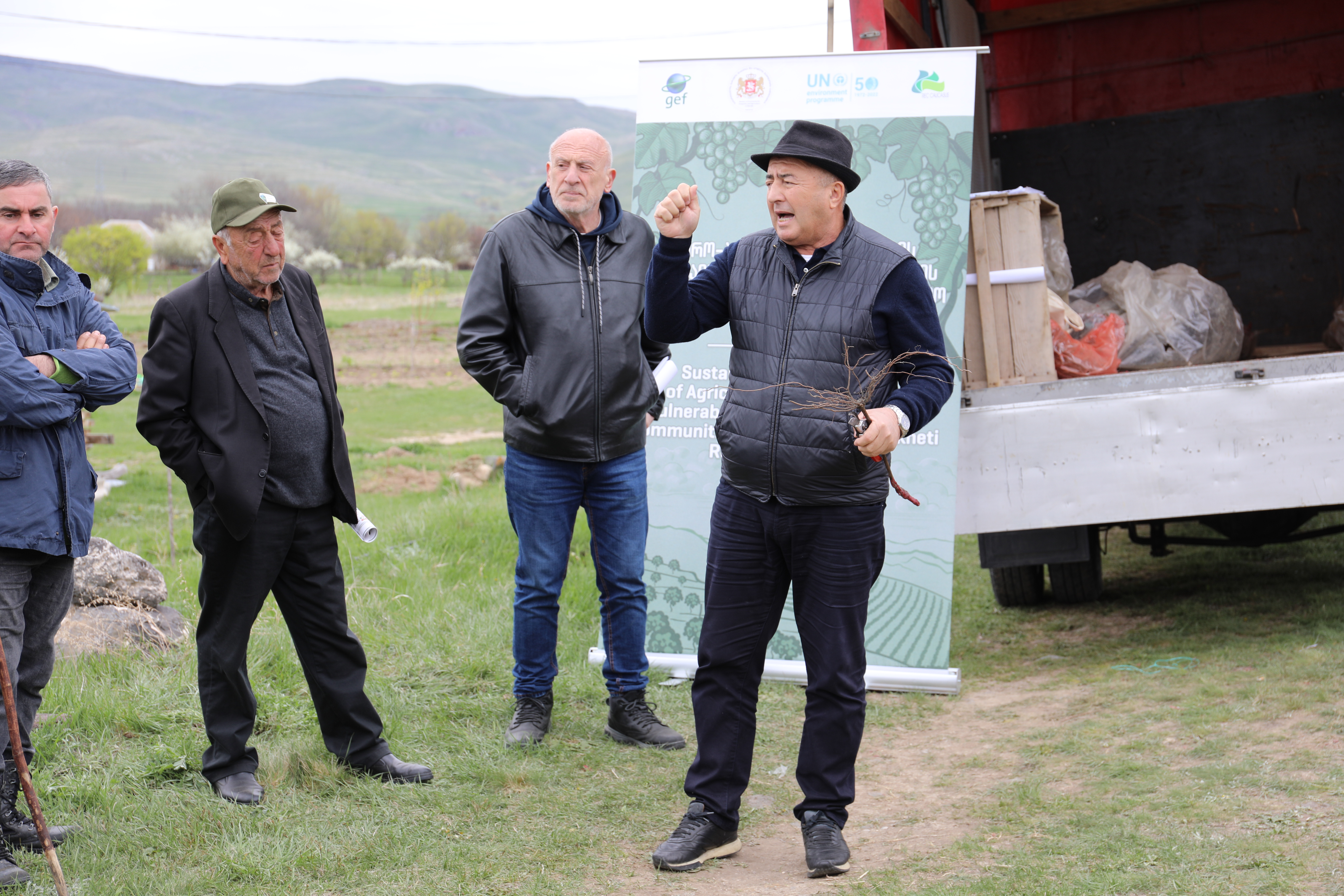
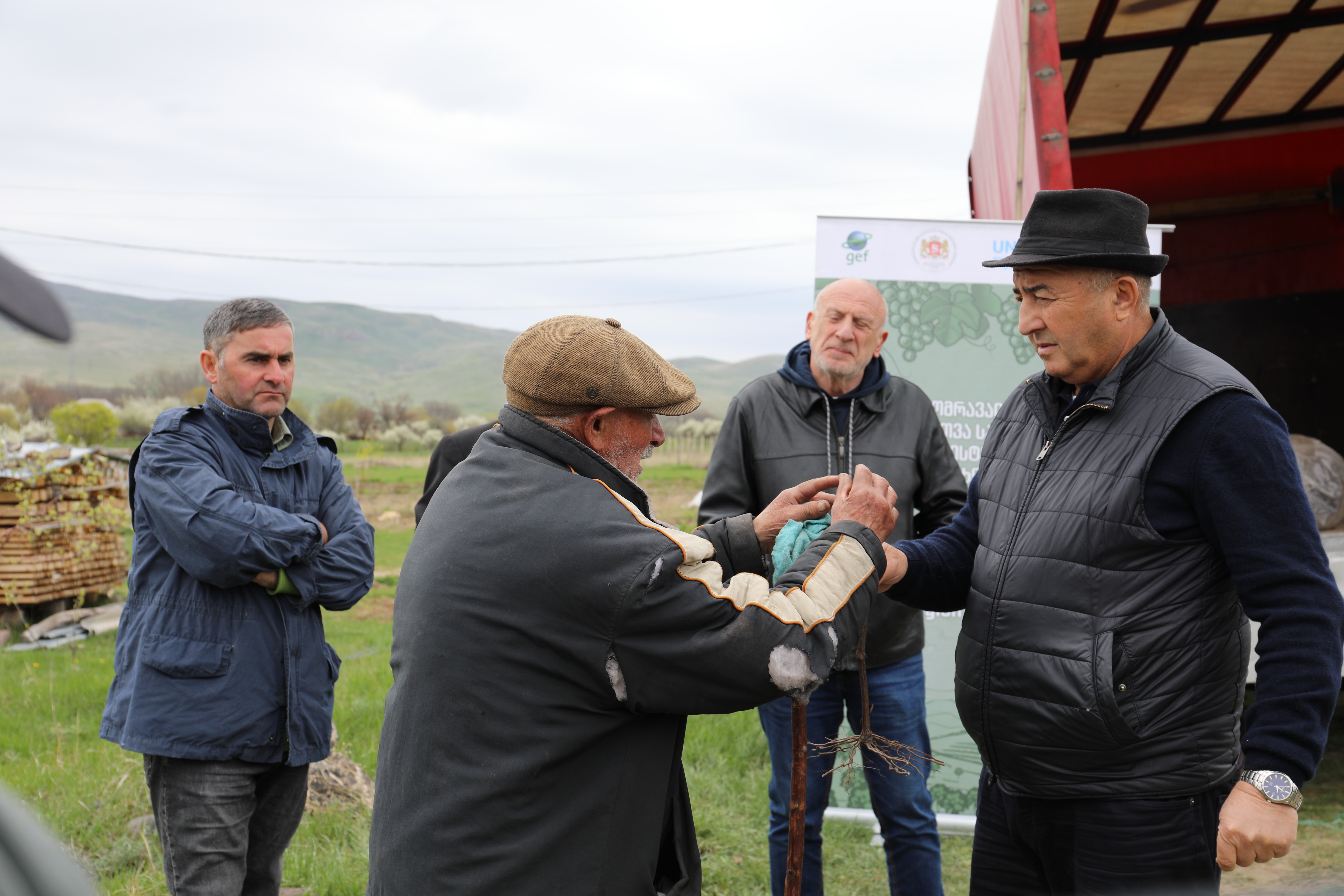
On 29–30 April 2026, on-job training sessions were conducted in the village of Ota, Aspindza Municipality, and the city of Akhaltsikhe and these were the spaces where participants gain theoretical knowledge and hands-on experiences in vineyard establishment and maintenance under the professional guidance of Mr. Levan Ujmajuridze. More than 60 farmers from across the Samtskhe-Javakheti region participated in the events, which focused on the cultivation and maintenance of endemic Meskhetian grape varieties, vineyard establishment and management, soil fertility improvement, and climate-adaptive agricultural practices.
The trainings were delivered under the guidance of the Scientific-Research Center of Agriculture and the Regional Environmental Centre for the Caucasus (RECC), with support from the Ministry of Environmental Protection and Agriculture of Georgia and the United Nations Environment Programme (UNEP).
The practical component of the training was hosted on vineyard plots made available by local farmers Besik Magrakvelidze and Gia Lekishvili. Their willingness to share their land and actively participate in the initiative significantly contributed to the success of the activities. Such farmer-to-farmer learning approaches are particularly effective in promoting innovation and encouraging wider adoption of sustainable agricultural practices within rural communities.
Participants were introduced to proper agrotechnical practices throughout the grapevine’s development cycle. Particular emphasis was placed on identifying and correcting common mistakes in vineyard management, improving soil fertility, selecting appropriate vineyard exposure, and ensuring healthy plant development. Farmers also learned how traditional local grape varieties can contribute to climate adaptation due to their long-term adaptation to local environmental conditions.
“Although training sessions are organized regularly and we receive continuous support through the Agrobiodiversity Project, there are still many practices that we do not always implement correctly in our day-to-day farming activities. This is why the involvement of knowledgeable and experienced specialists is so important for us. Their advice and practical experience help us better understand the proper techniques for vineyard management, pruning, soil fertility improvement, and other essential agricultural practices. The training activities organized within the framework of the Agrobiodiversity Project provide farmers with valuable knowledge and practical skills that contribute to the development of our farms and the conservation of local varieties for future generations, ” farmer Irakli Kurdadze from Akhaltsikhe Municipality noted.
Farmer Tamar Tsikarishvili from the village of Klde, Akhaltsikhe Municipality, highlighted the importance of preserving and transferring traditional knowledge:
“Unfortunately, much of the traditional knowledge passed down by our ancestors has been lost over time. By establishing vineyards and cultivating local wheat varieties, we hope to revive both the unique varieties and the agricultural traditions that have shaped our region for generations. Preserving local agrobiodiversity is especially important in the face of climate change. Indigenous grapevine and wheat varieties have adapted to local conditions over centuries and can help build more resilient and sustainable farming systems for the future.
What I value most about this project is that it provides much more than seedlings and planting material. It equips farmers with practical knowledge and gives us access to expertise from scientists and agricultural specialists. This support helps us combine traditional knowledge with modern approaches to conserve our agrobiodiversity and strengthen our livelihoods.”
The field training sessions formed part of broader efforts to conserve and sustainably utilize local agrobiodiversity resources within the framework of the project “Sustainable Management of Agricultural Biodiversity in Vulnerable Ecosystems and Rural Communities of Samtskhe-Javakheti Region,” supported by the Global Environment Facility (GEF). The activities were implemented through the cooperation of the Scientific-Research Center of Agriculture and the Regional Environmental Centre for the Caucasus (RECC), with support from the Ministry of Environmental Protection and Agriculture of Georgia and the United Nations Environment Programme (UNEP).
The importance of such initiatives extends beyond the conservation of individual crop varieties. Local agrobiodiversity provides farmers with valuable genetic resources that can help agriculture adapt to changing climatic conditions, emerging pests and diseases, and increasing environmental pressures. Traditional varieties often possess characteristics such as drought tolerance, resistance to local diseases, and adaptability to marginal growing conditions, making them an essential component of sustainable food systems.
The active participation of farmers, researchers, local communities, and public institutions demonstrates a shared commitment to safeguarding Samtskhe-Javakheti’s unique agricultural heritage. Through continued training, knowledge transfer, and practical support, local communities are strengthening their capacity to conserve agrobiodiversity while creating new opportunities for sustainable rural development, value-added agricultural production, and agrobiodiversity-based tourism.
As climate change continues to challenge agricultural systems worldwide, investing in farmers’ knowledge and supporting the conservation of local genetic resources remain among the most effective strategies for ensuring resilient and sustainable agriculture. The growing interest among farmers in traditional crop varieties and sustainable agricultural practices demonstrates that the preservation of agrobiodiversity is not only about protecting the past—it is also about securing the future of rural communities and food production systems.
_1780318732.jpeg)
_1780318732.jpeg)
_1780318732.jpeg)