Meskhetian Wine Moves Toward Appellation of Origin Registration: Reviving Tradition Through Biodiversity, Science, and Regional Cooperation
A significant step toward the recognition of Meskhetian wine has been initiated as local winegrowers, national institutions, scientists, and development partners join efforts to register an appellation of origin for wines produced in Georgia’s historic southern region. The initiative aims to protect the authenticity of Meskhetian wine, conserve agricultural biodiversity, and create new economic opportunities through quality recognition, market positioning and regional branding.
Meskheti, located in the southern part of Georgia, has long been recognized as one of Georgia’s historical viticultural areas. Situated in the mountainous landscapes of southern Georgia, the region is characterized by volcanic soils, diverse microclimates, and high-altitude conditions that have shaped a distinctive wine culture over centuries. Historical sources and archaeological evidence confirm that viticulture and wine production were integral parts of local livelihoods. Traditional terraced vineyards and locally adapted grape varieties reflected generations of accumulated knowledge and close interaction between communities and their natural environment.
During the twentieth century, socio-economic transformations led to the gradual abandonment of vineyards and the loss of many indigenous varieties. However, renewed attention to agrobiodiversity conservation and cultural heritage restoration has sparked a revival of Meskhetian winemaking traditions in recent years. A defining feature of Meskhetian wine is the diversity of indigenous grape varieties historically spread across the Samtskhe–Javakheti region. These varieties evolved under cool-climate conditions and represent an important component of Georgia’s agricultural genetic heritage.
Among the varieties traditionally cultivated or documented in the region are: Meskhuri Mtsvane, Meskhuri Shavi, Tskhenis Dzudzu (white and red forms), Shavi Aspindzura, Samariobo, Tskhenis Zdua, Tamaris Vazi, Meskhuri Kharistvala, Chitiskvertskha and etc. These local grapes demonstrate strong adaptation to colder climates, shorter vegetation periods, and mountainous terroir conditions. Their preservation contributes not only to wine diversity but also to climate-resilient agriculture and biodiversity conservation. A major milestone in the revival process has been the restoration and establishment of new vineyards based exclusively on indigenous Meskhetian grape varieties. Within the framework of the ongoing project, more than 20 hectares of land have been restored and planted, contributing significantly to rebuilding the region’s traditional viticultural landscape. Moreover, about 7 hectares of land will be planted during 2026. The newly planted vineyards include Meskhuri Mtsvane, Tskhenis Dzudzu (white and red varieties), Shavi Aspindzura, Samariobo, Tskhenis Zdua, Tamaris Vazi, Kharistvala, Chitiskvertskha, and other endemic varieties preserved through research and restoration initiatives.
Today, approximately 34 hectares of vineyards are cultivated in Meskheti, with continued expansion expected as farmer engagement increases and planting material becomes more widely available. Although the scale may appear limited, the restoration process and its strategic vision represent the most important achievement, laying the foundation for long-term development.
The restoration and development process has been implemented through close cooperation with national scientific and sectoral institutions. Technical and research support has been provided in collaboration with the LEPL Scientific-Research Center of Agriculture of the Ministry of Environmental Protection and Agriculture of Georgia (MEPA), which has contributed to the identification, conservation, and propagation of authentic Meskhetian grape varieties, ensuring genetic accuracy and varietal purity.
At the same time, cooperation with the LEPL National Wine Agency of Georgia of the MEPA has ensured alignment with national wine policies, quality standards, and regulatory frameworks necessary for origin registration. This partnership between scientific institutions, government agencies, and local producers has created a strong technical foundation for developing a controlled and traceable wine production system.
The planned registration of an appellation of origin represents a strategic step toward safeguarding the identity of Meskhetian wine. Appellation systems link product quality directly to geographical origin, including natural conditions, traditional practices, and local biodiversity.
Registration is expected to:
- Protect indigenous grape varieties and traditional knowledge;
- Prevent misuse of the Meskhetian wine name;
- Establish clear production and quality standards;
- Strengthen traceability and consumer confidence;
- Enhance competitiveness in domestic and international markets.
Experts underline that appellation of origin instruments also create market-based incentives for biodiversity conservation, encouraging producers to maintain local varieties and sustainable agricultural practices.
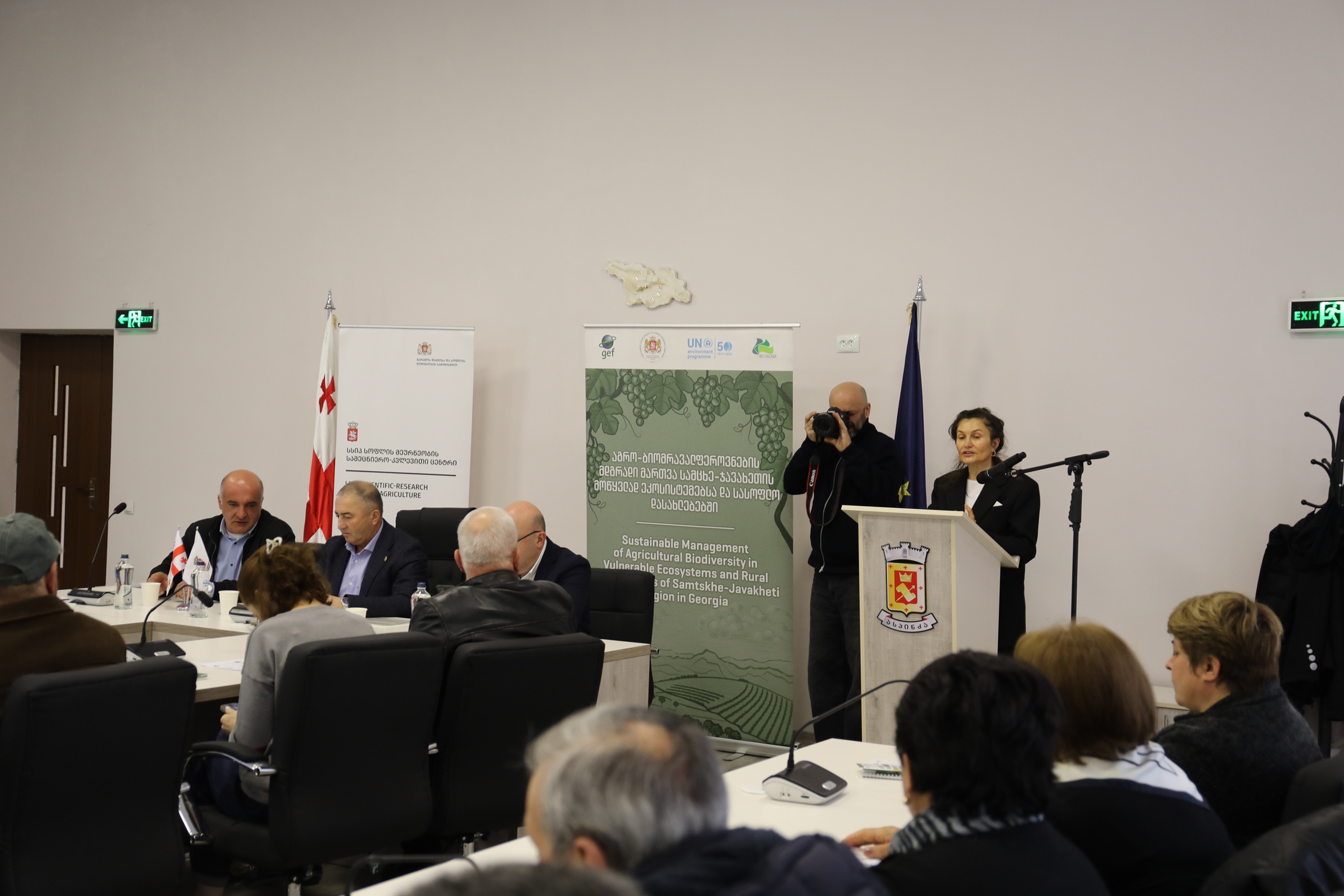
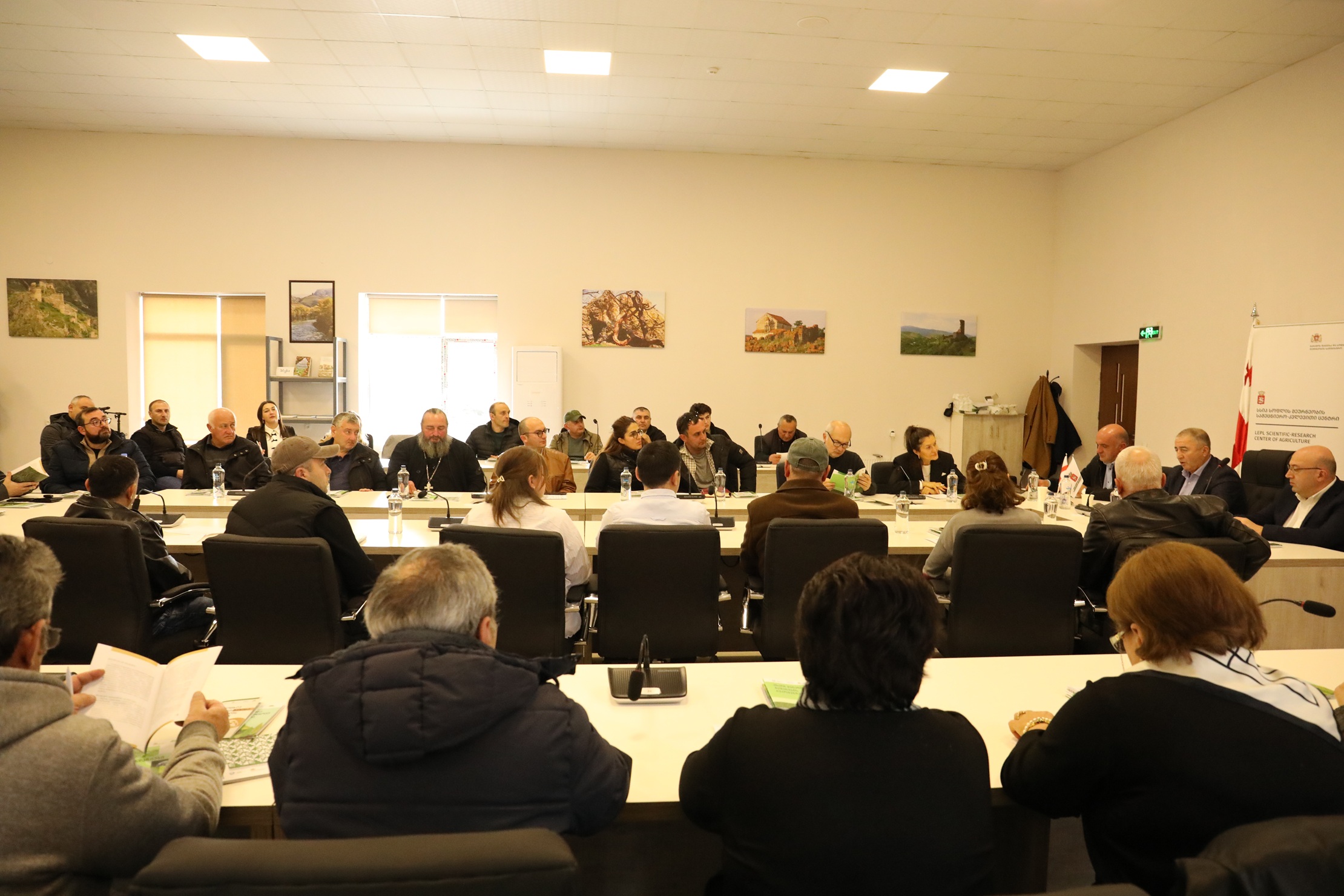
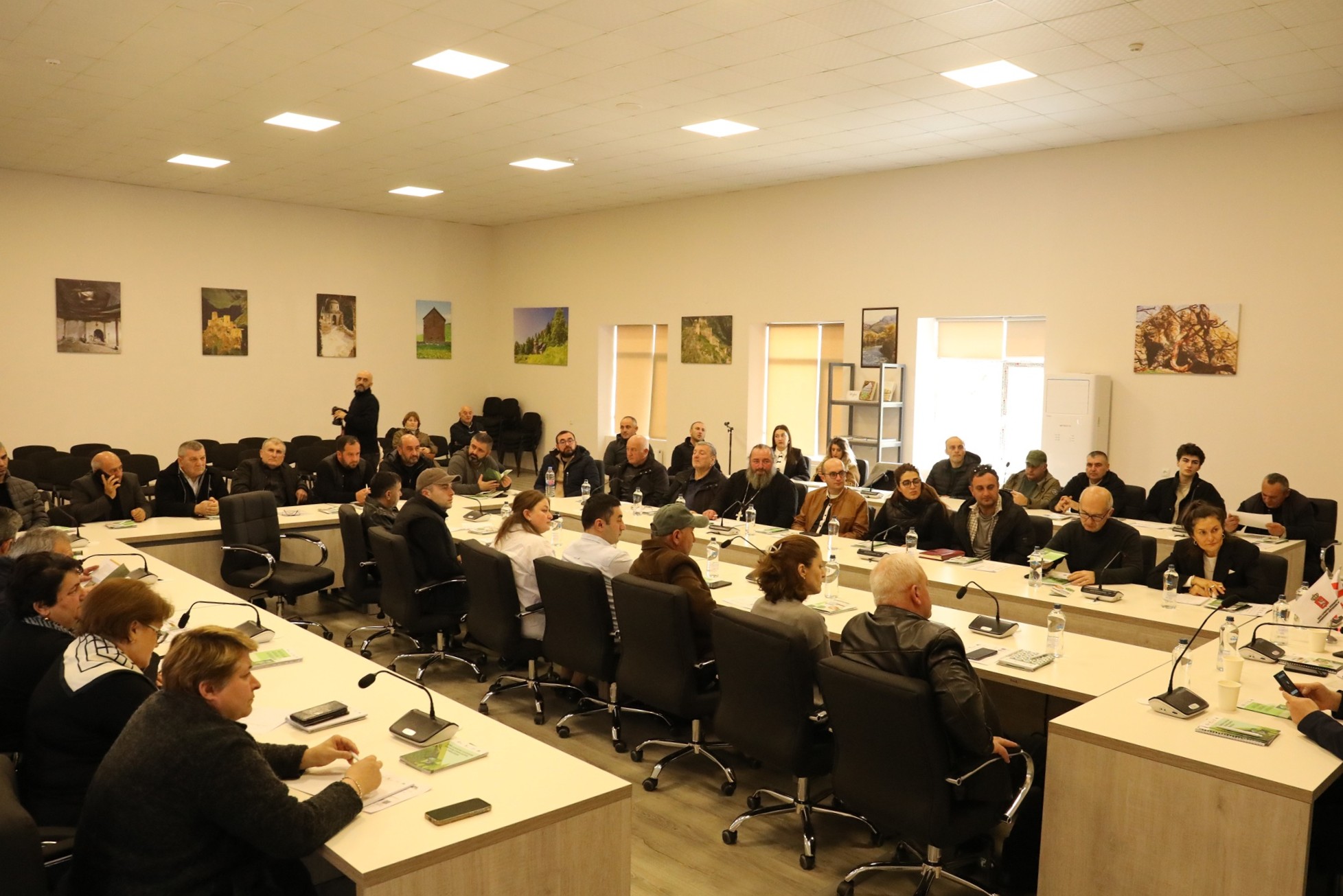
Stakeholders emphasize that the initiative goes beyond wine production alone. The development of an origin-based wine system is closely linked with agro-ecotourism, cultural heritage preservation, and rural economic diversification. During stakeholder consultations held in Aspindza Municipality, participants expressed readiness to engage in the registration process and supported the establishment of a producers’ association that will coordinate activities, define standards, and represent the collective interests of Meskhetian winemakers.
Although the registration of an appellation of origin is a complex and long-term process requiring cooperation, technical preparation, and regulatory compliance, stakeholders remain optimistic. The combination of restored vineyards, revived indigenous varieties, scientific support, and growing producer engagement provides a strong basis for future recognition.
The initiative is widely viewed as a strategic advancement that links biodiversity conservation with economic development, ensuring that Meskhetian wine evolves into a distinctive, traceable, and sustainable sector rooted in Georgia’s rich cultural and natural heritage.